
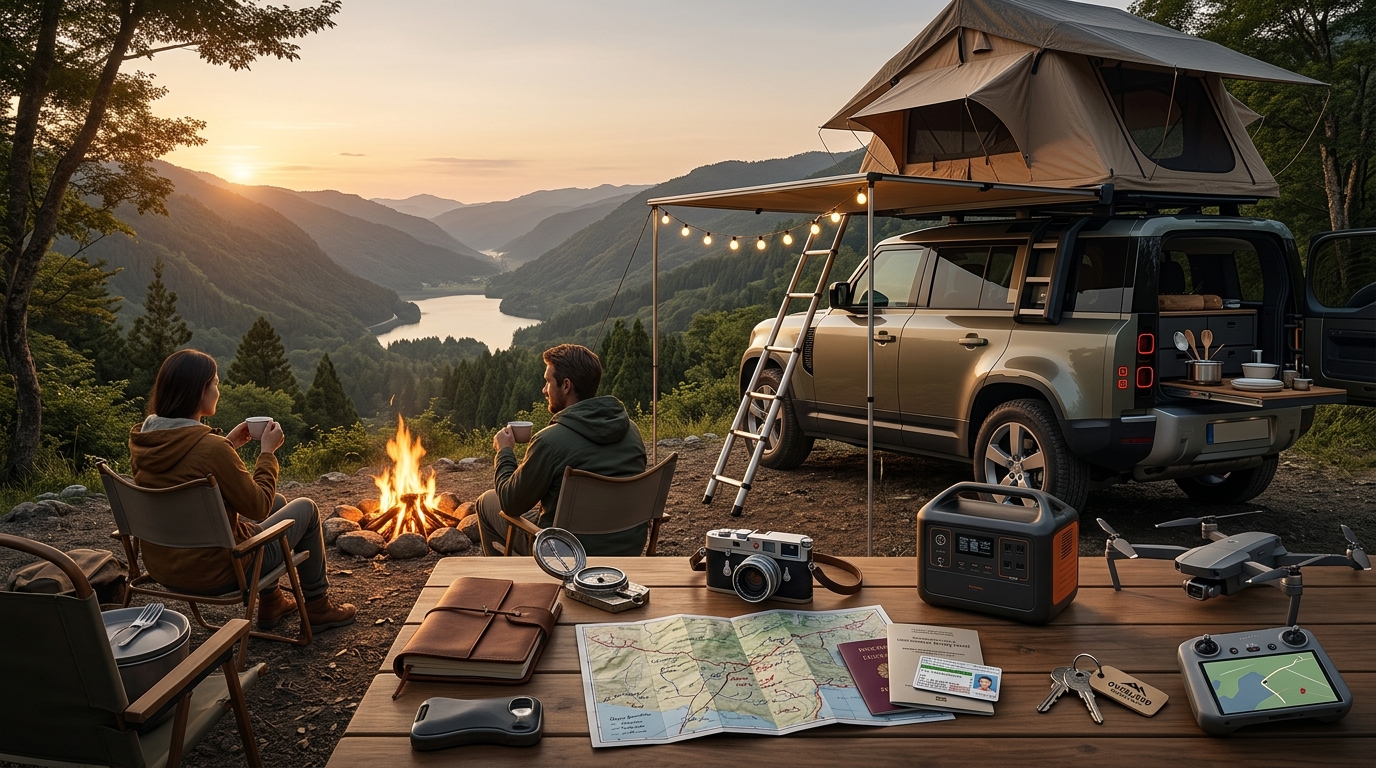
Japan is famous for bullet trains and neon cities, but some of the country's most unforgettable scenery lies far beyond the rail network. Coastal cliffs, hidden onsen towns, volcanic plateaus, and ancient forests are all waiting along roads most tourists never travel. An overland camping trip is the best way to reach these places on your own terms. Overlanding is a style of self-sufficient travel where your vehicle serves as both transport and accommodation, typically fitted with a rooftop tent, kitchen, and power system. This guide walks you through every step, from licensing and vehicle choice to campsite rules and route planning, so you can hit the road with confidence.
Get Your Driving License Sorted
Before anything else, you need legal permission to drive in Japan. The most common method is obtaining an International Driving Permit (IDP) issued under the 1949 Geneva Convention. You must present this together with your valid home-country license and passport. Citizens of Switzerland, Germany, France, Belgium, Monaco, and Taiwan can instead obtain an official Japanese translation of their license.
One important detail catches many travelers off guard. The IDP expires one year from the date of issuance, and your right to drive in Japan expires one year from the date you land. If you have been residing in Japan for more than a year, the IDP becomes invalid and you must hold a Japanese license. Check the Overland Japan FAQ page for the latest requirements before booking.
Choose the Right Overland Vehicle
Your vehicle choice shapes the entire trip. An overland camper is a 4WD vehicle custom-fitted with a rooftop tent, onboard kitchen, power system, and complete camping gear so you can travel self-sufficiently. The table below compares the main platforms available through Overland Campers Japan.
| Vehicle | Best For | Sleeps | Key Features |
|---|---|---|---|
| Suzuki Jimny Sierra | Couples, solo travelers | 2 | Compact 4x4, nimble on narrow roads, excellent fuel economy |
| Toyota FJ Cruiser | Couples, small families | 2-3 | Custom kitchen, 270-degree awning, more cargo space |
| Land Rover Defender | Families, groups, enthusiasts | 2-4 | Premium fit-out, outdoor shower room, mega power battery |
| Toyota Hilux | Extended trips, larger groups | 2-4 | Cargo-bed versatility, dual-tent option, built for endurance |
All vehicles are automatic transmission and right-hand drive. Note that rooftop tents add height, so underground or covered parking is not possible.
Plan Your Route and Timing
Japan has over 3,000 designated campsites spread across all four main islands. The best camping weather runs from May through November on Honshu, Shikoku, and Kyushu, while Hokkaido's prime window is June through September. Golden Week (late April to early May) and Obon (mid-August) are peak domestic travel periods when sites fill quickly, so book early or aim for shoulder weeks.
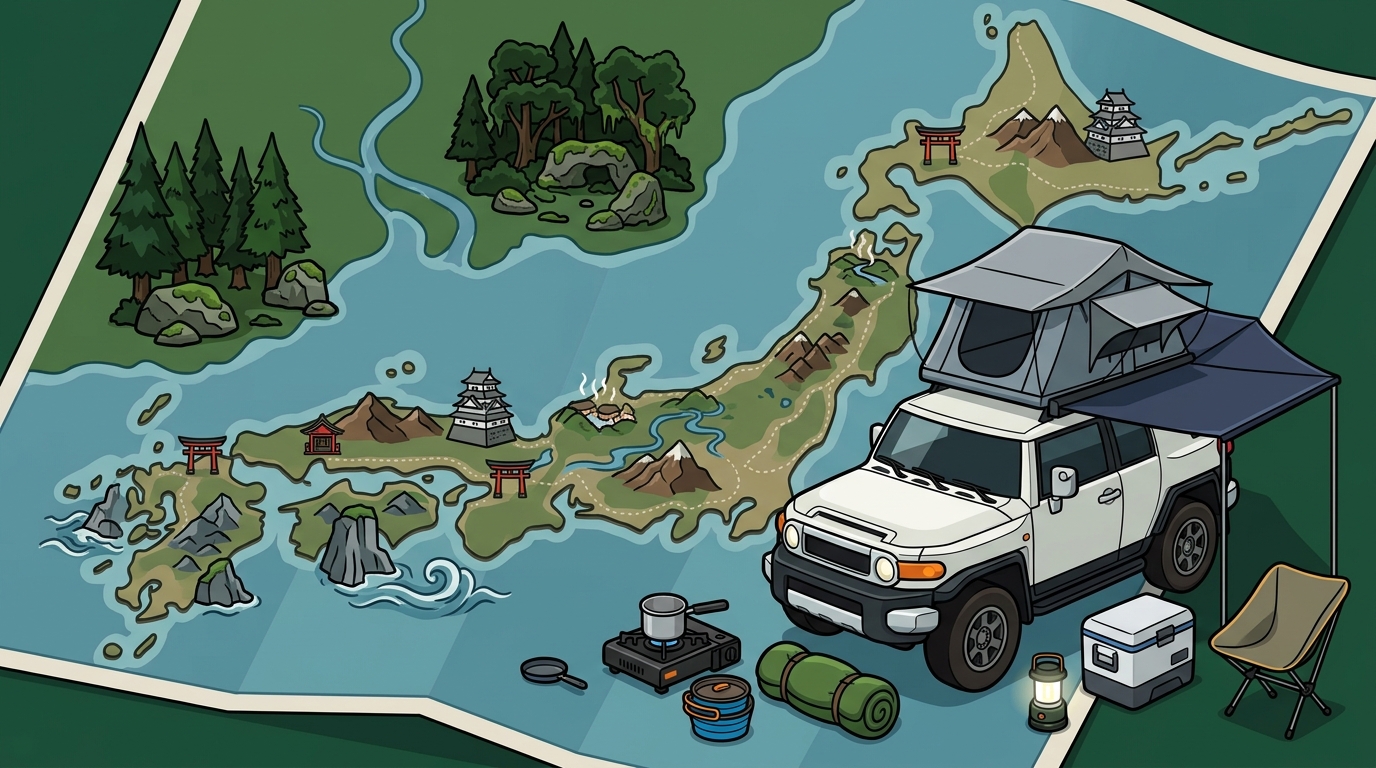
Start building your itinerary with the curated road trip itineraries on Overland Japan's site. Popular routes include the Fuji Five Lakes loop, the Izu Peninsula coastal drive, and the Chiba surf-coast circuit. For longer adventures, a one-way trip from Tokyo to Fukuoka lets you cross multiple regions. Apps such as NAP-CAMP and Camp-Quests are invaluable for filtering campsites by facilities, cost, and availability.
Michi-no-Eki: Your Best Friend on the Road
A michi-no-eki is a government-run roadside station offering clean restrooms, vending machines, local food shops, and tourist information. Japan has over 1,200 of them. While pitching a tent is generally not allowed, they are perfect rest stops for meal prep and route planning during your drive.
Understand Japan's Campsite Rules
Wild camping in Japan is heavily restricted. Most land is privately owned or protected under the Ministry of the Environment's national park regulations. Camping outside designated areas can result in fines or police intervention. Always use designated campgrounds (kyampu-jo) or auto-camp sites.
Essential Etiquette
- Book campsites in advance, especially on weekends and holidays.
- Arrive during check-in hours, typically 9 AM to 5 PM.
- Pack out all trash; many sites expect full waste separation.
- Open ground fires are prohibited at most campgrounds. Use the gas stove provided with your vehicle.
- Keep noise low after quiet hours and respect neighboring campers.
Onsen Access
Many campsites sit near public hot springs (onsen), which serve as both bathing facilities and a cultural highlight. Showers at free or budget campsites are rare, so a nearby onsen at around 500 to 1,000 yen is the best alternative.
Know What Equipment Is Included
One of the biggest advantages of renting an overland camper is arriving to a vehicle that is completely ready to go. With Overland Campers Japan, every rental includes a rooftop tent with seasonal bedding, shade awning, fridge, camping chairs, table, LED lights, Bluetooth speaker, dual-burner gas stove, Italian coffee set, chef's knives, pots, pans, cutlery, cleaning supplies, and a sub-battery system for charging phones and cameras. Optional road trip extras are available if you want to personalize further.
In short, you only need to bring your clothes, toiletries, and food to cook. Everything else is already packed and demonstrated at check-in.
Pick-Up Locations and Logistics
Overland Campers Japan operates from two bases. The Tokyo location in Yutenji, Meguro, sits just six minutes from Shibuya by train, making it easy to reach straight from the airport or after a day exploring the city. The Fukuoka base near Fukuma opens up Kyushu and one-way road trip options between the two cities.
Check-in involves a full vehicle walkthrough, equipment demonstration, and safety briefing conducted in English. Late arrivals of more than 15 minutes without notice may be treated as a no-show, so plan your transit carefully.
Key Takeaways
- Secure an International Driving Permit under the 1949 Geneva Convention before you fly.
- Choose a vehicle that matches your group size and trip length.
- Use designated campgrounds only; wild camping is restricted across Japan.
- All Overland Campers Japan vehicles come fully equipped with tent, kitchen, power, and gear.
- Plan routes using curated itineraries and campsite apps like NAP-CAMP.
- Pick up in Tokyo (Yutenji) or Fukuoka for maximum flexibility, including one-way trips.
- Respect quiet hours, pack out your trash, and use onsen for bathing along the way.
Frequently Asked Questions
Do I need a special license to drive a camper in Japan?
No special license is needed. A standard International Driving Permit issued under the 1949 Geneva Convention, paired with your valid home license and passport, is sufficient. All Overland Campers Japan vehicles are standard-size 4WDs with automatic transmission.
Is wild camping legal in Japan?
Wild camping is generally not legal in Japan, especially in national parks, on private land, and in protected areas. Most prefectures encourage the use of designated campsites. Fines for unauthorized camping can range from 5,000 to 50,000 yen depending on the region.
What camping gear do I need to bring?
If you rent from Overland Campers Japan, you only need to bring clothes, toiletries, and food. Every vehicle comes with a rooftop tent, bedding, full kitchen setup, fridge, power system, lighting, chairs, table, and cleaning supplies.
Where can I park an overland camper overnight?
You should park at designated auto-camp sites or campgrounds. Michi-no-eki roadside stations are great for daytime rest stops but generally do not allow tent camping. Some campsites require advance booking, especially on weekends.
What is the best season for a camping road trip in Japan?
May through November offers the best conditions on Honshu, Shikoku, and Kyushu. Hokkaido is ideal from June through September. Avoid Golden Week and Obon unless you book campsites well in advance.
Can I do a one-way trip between Tokyo and Fukuoka?
Yes. Overland Campers Japan has bases in both Tokyo (Yutenji, Meguro) and Fukuoka (near Fukuma), making one-way road trips across multiple regions possible. Contact the team through the reservations page to arrange details.
How much do campsites cost in Japan?
Prices vary widely. Free municipal campsites exist in rural prefectures such as Hokkaido and Kochi. Budget sites cost under 2,000 yen per person, while premium auto-camp grounds near popular areas can cost as much as a hotel. Use NAP-CAMP to filter by price.
Are the vehicles suitable for Japan's narrow mountain roads?
Yes. The Suzuki Jimny Sierra in particular is compact and nimble, purpose-built for tight Japanese roads. Larger vehicles like the FJ Cruiser and Defender are still practical for most roads but require more awareness in very narrow mountain passes.
Start Planning Your Japan Overland Adventure
The best camping trips start with a clear plan and the right vehicle. Browse the full fleet, check live availability, and make your reservation on the Overland Campers Japan booking page. Have questions first? Reach out to the team at the contact page for personalized route advice in English.