
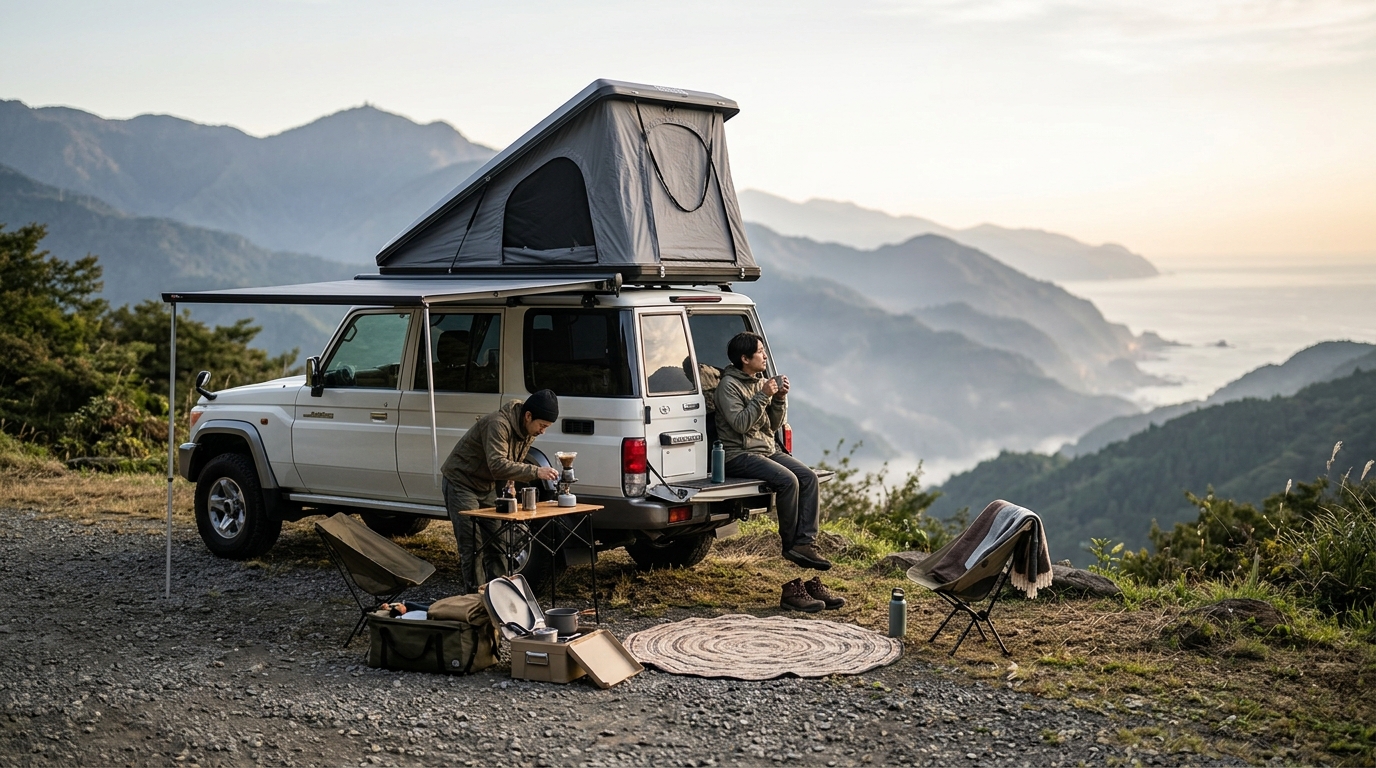
Japan is one of the most rewarding countries to explore by road. Hidden coastlines, mountain onsen towns, and national parks sit just beyond the reach of bullet trains, and a campervan puts all of it within reach. But renting the right vehicle in a foreign country takes more than a quick online booking. From driving permits to included equipment and vehicle size, several factors separate a stressful trip from a seamless one. This guide walks you through every detail you should evaluate before choosing a campervan rental for your Japan adventure.
Driving Requirements and Permits
An International Driving Permit (IDP) is the single most important document you need before renting any vehicle in Japan. The IDP must be issued under the 1949 Geneva Convention and presented alongside your valid home-country licence and passport. Drivers from Switzerland, Germany, France, Belgium, Monaco, or Taiwan can instead obtain an official Japanese translation of their licence through JAF (Japan Automobile Federation).
One common trap catches residents off guard: if you have been continuously residing in Japan for more than one year, your IDP becomes invalid and you must hold a Japanese driving licence. Apply for your IDP well before departure, as processing can take several weeks. Without it, no reputable rental company will hand you the keys.
Choosing the Right Vehicle Type
A campervan is a vehicle fitted with sleeping, cooking, and living equipment for self-sufficient travel. In Japan, campervan options range from large motorhomes to compact 4x4 overland campers. The right choice depends on your group size, trip length, and the type of roads you plan to drive.
| Vehicle Type | Best For | Seats/Sleeps | Japan Road Suitability |
|---|---|---|---|
| Compact 4x4 (e.g. Suzuki Jimny Sierra) | Couples, solo travellers | 2 / 2 | Excellent on narrow rural roads |
| Mid-size 4x4 (e.g. Toyota FJ Cruiser) | Couples, small families | 5 / 2-3 | Great all-rounder |
| Full-size 4x4 (e.g. Land Rover Defender) | Families, groups, premium travellers | 5 / 2-4 | Strong capability, easy to park |
| Large Motorhome / RV | Families wanting built-in bathroom | 4-6 / 4-6 | Challenging on narrow roads and in parking |
Overland Campers Japan offers a fleet of individually built 4x4 campers from their Tokyo base, including Jimny Sierras, FJ Cruisers, and Defenders. Each vehicle is custom-fitted rather than mass-produced, which means the build quality and layout are designed specifically for Japan's roads and camping conditions.
Equipment and What Should Be Included
Equipment is where rental experiences vary the most. Many providers list sleeping bags, a stove, and a mini fridge as optional add-ons at extra cost. A fully equipped rental should include everything you need to sleep, cook, and camp from day one, with no surprise fees at check-in.
At Overland Campers Japan, every vehicle comes standard with roof-top tents, seasonal bedding, shade awnings, fridges, camping chairs, tables, lights, speakers, gas stoves, an Italian coffee set, pots, pans, chef's knives, cutting boards, cutlery, and even basics like olive oil, salt, and aluminium foil. A sub-battery system provides electricity to charge phones, cameras, laptops, and drones. When a company says "just bring your clothes, toiletries, and food to cook," that is the standard you should benchmark against.
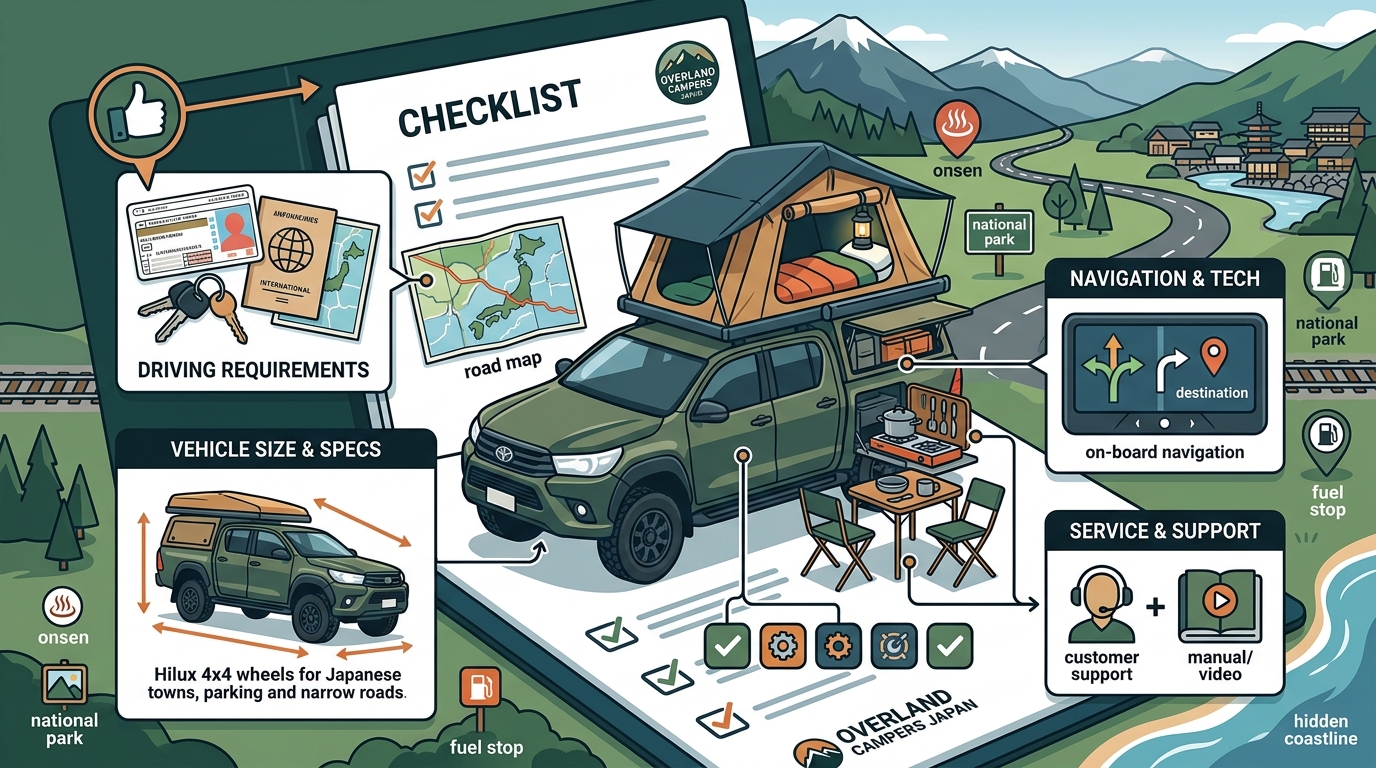
Questions to Ask Any Rental Provider
- Is camping equipment included or charged separately?
- Does the vehicle have a portable power system?
- Is seasonal bedding provided for winter or summer travel?
- Are cooking essentials (fuel, utensils, condiments) part of the package?
Vehicle Size and Japan's Roads
Vehicle size is a practical consideration that many first-time visitors underestimate. Japan's rural roads, mountain passes, and small-town streets can be narrow. Parking structures often have height restrictions that prevent roof-top-tent-equipped vehicles from using covered or underground facilities.
Compact 4x4 vehicles like the Suzuki Jimny Sierra excel in this environment. They are fuel-efficient, easy to manoeuvre, and fit comfortably in standard-size parking spaces. Larger vehicles like the FJ Cruiser or Defender still park in regular outdoor spots but require slightly more awareness of height clearance. Always confirm overhead clearance before entering any covered structure.
Insurance, Support, and Safety
Insurance coverage is a non-negotiable part of any rental. Standard damage liability insurance should be included in the base rental price. Ask whether the provider offers 24-hour roadside assistance and English-language support, both of which are critical if something goes wrong in a rural area where English is not widely spoken.
In Japan, all accidents must be reported to the police. Japanese insurance companies require a police-issued certificate of accident before any claim can be processed. Make sure your rental company explains these procedures at check-in and provides an emergency contact number. Overland Campers Japan includes standard damage liability insurance and 24-hour roadside assistance with every booking, along with a full check-in briefing and detailed FAQ and travel information.
Pick-Up Locations and Flexibility
A pick-up location is the physical point where you collect your rental vehicle and begin your trip. Convenience matters: a depot near central transport hubs saves time, especially after a long-haul flight. Overland Campers Japan operates from Yutenji in Meguro, Tokyo, just six minutes from Shibuya, and from Fukuoka near Fukuma, close to Hakata and Fukuoka Airport. The two-location setup also opens the door to one-way road trip options between Tokyo and Kyushu.
Check whether the company allows flexible pick-up and drop-off times. Morning collection and evening return schedules let you maximise your travel days rather than losing half a day to logistics.
Key Takeaways
- Secure your International Driving Permit (1949 Geneva Convention) before arriving in Japan.
- Choose a vehicle size that matches Japan's narrow roads and your group size.
- Prioritise rentals where all camping equipment is included with no hidden extras.
- Confirm that standard insurance and 24-hour roadside assistance are part of the base price.
- Look for English-language support, especially for emergencies in rural areas.
- Pick a provider with a convenient, central pick-up location near transit hubs.
- Explore curated road trip itineraries to make the most of your route planning.
Frequently Asked Questions
Do I need a special licence to drive a campervan in Japan?
No. Most rental campervans and 4x4 campers in Japan can be driven with a standard driving licence and a valid International Driving Permit issued under the 1949 Geneva Convention. Larger bus-sized RVs may require a medium vehicle licence, but these are rare for rental use.
What equipment should come included with a campervan rental?
A quality rental should include a sleeping system (roof-top tent or bed), seasonal bedding, cooking equipment, a portable kitchen, lighting, chairs, a table, and a power system for charging devices. Providers like Overland Campers Japan include all of this as standard.
Is it safe to camp in a vehicle in Japan?
Yes. Japan is one of the safest countries in the world for road travel and outdoor camping. Designated campsites, RV parks, and many open outdoor areas are commonly used. Always verify local rules before parking overnight.
Can I drive on the left if I have never done it before?
Absolutely. Japan's roads are well-maintained and clearly signed. All rental vehicles from Overland Campers Japan are right-hand drive with automatic transmission, which makes the adjustment easier. Take it slow at intersections and you will adapt quickly.
How much does a campervan rental cost in Japan?
Prices vary depending on vehicle type, season, and rental duration. Compact campers start from around 15,000 to 20,000 yen per day, while premium 4x4 overland setups typically range higher. The key is to compare what is included: a lower daily rate with many paid extras can end up costing more than an all-inclusive option.
Where can I pick up a campervan in Japan?
Major providers operate from Tokyo, Osaka, and Fukuoka. Overland Campers Japan offers pick-up from central Tokyo (Yutenji, Meguro) and Fukuoka, with one-way trip options between locations.
What should I know about toll roads in Japan?
Japan's expressways charge tolls that can add up on long drives. An ETC (Electronic Toll Collection) card speeds up toll payment. Ask your rental provider whether an ETC card is available, as tourists typically cannot acquire one independently. Some expressway passes for foreign visitors offer discounted rates on certain routes.
What is the best season for a campervan trip in Japan?
Every season offers something different. Spring (March to May) brings cherry blossoms, summer is ideal for coastal and mountain trips, autumn delivers stunning foliage, and winter camping is increasingly popular with the right gear and seasonal bedding.
Start Planning Your Japan Road Trip
The best campervan trips start with the right vehicle and the right preparation. Browse the full fleet, check live availability, and get personalised route advice from the Overland Campers Japan team. Get in touch today to start shaping your journey.