
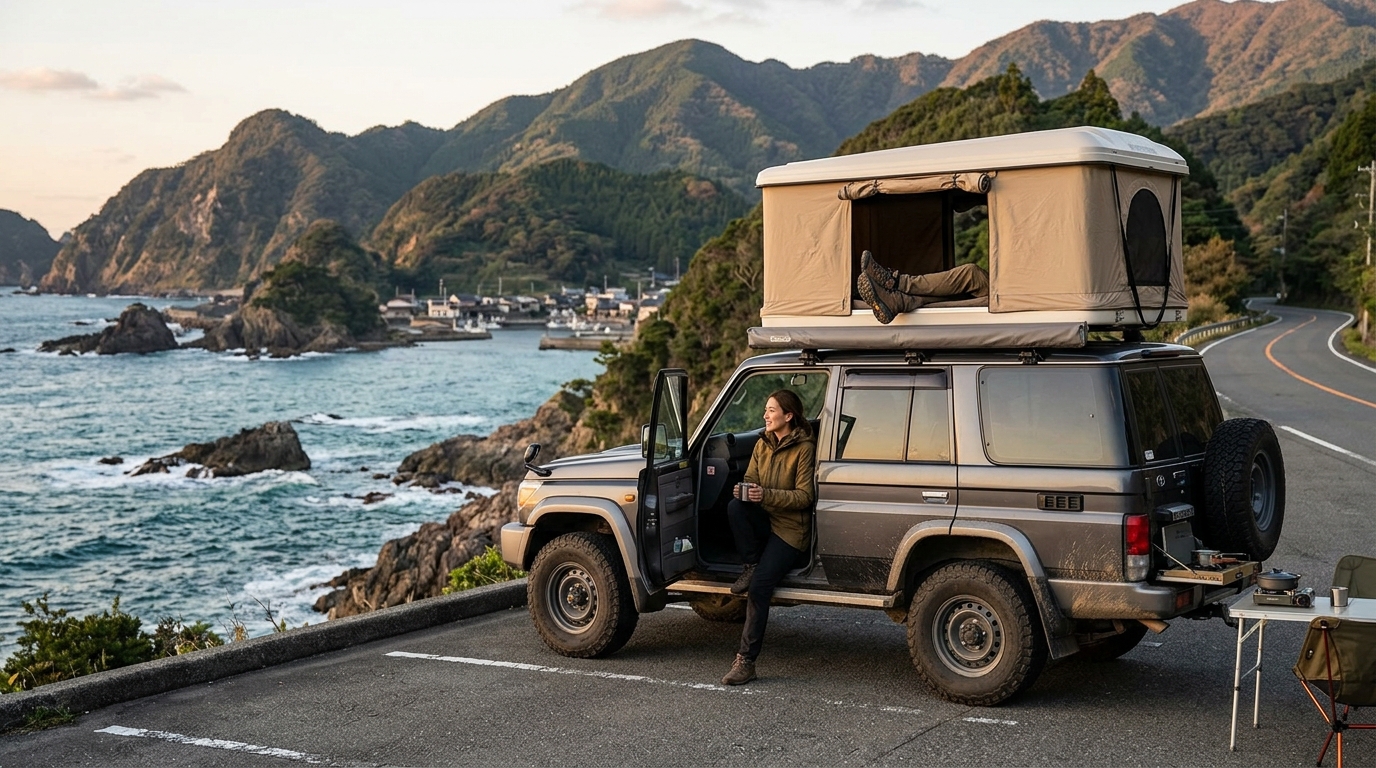
Japan is one of the safest and most road-trip-friendly countries on the planet, yet most visitors never leave the train corridor between Tokyo and Kyoto. An overland camping trip changes that completely. With well-maintained roads, more than 3,000 campsites, thousands of natural hot springs, and free roadside rest stations called michi-no-eki, Japan is practically built for self-drive adventure. This guide walks you through every step of planning an overland camping road trip across Japan, from licensing paperwork to choosing your vehicle, finding campsites, and packing the right gear.
What Is Overlanding in Japan?
Overlanding is a style of self-sufficient travel where the vehicle serves as your home, kitchen, and campsite. Unlike traditional campervanning in a large motorhome, overlanding in Japan typically uses compact 4x4 vehicles fitted with rooftop tents, portable kitchens, and battery systems. This approach lets you access narrow mountain roads, coastal tracks, and rural parking areas that larger RVs simply cannot reach.
Japan's extensive paved road network, roadside services, and culture of safety make it one of the world's best locations for overland camping. From Hokkaido's volcanic plateaus to Kyushu's subtropical coastlines, you can cover remarkably diverse terrain in a single trip.
Get Your Driving License Sorted First
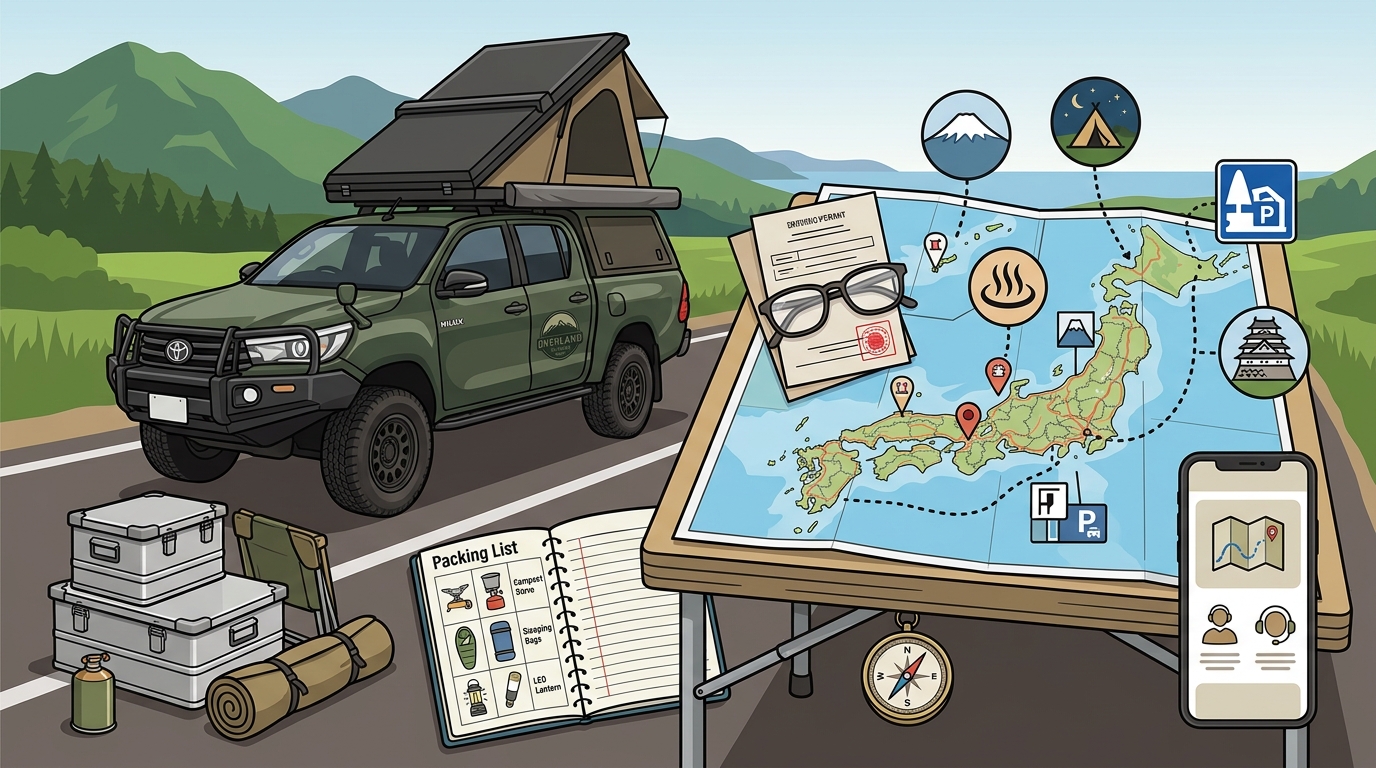
An International Driving Permit (IDP) is an official document that translates your national license and allows you to drive legally in a foreign country. Japan only recognizes IDPs issued under the 1949 Geneva Convention on Road Traffic. Permits issued under the 1968 Vienna Convention are not accepted.
How to Get the Right IDP
Apply through an authorized automobile association in your home country before you depart. In the United States that means the AAA; in Australia it is the Australian Automobile Association. The permit must be in booklet format and is valid for one year from the date of issue.
Exceptions for Certain Countries
Drivers from Switzerland, Germany, France, Belgium, Monaco, or Taiwan do not use an IDP. Instead, they must carry an official Japanese translation of their license, obtainable from the Japan Automobile Federation (JAF) or their country's embassy in Japan.
Documents to Carry While Driving
| Document | Required? | Notes |
|---|---|---|
| Passport | Yes | Entry stamp confirms your landing date |
| Original home-country license | Yes | Must be valid for the duration of the trip |
| 1949 Geneva Convention IDP | Yes (most countries) | Booklet format only |
| JAF license translation | Only for DE, FR, CH, BE, MC, TW | Replaces the IDP requirement |
Rental companies, including Overland Japan, will check these documents at pickup. Arriving without valid paperwork means your booking cannot proceed.
Choose the Right Overland Vehicle
The vehicle you choose shapes your entire trip. Japan's roads range from multi-lane expressways to single-track mountain passes, so size matters. A compact 4x4 like the Suzuki Jimny Sierra is nimble enough for tight village streets and fuel-efficient for longer hauls. Larger platforms like the Toyota FJ Cruiser or Land Rover Defender 110 offer more cabin and cargo space for families or longer expeditions.
What Should Be Included
A properly equipped overland vehicle eliminates the need for separate gear shopping. Look for rentals that include a rooftop tent, portable kitchen with gas burners, a sub-battery power system, fridge, awning, bedding, cookware, and lighting. Overland Japan, for example, builds every vehicle with a complete camping system as standard with no upgrade fees or hidden add-ons.
Plan Your Route and Itinerary
Japan rewards flexible itineraries. Rather than booking fixed accommodation each night, plan a general direction and adjust as you go. Popular overland corridors from the Tokyo base include the Fuji Five Lakes loop, the Izu Peninsula coastal circuit, and multi-day runs through Nagano and the Japanese Alps.
If you are starting from Fukuoka, Kyushu opens up with volcanic landscapes around Aso, coastal drives along the Kunisaki Peninsula, and onsen towns like Beppu and Kurokawa. Overland Japan now offers curated itinerary ideas plus one-way options between Tokyo and Fukuoka for longer cross-country trips.
Toll Roads vs. Free Routes
Japan's expressway system is efficient but tolls add up quickly. Budget-conscious overlanders often mix expressway segments with free national routes (kokudo). An ETC card, available at most rental counters, automates toll payment and qualifies you for off-peak discounts.
Where to Camp: Campsites, Wild Spots, and Road Stations
A campsite is a designated area with amenities such as water, toilets, and sometimes electrical hookups where you pay a nightly fee. Japan has more than 3,000 of them, according to the Japan National Tourism Organization, ranging from basic free pitches to well-equipped auto-camp grounds.
Michi-no-Eki (Road Stations)
A michi-no-eki is a government-designated roadside rest area that typically includes parking, toilets, a regional shop, and sometimes a hot spring. Many overlanders use them as convenient overnight stops when traveling between destinations.
Wild Camping (Ninja Camping)
Free nature spots along rivers, coastlines, and mountains can be found across Japan. The general etiquette is straightforward: if locals are doing it, it is usually acceptable. Avoid busy urban areas, keep your setup low-profile, and always leave no trace.
What to Pack (and What You Can Skip)
If you rent a fully equipped overland vehicle, the packing list shrinks dramatically. Overland Japan's FAQ notes that the most common customer feedback is "you have thought of everything." Standard inclusions typically cover bedding, kitchen gear, lighting, chairs, tables, a fridge, and a sub-battery system.
What you still need to bring: personal clothing appropriate for the season, toiletries, sunscreen, insect repellent, and food. A pocket Wi-Fi device or local SIM card is also essential for navigation and translation apps.
Seasonal Tips and Best Times to Go
| Season | Highlights | Considerations |
|---|---|---|
| Spring (Mar-May) | Cherry blossoms, mild weather, Golden Week festivals | Book campsites early for Golden Week |
| Summer (Jun-Aug) | Beach camping, highland escapes, festivals | Rainy season (tsuyu) in June; heat and humidity July-Aug |
| Autumn (Sep-Nov) | Spectacular foliage, comfortable temperatures | Peak season at popular spots; book ahead |
| Winter (Dec-Feb) | Snow landscapes, uncrowded roads, onsen culture | Mountain roads may require chains; southern Kyushu stays mild |
Campgrounds in central Honshu and northern Japan are generally open from May through October, according to Japan's National Parks guide. In southern Japan, many campgrounds stay open year-round.
Key Takeaways
- Secure a 1949 Geneva Convention IDP before you leave home. Vienna Convention permits are not valid in Japan.
- Choose a compact 4x4 over a large motorhome to access Japan's narrow roads and standard parking.
- Rent a vehicle that comes fully equipped so you can skip gear shopping entirely.
- Mix paid campsites, free wild spots, and michi-no-eki road stations for a flexible, budget-friendly trip.
- Plan a general route but stay flexible. Japan rewards spontaneous detours.
- Visit onsen (hot springs) regularly. With over 20,000 facilities nationwide, bathing is easy to work into any itinerary.
- Overland Japan offers pickup from both Tokyo and Fukuoka, with one-way drop-off options for cross-country routes.
Frequently Asked Questions
Do I need a special license to drive an overland camper in Japan?
No special license is required beyond a valid home-country license and a 1949 Geneva Convention IDP (or JAF translation for select countries). All Overland Japan vehicles are automatic transmission and classified as standard passenger cars.
Can I wild camp anywhere in Japan?
Japan does not have a blanket law prohibiting sleeping in your vehicle. Free nature parking spots exist along rivers, coastlines, and mountains. However, avoid camping in busy urban areas, always respect signage, and follow Leave No Trace principles.
How much do campsites cost in Japan?
Prices vary widely. Many basic sites are free. Equipped campsites with facilities generally range from 400 yen to 3,000 yen per night, while cabin or glamping options can run from 4,000 yen to 30,000 yen.
What equipment is included with an Overland Japan rental?
Every vehicle includes a rooftop tent, seasonal bedding, awning, fridge, camping chairs and table, gas stove, Italian coffee set, cookware, cutlery, sub-battery power system, cleaning supplies, and more. Check individual vehicle pages for specific details.
Is Japan safe for solo overland travel?
Japan consistently ranks among the safest countries in the world for travelers. Roads are well-maintained, roadside assistance is available 24/7, and convenience stores (konbini) offering food, ATMs, and restrooms are found nationwide.
What is the best season for overland camping in Japan?
Autumn (September to November) offers comfortable temperatures and stunning foliage. Spring (March to May) brings cherry blossoms and mild weather. Summer suits beach and highland camping, while winter appeals to those who enjoy snow landscapes and uncrowded roads.
Can I pick up in Tokyo and drop off in Fukuoka?
Yes. Overland Japan operates from two bases and offers one-way rental options between Tokyo (Yutenji, near Shibuya) and Fukuoka (Fukuma), making cross-country road trips practical. Check the contact page for availability.
How do I charge devices and the vehicle's battery system?
Each vehicle has a sub-battery system for phones, cameras, laptops, and small appliances. For longer trips, Overland Japan recommends charging at a powered campsite every second evening. Driving also recharges the system partially.
Ready to Hit the Road?
The best overland trip starts with a vehicle that is already packed and ready. Browse the full Overland Japan fleet, check live availability, and book your dates today. Pick up from Tokyo or Fukuoka, and let Japan's open roads do the rest.