
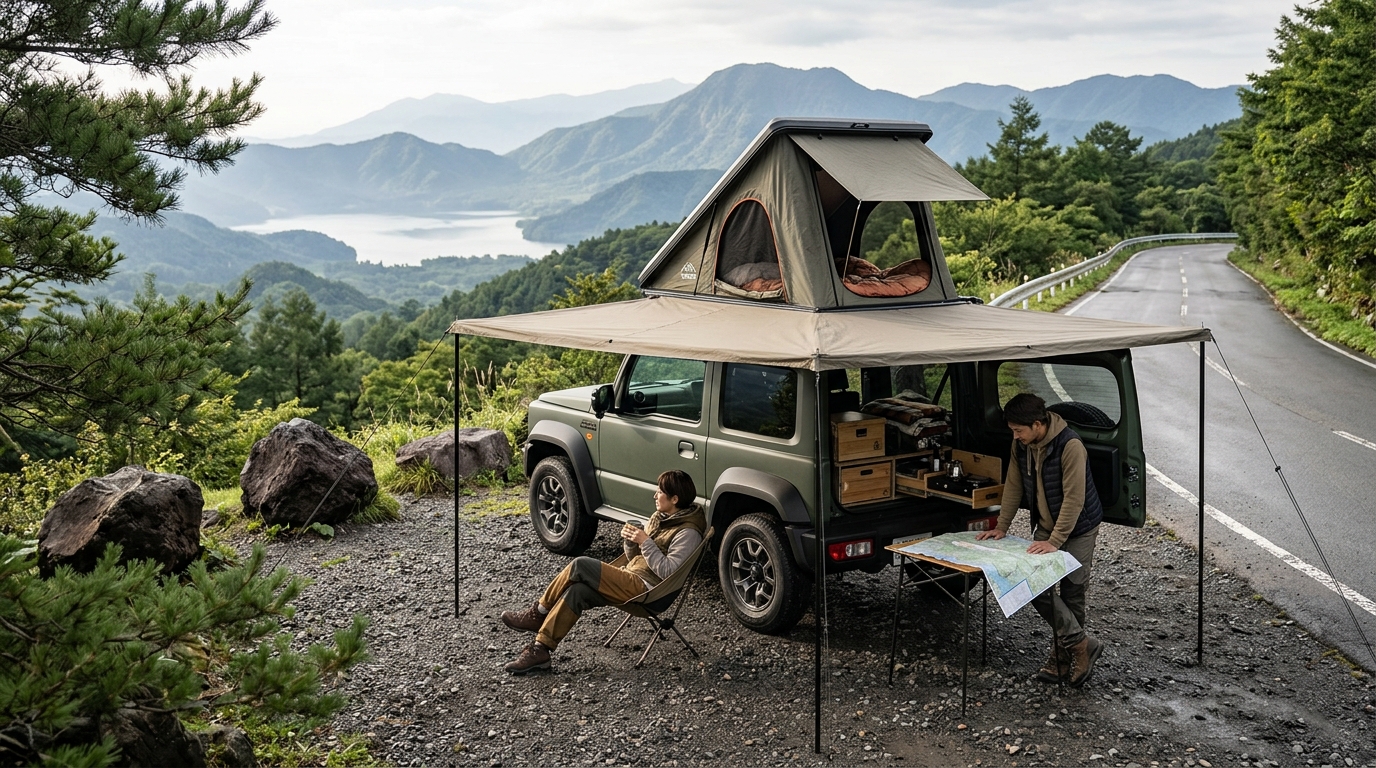
Japan is one of the most rewarding countries to explore by campervan. From coastal roads and mountain passes to hidden onsen towns and remote national parks, a camping car gives you freedom that trains and hotels simply cannot match. But renting a campervan here is not quite the same as picking up a standard rental car. There are licensing requirements, vehicle size considerations, equipment checklists, and insurance details you need to understand before you book. This guide covers everything you should evaluate when choosing a campervan rental for Japan travel.
1. Licensing and Legal Requirements
An International Driving Permit (IDP) is an official document that translates your home country driver's license and allows you to drive legally in Japan. The critical detail most travelers miss is that Japan only recognizes IDPs issued under the 1949 Geneva Convention. Permits issued under the 1968 Vienna Convention are not valid here.
You must obtain your IDP in your home country before arriving. Japan does not issue IDPs locally. When you pick up your vehicle, you will need to present three documents: your passport, your original home country driver's license, and your valid IDP. Drivers from Switzerland, Germany, France, Belgium, Monaco, and Taiwan follow a different process, requiring an official Japanese translation of their license from an organization like JAF (Japan Automobile Federation) instead of an IDP.
At Overland Campers Japan, all drivers must be at least 21 years old and present their physical license at pickup. Electronic or scanned copies are not accepted.
2. Choosing the Right Vehicle Type
The type of vehicle you choose will greatly affect both your comfort and your ability to navigate Japan's roads. Large motorhomes offer interior kitchens and bathrooms but can struggle on narrow rural roads, in tight parking lots, and at height-restricted facilities. Compact campervans and 4WD vehicles with roof-top tents strike a better balance for Japan's infrastructure.
Compact 4WD Campers
Vehicles like the Suzuki Jimny Sierra or Toyota FJ Cruiser are designed for maneuverability on narrow mountain roads while still providing a full camping setup. Check out the FJ Cruiser overland camper as an example of a vehicle that combines off-road capability with a rooftop tent and full kit.
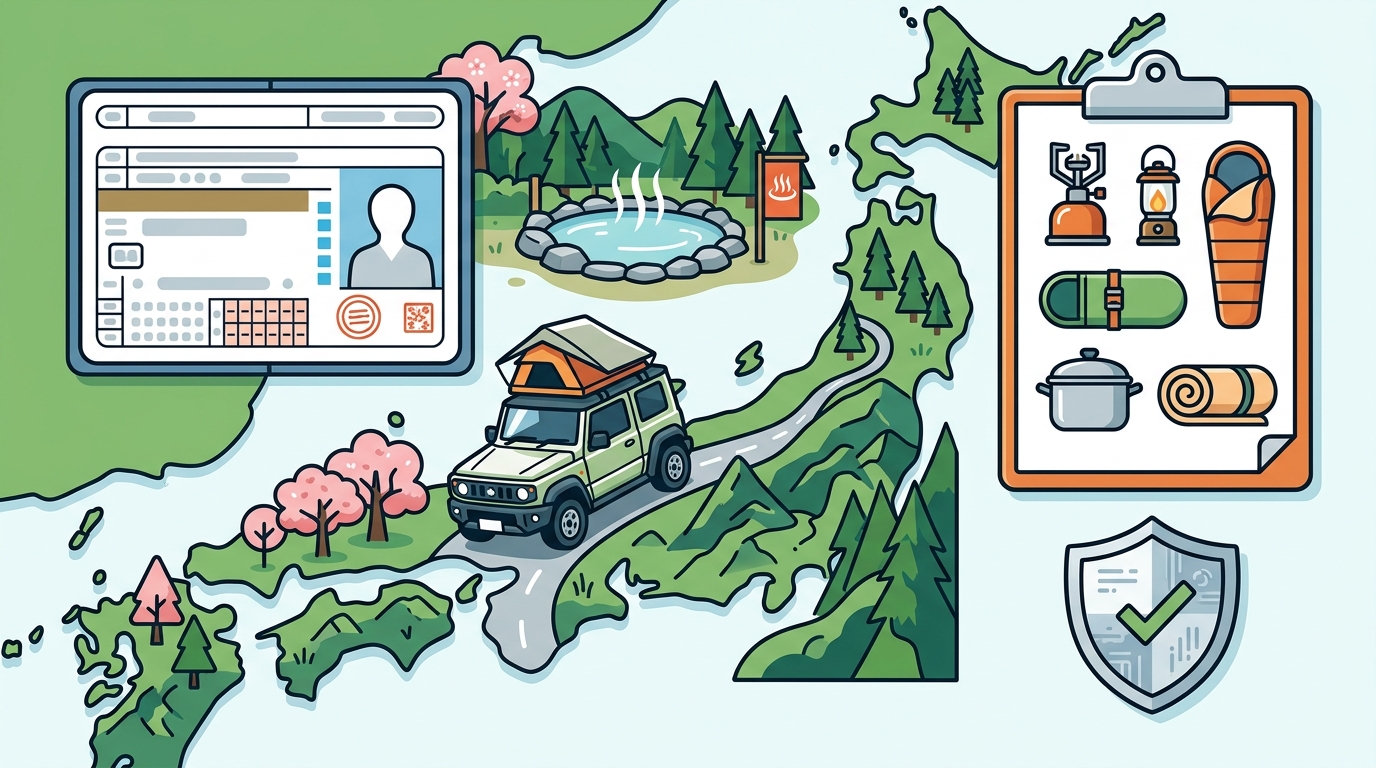
Full-Size Overland Vehicles
Larger platforms like the Land Rover Defender or Toyota Hilux offer more cargo capacity for families or longer trips. These are still far more practical on Japanese roads than bus-sized RVs, which can exceed 3 meters in height and create clearance problems at parking garages and service areas.
What to Ask About
When comparing vehicles, ask about passenger capacity, drivetrain (2WD vs. 4WD), tire setup (especially snow tires for winter), and whether the vehicle includes an automatic or manual transmission. Many international visitors prefer automatic, which is standard across the Overland Campers Japan Tokyo fleet.
3. Equipment and Camping Gear
A campervan rental is a camping equipment package that combines your vehicle, sleeping setup, cooking gear, and shelter into one booking. Not all rental companies include the same level of gear. Before you book, confirm what is included and what costs extra.
| Equipment Category | Essential Items | Check If Included |
|---|---|---|
| Sleeping | Roof-top tent, mattress, pillows, bedding | Often included with overland campers |
| Cooking | Stove, cookware, utensils, cooler/fridge | Varies by company |
| Shelter | Awning, tarp, rain cover | Sometimes optional |
| Connectivity | Pocket WiFi, phone mount | Usually an add-on |
| Toll Payment | ETC card | Important for highway travel |
| Child Safety | Child seat (required by law for under 6) | Must be requested in advance |
Overland Campers Japan includes a full camping kit with every rental and offers optional add-ons such as ETC cards, pocket WiFi, swag tents, child seats, and even a portable movie projector.
4. Insurance and Security Deposits
Insurance coverage is one of the most important factors to evaluate. Japanese compulsory automobile liability insurance (jibaiseki) is mandatory for all vehicles but only covers third-party bodily injury up to 30 million yen in the event of death. It does not cover property damage or your own injuries. Reputable campervan rental companies provide comprehensive voluntary insurance on top of this.
Ask about the excess (deductible) amount. For example, Overland Campers Japan requires a refundable security deposit of 200,000 yen at pickup, which is a partial amount of the total excess of 480,000 yen, or 220,000 yen if the extended waiver option is selected. Always consider purchasing your own travel insurance that covers rental vehicle excess as an additional layer of protection.
5. English Support and Customer Service
English-language support is a non-negotiable for most international travelers renting a campervan in Japan. Look for companies that offer English communication at every stage: booking, pickup demonstration, on-road support, and return.
A thorough vehicle briefing at pickup should take around 30 to 40 minutes. The best operators walk you through the tent setup, cooking equipment, vehicle controls, and emergency procedures. Some companies also provide demonstration videos and written safety guides you can reference during your trip. Overland Campers Japan provides this full check-in experience from their Yutenji/Naka-Meguro base in Tokyo, just six minutes from Shibuya.
6. Driving and Road Trip Practicalities
Japan drives on the left side of the road. Seatbelts are mandatory for all passengers, and using a mobile phone while driving is strictly prohibited. Speed limits are typically 80 to 100 km/h on expressways and 30 to 40 km/h in urban areas, according to Japan Guide.
Tolls and Highway Travel
Japan's expressway network charges tolls at each gate. An ETC (Electronic Toll Collection) card is a prepaid card system that lets you pass through toll gates without stopping. Tourists typically cannot acquire ETC cards independently, so ask your rental provider about availability. Overland Campers Japan offers ETC cards as an add-on where you simply pay for tolls after your trip.
Where to Sleep
Popular overnight options include auto-campsites, RV parks, and designated camping grounds. Michi-no-eki (roadside stations) offer restrooms and parking but overnight sleeping rules vary by location. For route inspiration, explore the Mt. Fuji camping car road trip itinerary or the Chiba coastal road trip guide.
7. Campervan vs. Standard Rental Car
| Factor | Standard Rental Car | Campervan / Overland Camper |
|---|---|---|
| Sleeping | None; hotel needed nightly | Built-in tent/bed; sleep anywhere permitted |
| Cooking | None | Stove, utensils, cooler included |
| Flexibility | Tied to hotel check-in times | Full schedule freedom |
| Rural Access | Good | Excellent with 4WD capability |
| Cost (week trip) | Car + 7 nights hotel | All-in-one rental; often lower total cost |
| Gear Included | None | Full camping kit provided |
For travelers planning to explore areas beyond the major tourist circuit, a campervan eliminates the daily stress of finding and booking accommodation while giving you access to coastlines, mountains, and rural onsen towns that are impractical by train.
Key Takeaways
- Obtain your IDP under the 1949 Geneva Convention before leaving your home country. Vienna Convention permits are not valid in Japan.
- Choose a vehicle sized for Japan's roads. Compact 4WD campers with roof-top tents outperform large motorhomes in most situations.
- Confirm what camping equipment is included. The best rentals are "ready to go" with sleeping, cooking, and shelter gear.
- Understand insurance terms, excess amounts, and security deposit requirements before you book.
- Prioritize rental companies that offer full English-language support from booking through return.
- Request an ETC card and pocket WiFi as add-ons for a smoother road trip experience.
- Plan overnight stops at campsites and check local rules for roadside sleeping before your trip.
Frequently Asked Questions
Do I need an International Driving Permit to rent a campervan in Japan?
Yes. Most international visitors need a valid IDP issued under the 1949 Geneva Convention along with their home country driver's license and passport. Drivers from Switzerland, Germany, France, Belgium, Monaco, and Taiwan need an official Japanese translation of their license instead.
What is the minimum age to rent a campervan in Japan?
It varies by company. Some require drivers to be 18 while others set the minimum at 21. Overland Campers Japan requires all drivers to be at least 21 years old at the time of pickup.
Is insurance included with campervan rentals?
Reputable companies include comprehensive insurance with every rental. However, you should always check the excess (deductible) amount and consider purchasing separate travel insurance that covers rental vehicle excess for additional peace of mind.
Can I drive a campervan on regular roads in Japan?
Yes. Most rental campervans, including compact 4WD vehicles with roof-top tents, are classified as standard vehicles and do not require a special license. Be mindful of vehicle height at parking garages and low-clearance structures.
Where can I legally sleep in a campervan in Japan?
Designated campsites and auto-camps are the safest and most reliable option. Rules around sleeping at michi-no-eki and public parking areas vary by location, so always check local signage and guidelines.
What extras should I add to my campervan rental?
An ETC card for highway tolls, pocket WiFi for navigation and connectivity, and a child seat if traveling with children under six are the most commonly recommended add-ons.
How far in advance should I book a campervan in Japan?
Book as early as possible, especially during peak seasons like Golden Week (late April to early May), summer (July to August), and autumn foliage season (October to November). Boutique operators with small fleets can fill up quickly.
Can I do a one-way campervan rental in Japan?
Some companies offer one-way rentals between locations for an additional fee. Overland Campers Japan now offers pickup from both Tokyo and Fukuoka, giving customers more flexibility for regional travel and one-way road trip options.
Start Your Japan Campervan Adventure
Ready to explore Japan beyond the usual tourist route? Browse the full vehicle lineup, check available dates, and send a booking enquiry at Overland Campers Japan. Every camper comes fully equipped with everything you need to hit the road, camp under the stars, and discover a side of Japan most visitors never see.