
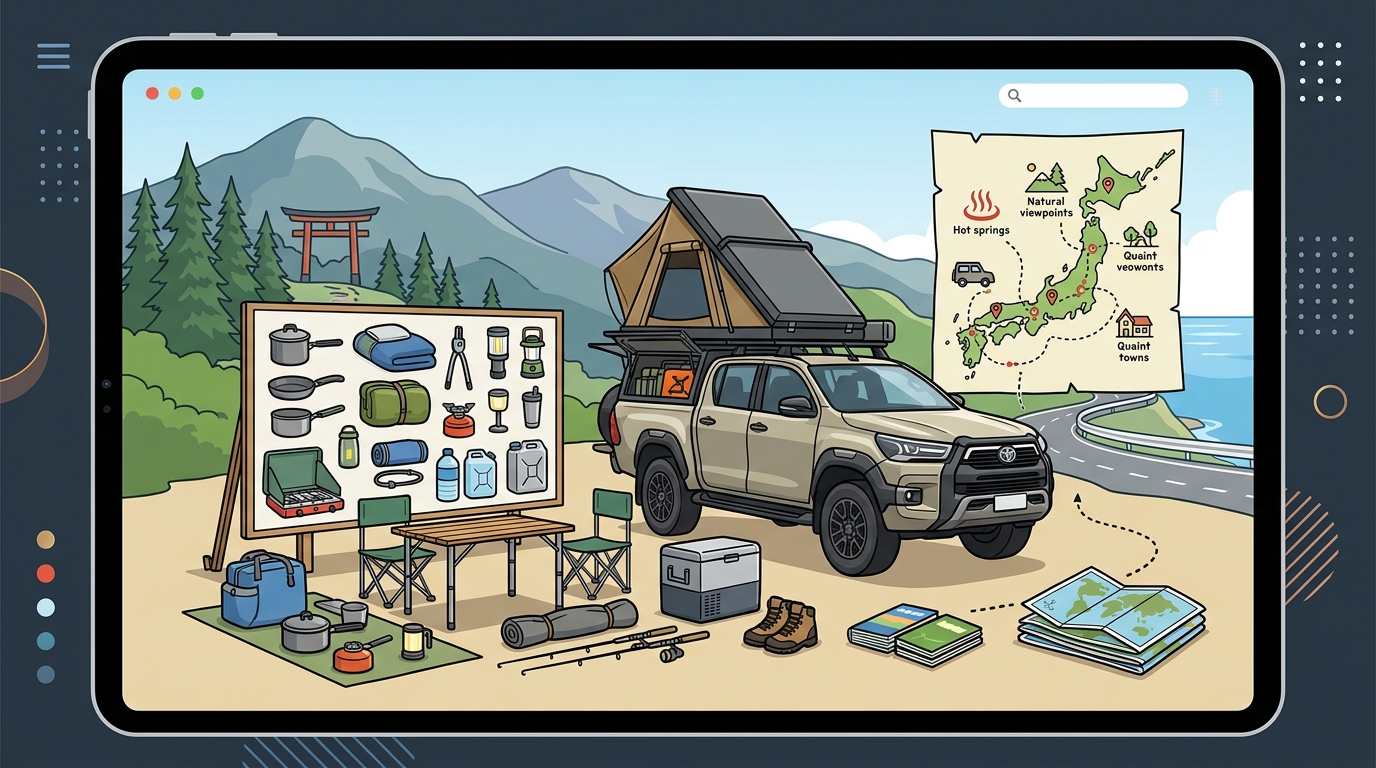
Can I Rent a Custom Campervan for a Road Trip in Japan?
Yes, you absolutely can, and it is one of the best ways to experience the country beyond the typical train-and-hotel route. Japan has a growing number of campervan and overland vehicle rental services designed specifically for international visitors. These providers offer fully equipped vehicles with rooftop tents, kitchens, bedding, and camping gear so you can explore rural coastlines, mountain passes, national parks, and onsen towns at your own pace. This guide covers everything you need to know: vehicle types, what is included, licensing requirements, pickup locations, and how to plan your first self-drive camping adventure in Japan.
What Is an Overland Campervan?
An overland campervan is a self-sufficient adventure vehicle fitted with sleeping, cooking, and living equipment for extended road travel. Unlike a traditional motorhome or RV, overland campers are typically built on compact 4x4 platforms that handle narrow mountain roads and standard-size Japanese parking spaces with ease.
Overlanding is a style of travel focused on the journey rather than the destination, combining self-drive freedom with camping in nature. In Japan, this means accessing hidden coastal villages, volcanic hot springs, and forest campsites that public transport simply cannot reach. Specialists like Overland Campers Japan have built their entire service around this concept, providing ready-to-go vehicles so travellers need only bring clothes and food.
Vehicle Options Available in Japan
The best custom campervan rental providers in Japan offer a curated fleet rather than a one-size-fits-all approach. Each vehicle is individually built with a specific travel style in mind.
| Vehicle | Seats | Sleeps | Best For |
|---|---|---|---|
| Suzuki Jimny Sierra | 2 | 2 | Couples, solo travellers |
| Toyota FJ Cruiser | 5 | 3 | Small families, groups |
| Land Rover Defender 130 | 5+ | 4 | Families, premium travellers |
All vehicles in the Overland Japan fleet are automatic transmission and right-hand drive, making them accessible for visitors from most countries. They are also sized to fit into regular Japanese car parks, although rooftop tents mean underground or covered parking is not possible.
What Is Included in a Custom Campervan Rental
A custom campervan rental is a fully outfitted vehicle that includes all the equipment you need for a self-sufficient road trip. The best providers distinguish themselves by the completeness and quality of their included gear.
Sleep and Shelter
Expect a premium rooftop tent with seasonal bedding, pillows, and climate-adaptive underlay. Awnings (180 or 270 degree) create a shaded living area beside the vehicle, and optional side walls offer privacy and weather protection.
Kitchen and Cooking
A proper mobile kitchen typically includes dual gas burners, a fridge, pots and pans, chef knives, cutting boards, cutlery, Italian coffee sets, and consumables like olive oil and foil. Overland Japan's setup has been praised by renters for offering more counter space than many Japanese apartments.
Power and Extras
Sub-battery systems provide electricity for charging phones, cameras, laptops, and drones. Optional add-ons such as ETC cards, pocket WiFi, child seats, swag tents, and movie projectors can further enhance the experience.
Driving License Requirements for Foreign Visitors
An International Driving Permit (IDP) is a translated document that allows you to drive legally in Japan alongside your home country license. Japan only recognizes IDPs issued under the 1949 Geneva Convention on Road Traffic. IDPs based on the 1968 Vienna Convention are not valid here.
If you are from the US, UK, Australia, Canada, or most European nations, you can obtain an IDP from your national automobile association before departure. Visitors from Germany, Switzerland, France, Belgium, Taiwan, or Monaco need an official JAF (Japan Automobile Federation) translation instead. Your IDP is valid for up to one year from your date of entry into Japan.
Always carry your IDP, original license, and passport together. According to the U.S. Embassy in Japan, you must obtain your IDP before arriving, as they cannot be issued within the country.
Pickup Locations: Tokyo and Fukuoka
Convenience of pickup matters when you are landing in a new country with luggage and jetlag. Overland Campers Japan operates from two bases designed for easy access.
The Tokyo base in Yutenji, Naka-Meguro sits just six minutes from Shibuya and fifteen from Shinjuku. Check-in takes roughly 30 to 40 minutes and includes a full vehicle walkthrough before departure. The Fukuoka base in Fukuma is well connected to central Fukuoka and Fukuoka Airport, opening up Kyushu's coastlines, volcanoes, and hot spring regions. One-way rentals between the two locations are also available, giving travellers flexibility for longer itineraries.
Where to Camp and Sleep in Japan
Japan offers a surprising number of places to park and sleep in an overland camper. A michi-no-eki (roadside station) is a government-operated rest facility with free parking and 24-hour restrooms found across the country. Overnight parking is generally accepted for a single night, though setting up chairs or fires is not permitted.
Paid campsites range from basic forest clearings to well-equipped auto-camp grounds with power hookups, showers, and fire pits. Overland Japan provides complete itinerary guides for popular routes including Mt. Fuji, Chiba, and weekend microadventures from Tokyo. Public onsen hot springs are widely available and are the recommended way to bathe during a camping trip, with day-use fees typically ranging from 1,000 to 1,300 yen.
Key Takeaways
- You can rent a fully equipped custom campervan in Japan from providers like Overland Campers Japan, with pickup in Tokyo or Fukuoka.
- Vehicles include 4x4 platforms such as the Suzuki Jimny Sierra, Toyota FJ Cruiser, and Land Rover Defender, all with rooftop tents and complete camping kits.
- Everything from bedding and kitchen gear to a sub-battery power system is included; just bring clothes and food.
- Foreign visitors need a valid IDP issued under the 1949 Geneva Convention (or a JAF translation for select countries) before arriving in Japan.
- Japan drives on the left side of the road, and all rental campers are automatic transmission and right-hand drive.
- Michi-no-eki roadside stations, auto-camp grounds, and public onsen make overnight camping practical and comfortable across the country.
- One-way rental options between Tokyo and Fukuoka enable longer, more flexible road trip itineraries.
Frequently Asked Questions
Do I need a special license to rent a campervan in Japan?
No special license is required. Short-term visitors need a valid International Driving Permit issued under the 1949 Geneva Convention, plus their original home country license and passport. Visitors from Germany, France, Switzerland, Belgium, Taiwan, or Monaco need a JAF translation instead of an IDP.
Are custom campervans in Japan automatic or manual?
All vehicles in the Overland Campers Japan fleet are automatic transmission, making them easy to drive even if you are unfamiliar with Japanese roads.
What is included in a campervan rental?
A premium rental includes a rooftop tent with seasonal bedding, a full kitchen setup with gas burners and fridge, an awning, camping chairs, tables, lighting, a sub-battery power system, and more. You only need to bring personal clothing, toiletries, and food.
Can I pick up a campervan in Tokyo and drop it off in Fukuoka?
Yes. Overland Campers Japan now offers one-way rental options between its Tokyo and Fukuoka bases, making cross-country road trips through Honshu and Kyushu practical for visitors.
Where can I sleep overnight in a campervan in Japan?
Options include michi-no-eki roadside stations (generally one night, no external setup), paid auto-camp grounds, and campsite facilities. Many travellers also use public onsen for bathing, which are available throughout the country.
Is it safe to drive in Japan as a foreign tourist?
Japan has well-maintained roads, clear signage (often bilingual), and very low traffic accident rates compared to most Western countries. Remember that Japan drives on the left, enforces near-zero alcohol tolerance for drivers, and has strict speed limits on expressways.
How far in advance should I book a campervan?
Booking at least two to four weeks ahead is recommended, especially during peak seasons like Golden Week (late April to early May), Obon (mid-August), and autumn foliage season (October to November). Overland Japan's fleet is boutique-sized, so early reservation ensures availability.
Can families with young children rent a campervan?
Yes. Child seats are available as optional add-ons and are required by Japanese law for children under 6. Larger vehicles like the Toyota FJ Cruiser and Land Rover Defender comfortably seat families of four to five.
Start Planning Your Japan Road Trip
Ready to explore Japan beyond the guidebook? Browse the full range of custom-built overland campers, check availability, and submit a reservation request to get a personalized quote. Your adventure starts the moment you pick up the keys.