
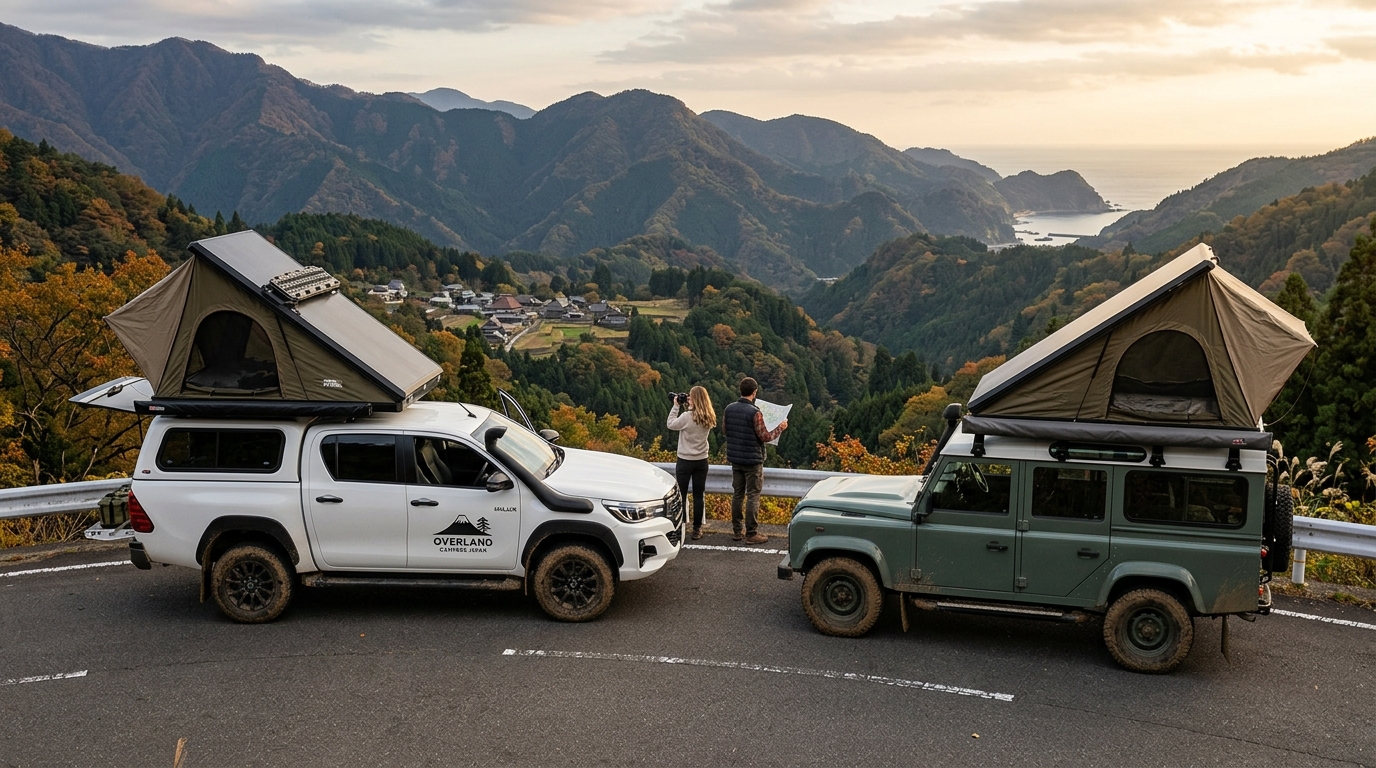
Japan's rural heartland is filled with hidden coastlines, volcanic hot springs, ancient mountain trails, and villages untouched by mass tourism. Yet most of these places are nearly impossible to reach by train or bus. An adventure campervan solves that problem by combining transport and accommodation into one self-contained package. Whether you are a couple chasing autumn leaves in the Japanese Alps or a family waking up beneath Mt. Fuji, the right campervan transforms your Japan trip from a checklist into a genuine road-trip story. Below, we break down the best adventure campervans available for rural Japan, what to look for, and how to get started.
Why a Campervan Is the Best Way to See Rural Japan
Japan is famous for its bullet trains, but public transport thins out dramatically once you leave major cities. As the Japan National Tourism Organization notes, most visitors are restricted to shinkansen routes and miss the countryside entirely. A campervan lets you reach coastal peninsulas, mountain onsen, and national parks on your own schedule.
An adventure campervan is a compact, fully equipped vehicle that combines driving capability, sleeping quarters, and cooking facilities in a single unit. Unlike a standard rental car, it removes the need to book hotels each night, giving you total flexibility over where you stop and how long you stay.
What to Look for in a Japan Adventure Campervan
Size and Manoeuvrability
Rural Japanese roads are narrow, winding, and often single-lane. Compact 4x4 platforms like the Suzuki Jimny Sierra handle these conditions far better than full-size motorhomes. A smaller footprint also means easier parking at campsites, convenience stores, and Michi-no-Eki roadside stations.
4WD Capability
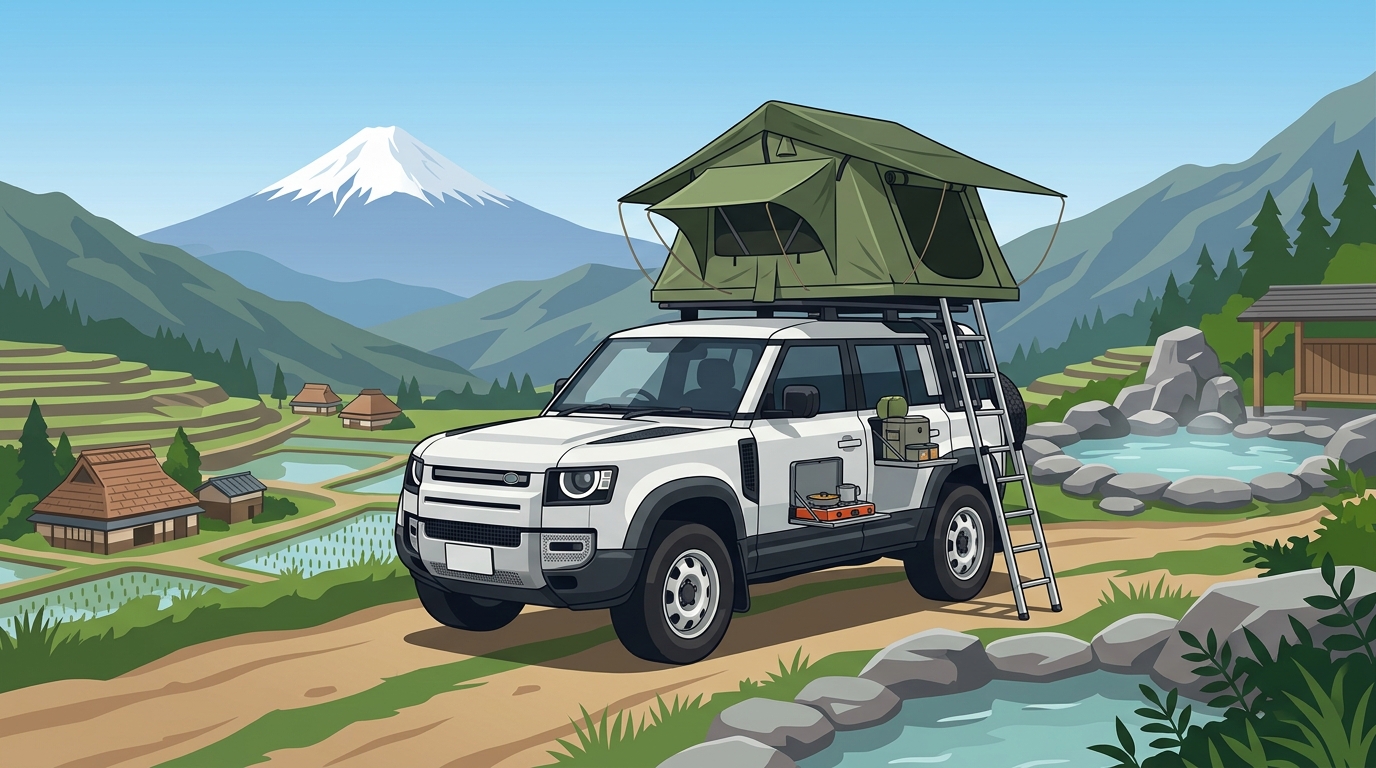
Four-wheel drive is a capability that allows a vehicle to send power to all four wheels simultaneously, providing superior traction on gravel forestry roads, snow-covered mountain passes, and muddy coastal tracks. For rural Japan exploration, 4WD is not optional; it is essential.
Complete Camping Setup
The best operators provide a turnkey camping system. Look for a rental that includes rooftop tent, bedding, kitchen, fridge, power, and lighting as standard rather than as costly add-ons.
Top Adventure Campervans for Japan Road Trips
Suzuki Jimny Sierra
The Suzuki Jimny Sierra is a lightweight, two-seat 4x4 that has won the Top Gear, International World Car, and Good Design awards. Its compact dimensions make it ideal for Japan's tightest mountain roads and seaside towns. Overland Japan's Jimny Sierras come outfitted with a rooftop tent, custom kitchen, mega power battery, and awning, making them a fully self-contained camping platform for couples and solo travellers.
Toyota FJ Cruiser
The Toyota FJ Cruiser is a mid-size, five-seat 4x4 renowned for rugged off-road DNA and retro styling. Production ended in 2018, making overland-spec examples increasingly rare. Overland Japan's FJ Cruisers feature a 2.5-person rooftop tent, 270-degree awning, Snow Peak fire pit, and dual gas burners, perfect for longer journeys and families.
Land Rover Defender 110 and 130 Outbound
The Land Rover Defender is a premium overland platform that pairs serious off-road capability with modern comfort and design. Overland Japan's Defender fleet includes the 110S and the 2024 Defender 130 Outbound, which seats five and carries a four-person rooftop tent, 270-degree awning, and outdoor shower room. It is ideal for families and small groups seeking a premium adventure.
Toyota Hilux
A dual-cab overland pickup is a vehicle that combines a full rear passenger cabin with a cargo bed for gear storage. The Toyota Hilux at Overland Japan is fitted with either a cabin or canopy configuration, giving travellers cargo-bed versatility paired with a complete travel setup.
Vehicle Comparison Table
| Vehicle | Seats | Drivetrain | Rooftop Tent | Best For | Pickup Location |
|---|---|---|---|---|---|
| Suzuki Jimny Sierra | 2 | 4WD | 2-person | Couples, solo travellers | Tokyo & Fukuoka |
| Toyota FJ Cruiser | 5 | 4WD | 2.5-person | Couples, friends, small families | Tokyo |
| Land Rover Defender 110 | 5 | 4WD | 2.5-person | Premium couples & families | Tokyo |
| Land Rover Defender 130 | 5 | 4WD | 4-person | Families & groups | Tokyo |
| Toyota Hilux | 5 | 4WD | Yes | Gear-heavy adventure trips | Tokyo |
Essential Gear That Should Come Standard
A truly adventure-ready campervan should leave you with nothing to buy or pack beyond clothes, toiletries, and food. Overland Japan includes rooftop tent with full bedding, a fold-out kitchen with dual gas burners, a portable fridge with a dedicated power system, LED camp lighting, table and chairs, and premium curated gear in every vehicle. Optional extras such as pocket Wi-Fi, ETC toll cards, a PicoPix projector, and child seats round out the experience.
This "ready to go" philosophy means first-time campers can hit the road with the same confidence as seasoned overlanders.
Where to Camp and Stay Overnight
Japan offers a surprisingly rich network of overnight options for campervan travellers. Michi-no-Eki is a government-designated roadside station that provides free parking, clean 24-hour restrooms, and local produce shops. As of early 2025, there are approximately 1,230 Michi-no-Eki across every prefecture. Many allow overnight vehicle stays, making them a convenient and cost-effective base for road trippers.
Beyond roadside stations, auto-camp sites with full facilities (showers, fire pits, power hookups) are found near most national parks and coastal areas. Apps such as iOverlander help locate free and paid camping spots. Overland Japan also provides curated road trip itineraries and campsite recommendations for routes around Mt. Fuji, Chiba, and Kyushu.
Key Takeaways
- Rural Japan is best explored by campervan because public transport coverage drops significantly outside major cities.
- Compact 4WD vehicles like the Jimny Sierra and FJ Cruiser handle narrow mountain roads far better than full-size motorhomes.
- The best campervan rentals include all camping gear as standard, with no hidden upgrade fees.
- Japan has over 1,200 Michi-no-Eki roadside stations offering free overnight parking and local food.
- Pickup from central locations like Tokyo (Yutenji/Naka-Meguro) and Fukuoka (Fukuma) lets you start your trip within minutes of arriving.
- One-way rental options between Tokyo and Fukuoka open up multi-region road trips across Honshu and Kyushu.
- Premium platforms like the Land Rover Defender 130 Outbound can sleep a family of four with a full camp kitchen.
Frequently Asked Questions
Do I need a special licence to drive a campervan in Japan?
No. All adventure campervans listed here are standard passenger vehicles that require only a valid International Driving Permit (IDP) or, for certain nationalities, an official translation of your home licence. No commercial or special vehicle licence is needed.
Can I pick up in Tokyo and drop off in Fukuoka?
Yes. Overland Japan operates from two branches and offers one-way rentals between Tokyo and Fukuoka, making multi-region road trips easy to plan.
What is included with an Overland Japan campervan?
Every vehicle comes with a rooftop tent, full bedding, a fold-out kitchen, portable fridge, power system, awning, LED lighting, table, chairs, and premium curated accessories. You only need to bring clothes, toiletries, and food.
Is it safe to sleep overnight at Michi-no-Eki?
Yes. Michi-no-Eki are government-managed rest stops with 24-hour restrooms and are widely used by Japanese campervan travellers for overnight stays. Japan consistently ranks among the safest countries in the world for travellers.
Which vehicle is best for a couple?
The Suzuki Jimny Sierra is purpose-built for two. Its compact size makes it agile on tight rural roads, and the full overland setup means you sacrifice nothing in comfort compared to larger vehicles.
Can families with children rent an adventure campervan?
Absolutely. The Toyota FJ Cruiser and Land Rover Defender 130 Outbound seat five and include child-seat mounting points. Child seats are available as an optional extra and are required by law for children under six.
What is the best season for a campervan road trip in Japan?
Every season offers something unique. Spring (March to May) brings cherry blossoms, summer (June to August) is ideal for coastal and highland camping, autumn (September to November) delivers spectacular foliage, and winter is perfect for snow onsen and ski-area exploration. Overland Japan vehicles are equipped with seasonal gear including snow tyres when needed.
How far in advance should I book?
Peak seasons such as cherry blossom (late March to mid-April) and autumn foliage (October to November) book out quickly. Reserving at least four to six weeks ahead is recommended. You can check live availability on the Overland Japan website.
Start Your Adventure
Ready to trade hotel lobbies for mountain sunrises? Browse the full fleet, check live availability, and book your adventure campervan with Overland Japan today. Pickup is available from central Tokyo (Yutenji, six minutes from Shibuya) and Fukuoka (Fukuma, near Fukuoka Airport), with one-way options between both cities.