
How to Compare Campervan Rental Options for a Japan Vacation
Choosing a campervan rental in Japan can feel overwhelming. Dozens of operators offer everything from basic kei vans to premium overland-equipped 4x4s, and prices swing from under ¥10,000 to well over ¥30,000 per night. The right pick depends on your group size, route, comfort expectations, and how much gear you want to pack yourself. This guide walks you through the key factors to compare so you can book with confidence and spend your time exploring Japan's coastlines, mountains, and hidden onsen towns rather than second-guessing your rental.
1. Understand Vehicle Types Available in Japan
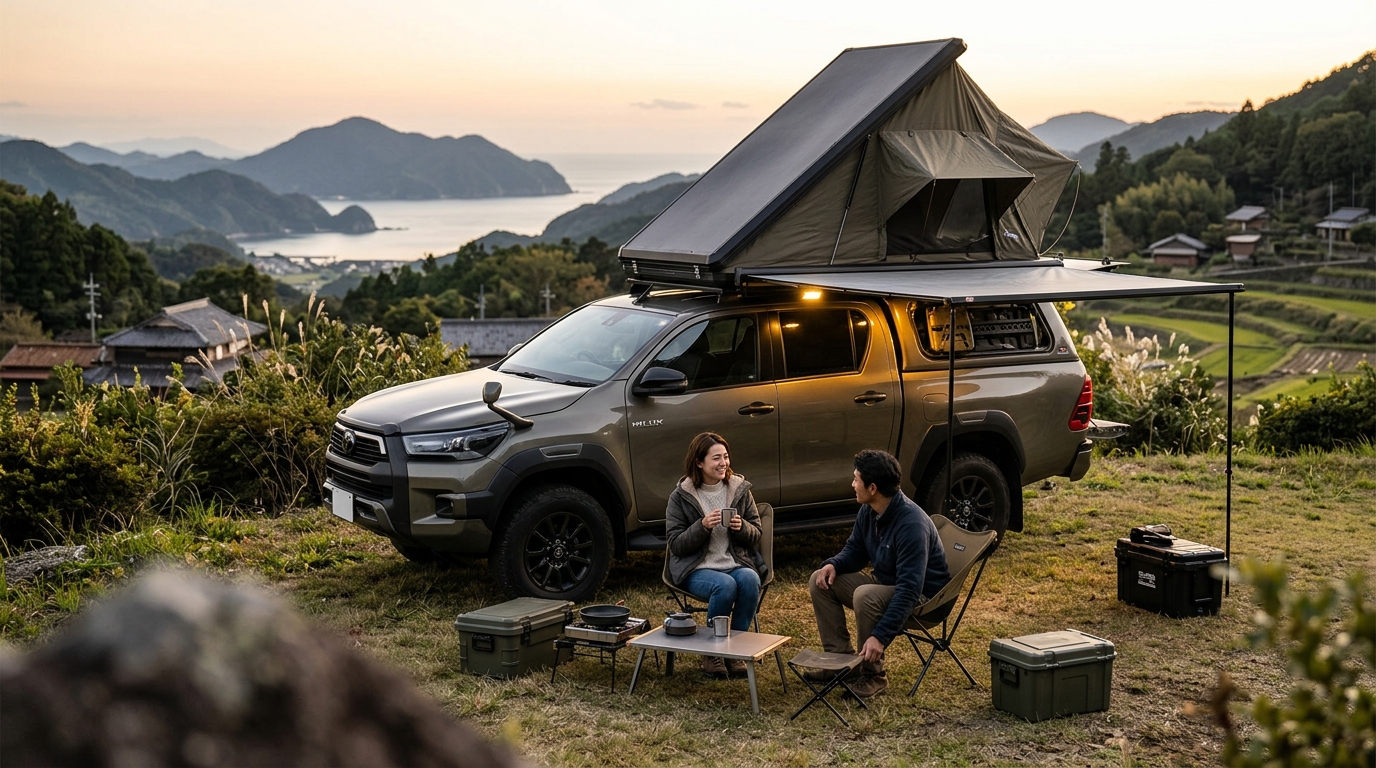
Campervan is a broad term in Japan. It covers converted kei vans, mid-size Hiace-based campers, full-size motorhomes, and 4x4 overland vehicles with rooftop tents. An overland camper is a rugged, off-road-capable vehicle fitted with a rooftop tent, kitchen system, power supply, and full camping gear for self-sufficient travel. The vehicle type you choose shapes every aspect of your trip, from which roads you can access to where you can park.
Compact 4x4s like the Suzuki Jimny Sierra are ideal for Japan's narrow mountain roads and tight rural parking. Larger options such as the Toyota FJ Cruiser or the Land Rover Defender 110S offer more interior space and presence while still fitting standard parking bays. Full-size RVs provide the most living space but struggle on rural roads that are often under 2.5 metres wide.
2. Compare What Is Actually Included
This is the single biggest differentiator between rental operators. Some companies provide a bare vehicle and charge extra for bedding, kitchen gear, fridges, chairs, and tables. Others deliver a complete setup from day one. A fully equipped rental is one where the rooftop tent, bedding, kitchen, fridge, power system, lighting, and outdoor furniture are all included in the base price with no add-on charges.
Inclusion Comparison Table
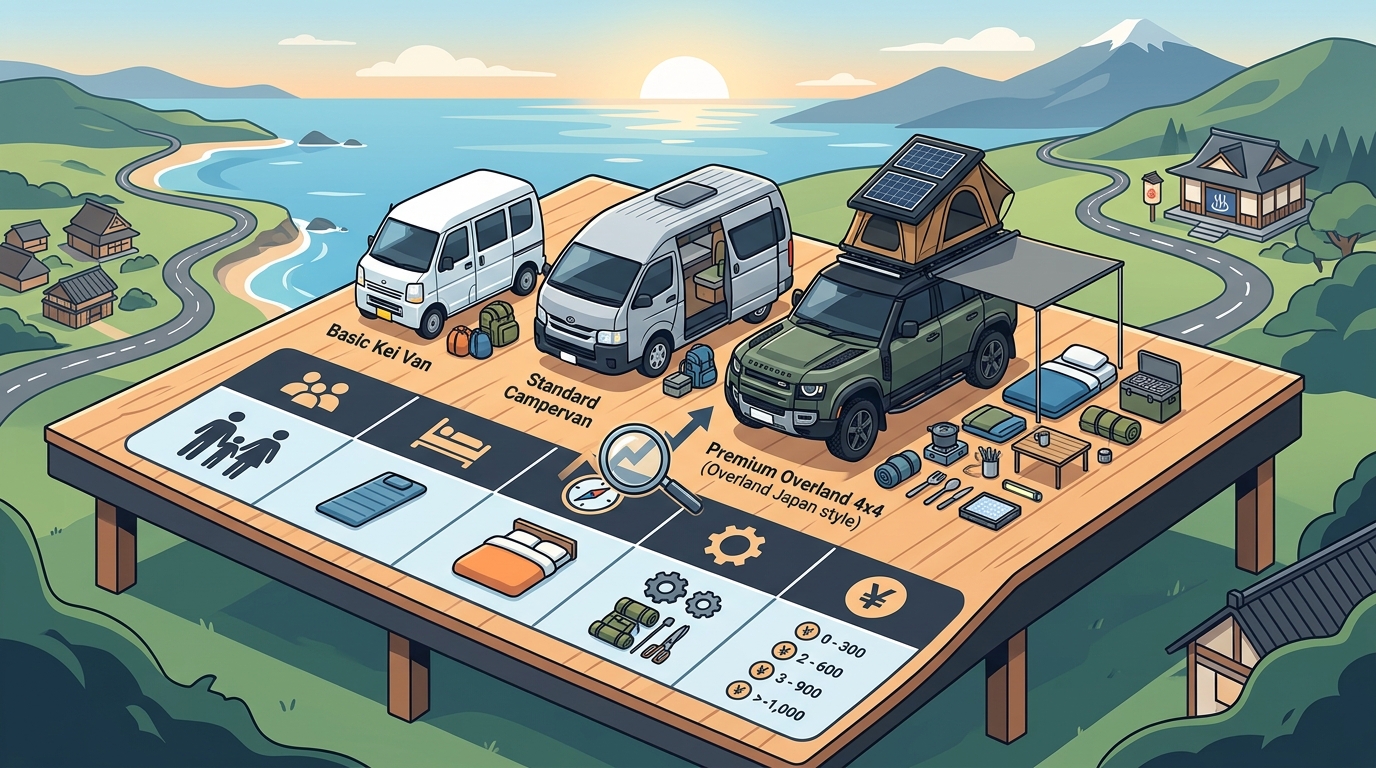
| Feature | Budget Campervan | Mid-Range Campervan | Premium Overland (e.g. Overland Japan) |
|---|---|---|---|
| Rooftop or interior bed | Basic mattress | Included | Premium rooftop tent + seasonal bedding |
| Kitchen / cooking gear | Optional add-on | Partial | Gas stove, pots, knives, cutting board, coffee set included |
| Fridge | Not included | Small cooler | Powered fridge included |
| Sub-battery / power | Cigarette lighter only | Basic inverter | Full sub-battery for phones, laptops, cameras |
| Outdoor furniture | Not included | Add-on fee | Table, chairs, awning included |
| Mileage | 100-150 miles/day cap | Varies | Check per vehicle |
At Overland Campers Japan, every vehicle comes fully equipped with a rooftop tent, kitchen, fridge, power system, lighting, outdoor setup, and premium curated gear. There are no upgrades or hidden extras to purchase.
3. Break Down Pricing and Hidden Fees
Daily rental rates in Japan typically range from ¥7,000 for a basic kei van to ¥30,000 or more for a premium setup. But the sticker price rarely tells the full story. Watch for these common extras that inflate your total cost:
- Insurance tiers: Basic coverage is usually included, but reduced-liability upgrades often cost ¥2,000 to ¥5,000 per day.
- Mileage caps: Some operators limit daily distance to 100 to 150 miles, with overage fees on top.
- Equipment add-ons: Bedding, cooking kits, chairs, and child seats can add ¥1,000 to ¥3,000 each.
- Holiday surcharges: Peak periods like Golden Week, cherry blossom season, and autumn foliage often carry premium pricing.
Before comparing headline rates, request a full quote that itemises insurance, mileage, equipment, and any seasonal surcharges. Check the Overland Japan extras page for an example of transparent optional add-on pricing where core gear is already included.
4. Evaluate Pickup Locations and Flexibility
Most campervan rental companies operate from Tokyo or Osaka. A growing number now offer pickup in secondary cities, which can save you a full day of driving. Overland Campers Japan, for instance, offers check-in from both Tokyo (Yutenji, Meguro) and Fukuoka, giving travellers one-way road trip options between regions.
When comparing operators, ask whether one-way rentals are available and what the drop-off fee looks like. A Fukuoka pickup lets you explore Kyushu's coastal roads and hot springs without backtracking to Tokyo.
5. Confirm Driving and License Requirements
An International Driving Permit (IDP) is a document issued under the 1949 Geneva Convention that allows foreign licence holders to drive legally in Japan. Most international visitors will need one, along with their passport and home-country licence. Some nationalities, including those from Switzerland, Germany, and France, need an official Japanese translation of their licence instead.
Confirm these requirements with your chosen rental company before booking. The Japan Automobile Federation (JAF) provides authoritative details on which countries qualify for each method. Also check the Overland Japan FAQ page for practical guidance on licences, parking height restrictions, and vehicle capacity.
6. Know Your Overnight Parking Options
Where you sleep each night is as important as the vehicle itself. Japan offers several categories of overnight accommodation for campervan travellers:
Auto Campgrounds
Japan has over 1,000 designated auto camp sites with facilities like power hookups, water, showers, and toilets. Prices typically run ¥2,000 to ¥5,000 per night. Book ahead during peak seasons. Browse ideas on the Mt Fuji camping car road trip guide for curated campground recommendations.
Michi-no-Eki (Roadside Stations)
Japan's network of over 1,200 Michi-no-Eki roadside stations offers free 24-hour parking and clean restrooms. Overnight resting in your vehicle is generally tolerated, but these are rest facilities, not campgrounds. Do not set up tables, chairs, or cooking gear outside. Arrive late, leave early, and limit yourself to one night per station.
RV Parks
A newer option, RV parks provide power outlets, trash disposal, and a legal right to stay overnight. Around 50 Michi-no-Eki stations now have adjacent paid RV parks, and the network is growing.
Key Takeaways
- Match your vehicle size to Japan's roads. Compact 4x4s handle narrow rural lanes and standard parking far better than full-size motorhomes.
- Compare total cost, not just the daily rate. Add insurance, mileage caps, equipment fees, and seasonal surcharges to get the real number.
- Check what gear is included. A fully equipped rental saves packing time and avoids surprise add-on costs at pickup.
- Verify your driving documents early. Most visitors need an IDP issued under the 1949 Geneva Convention.
- Book campsites in advance during cherry blossom, Golden Week, and autumn foliage seasons.
- Respect Michi-no-Eki etiquette: arrive after hours, keep setup inside the vehicle, and move on by morning.
- Consider one-way rental options to maximise your route without backtracking.
Frequently Asked Questions
What is the average cost of renting a campervan in Japan?
Daily rates range from about ¥7,000 for a basic kei van to ¥30,000 or more for a fully equipped premium overland vehicle. Factor in insurance, fuel, tolls, and campground fees when budgeting your trip.
Do I need a special licence to drive a campervan in Japan?
No special licence class is needed for standard campervans. Most international visitors require an International Driving Permit (IDP) based on the 1949 Geneva Convention, plus their home-country licence and passport.
Can I sleep at Michi-no-Eki roadside stations for free?
Resting in your vehicle overnight is generally tolerated at most Michi-no-Eki, but officially they are rest stops, not campgrounds. A growing number of stations near tourist areas now post signs prohibiting overnight stays, so always check signage on arrival.
What should be included in a good campervan rental?
Look for a rooftop or interior bed with bedding, a kitchen setup with stove and cookware, a powered fridge, a sub-battery system, outdoor furniture, and lighting. Premium operators include all of this in the base price.
Is it hard to drive a campervan on Japanese roads?
Japan drives on the left, and rural roads can be narrow. Smaller campervans and compact 4x4s are significantly easier to handle than full-size RVs. Automatic transmission is standard across most rental fleets.
Can I do a one-way campervan rental in Japan?
Some operators offer one-way rentals between cities. Overland Campers Japan, for example, supports trips between their Tokyo and Fukuoka locations, opening up cross-regional road trip routes.
When should I book my Japan campervan rental?
Book as early as possible, especially for travel during cherry blossom season (late March to mid-April), Golden Week (late April to early May), summer holidays (July to August), and autumn foliage (October to November).
What is the best vehicle size for a couple travelling Japan?
A compact 4x4 with a rooftop tent, such as a Suzuki Jimny Sierra, is ideal for two people. It handles all road types, parks easily, and comes fully equipped for camping at a lower price point than larger vehicles.
Start Comparing and Book Your Japan Road Trip
Ready to narrow down your options? Explore the full Overland Campers Japan vehicle range, see exactly what is included with each camper, and request a quote for your travel dates. Every vehicle is fully equipped and ready to go from the moment you arrive in Tokyo or Fukuoka.