
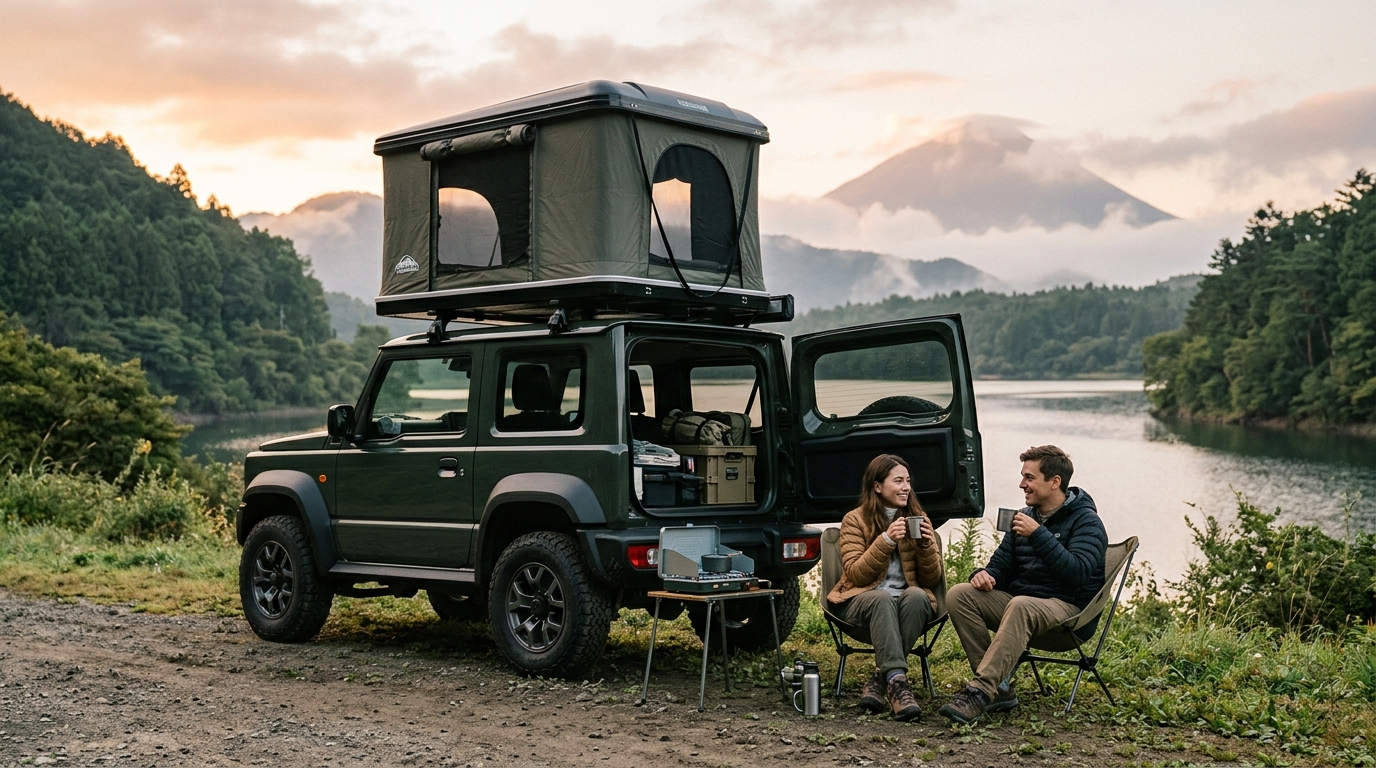
A camper van road trip is one of the best ways to experience Japan beyond the bullet trains and busy cities. With 3 to 5 days on the road, you can reach hidden coastlines, volcanic highlands, remote onsen towns, and national parks that most visitors never see. Japan's roads are exceptionally well maintained, crime rates are among the lowest in the world, and a network of roadside stations called Michi-no-Eki provides free parking, clean restrooms, and local food around the clock. This guide covers everything you need to plan your ideal short road trip, from choosing a vehicle and picking a route to practical tips for camping, driving, and making the most of every day.
Why a Camper Van Is the Best Way to Road Trip Japan
A camper van road trip is a self-drive travel style that combines transportation and accommodation in one vehicle, giving you complete freedom over your schedule and destination. Unlike rail passes that lock you into station-to-station travel, a camper van lets you stop at a waterfall, detour to a coastal campsite, or linger at an onsen town without worrying about check-in times.
Japan has over 1,200 Michi-no-Eki roadside stations spread across the country, many with hot springs, regional food stalls, and scenic overlooks. These make overnight stops practical and enjoyable. For travellers who want to explore rural Japan, mountains, and coastlines that public transport cannot easily reach, a camper van is the clear winner.
Choosing the Right Vehicle for 3–5 Days
The vehicle you choose directly affects comfort, manoeuvrability, and the types of roads you can access. A compact 4x4 like the Suzuki Jimny Sierra is ideal for couples who want to navigate narrow mountain roads and park easily in small towns. For families or groups of up to five, a mid-size platform like the Toyota FJ Cruiser provides more space without sacrificing off-road capability.
If you want premium comfort and extra room for longer stays, the Land Rover Defender 110 or Defender 130 Outbound deliver serious capability paired with high-end camping equipment. For those seeking cargo-bed versatility, the Toyota Hilux overland camper is a strong option.
| Vehicle | Best For | Sleeps | Highlights |
|---|---|---|---|
| Suzuki Jimny Sierra | Couples, solo | 2 | Compact 4x4, nimble on narrow roads, excellent fuel economy |
| Toyota FJ Cruiser | Couples, small families | 2–3 | Mid-size 4x4, custom kitchen, 270-degree awning |
| Land Rover Defender 110 | Couples, families | 2–3 | Premium build, shower room, mega power battery |
| Defender 130 Outbound | Families, groups | Up to 4 | 4-person roof tent, maximum interior space |
| Toyota Hilux | Groups, adventurers | 2–4 | Dual-cab pickup, cargo-bed versatility |
Top Routes for a 3–5 Day Trip
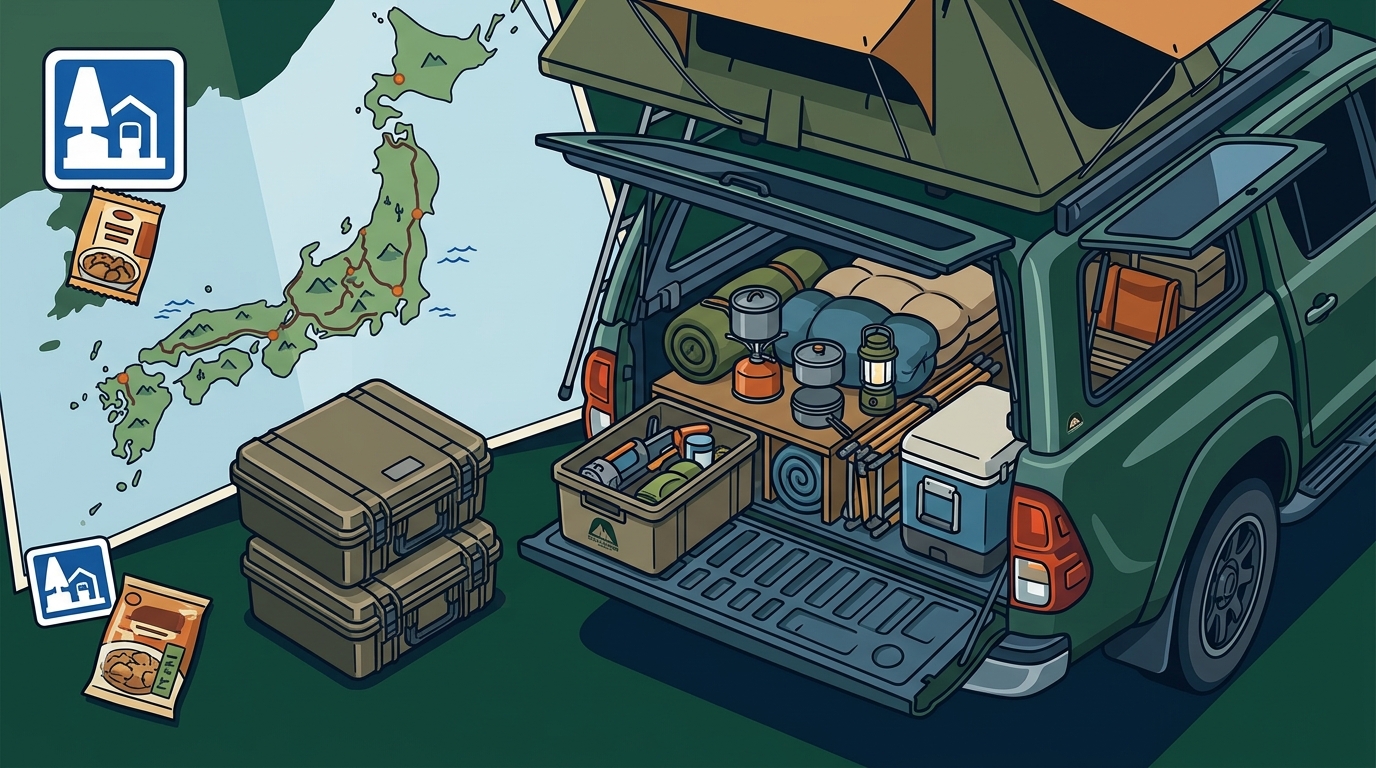
From Tokyo: Mt Fuji, Hakone, and the Izu Peninsula
Pick up your camper from the Tokyo base in Yutenji, just six minutes from Shibuya, and head southwest. Day one takes you through the Fuji Five Lakes area for iconic volcano views. Day two, drop into Hakone for hot springs and Lake Ashi. Days three to five, follow the Izu coastline for dramatic sea cliffs, hidden beaches, and fresh seafood. Total driving distance is roughly 350 to 450 km, with manageable 1 to 2 hour daily drives.
From Tokyo: The Japanese Alps via Matsumoto and Takayama
Head northwest toward Matsumoto Castle, then continue to the alpine valley of Kamikochi and the traditional merchant town of Takayama. This route is especially rewarding in spring (April to June) and autumn (September to November) when mountain scenery peaks. Expect around 500 to 600 km over 4 to 5 days.
From Fukuoka: Kyushu Coastal and Volcano Loop
Starting from the Fukuoka base, drive east to Beppu's famous hot springs, south to the volcanic caldera of Aso, and loop back via the Kunisaki Peninsula. Kyushu offers warmer weather, less traffic, and dramatic volcanic landscapes. This loop covers about 400 km and is perfect for 3 to 4 days.
For more curated ideas, explore the Japan road trip itinerary ideas page.
Where to Camp and Stay Overnight
A Michi-no-Eki is a government-designated roadside station that offers free parking, clean 24-hour restrooms, vending machines, and often a small shop or restaurant. Japan has over 1,200 of these stations, and many camper van travellers use them as convenient overnight stops. Note that Michi-no-Eki are not official campsites, so setting up chairs and tables outside is generally discouraged.
For a full camping experience, Japan is home to over 3,000 public and private campsites. Campsite fees are typically modest, averaging around 2,000 to 5,000 yen per night. Many campsites include shower facilities, fire pits, and scenic mountain or lakeside settings. Day-use onsen (hot spring baths) are widely available throughout the country and cost between 500 and 1,500 yen per visit, making them an easy addition to any road trip day.
Driving Tips and Licence Requirements
An International Driving Permit (IDP) is a document issued under the 1949 Geneva Convention that authorises you to drive in Japan for up to one year from your date of arrival. You must carry your IDP, your valid home-country licence, and your passport at all times while driving. Citizens of Switzerland, Germany, France, Belgium, Monaco, and Taiwan can instead obtain a Japanese translation of their licence.
Japan drives on the left side of the road, and all vehicles in the Overland Japan fleet are automatic transmission and right-hand drive. Speed limits are strictly enforced, typically 30 to 40 km/h in urban areas and 80 to 100 km/h on expressways. Expressway tolls add up, so budget approximately 5,000 to 10,000 yen per day if you use highways heavily. A Tohoku or Hokuriku expressway pass from NEXCO can reduce costs for longer routes.
Parking With a Roof Tent
Vehicles equipped with roof top tents have height restrictions and cannot use underground or covered parking facilities. Standard surface-level car parks, Michi-no-Eki, and campsites are all accessible.
What Is Included in a Fully Equipped Camper
Overland Campers Japan vehicles come with everything you need for a complete road trip. Every rental includes a rooftop tent with seasonal bedding, shade awning, portable fridge, camping chairs and table, LED lighting, Bluetooth speaker, dual-burner gas stove, Italian coffee set, pots and pans, chef's knives, cutting boards, cutlery, and essentials like lighters, salt, pepper, olive oil, and aluminium foil. A sub-battery power system lets you charge phones, cameras, laptops, and drones on the go.
The result is a true "just bring your clothes, toiletries, and food" experience. If you want to personalise further, optional enhancements and food provisions are also available. There are no hidden fees or upgrade tiers.
Key Takeaways
- A 3 to 5 day camper van trip is the ideal length to experience rural Japan without feeling rushed.
- Compact 4x4 vehicles like the Suzuki Jimny Sierra handle narrow roads and tight parking with ease.
- Top routes from Tokyo include Mt Fuji and Izu, or the Japanese Alps via Matsumoto and Takayama.
- Kyushu routes from Fukuoka offer volcanic landscapes, hot springs, and less crowded roads.
- Michi-no-Eki roadside stations provide free overnight parking with clean facilities across Japan.
- All Overland Japan vehicles come fully equipped with camping, cooking, and sleeping gear included.
- You need an International Driving Permit (IDP) and your home-country licence to drive in Japan.
Frequently Asked Questions
Do I need a special licence to drive a camper van in Japan?
You need an International Driving Permit (IDP) issued under the 1949 Geneva Convention, along with your valid home-country driving licence and passport. If you hold a licence from Switzerland, Germany, France, Belgium, Monaco, or Taiwan, a certified Japanese translation of your licence is accepted instead.
Can I sleep in my camper van at Michi-no-Eki?
Yes, overnight parking at Michi-no-Eki is common and accepted. However, these are not official campsites, so you should keep your setup inside or on the vehicle and avoid spreading chairs and tables in the parking area.
What is the best season for a camper van road trip in Japan?
Spring (late March to May) and autumn (October to November) offer the best weather and scenery. Summer is popular in highland and coastal areas where temperatures are cooler. Winter camping is also possible with proper gear and Overland Japan provides seasonal bedding for cold-weather trips.
How much does a 3–5 day road trip cost?
Budget for vehicle rental, fuel (roughly 5,000 to 8,000 yen per day depending on the vehicle), expressway tolls (5,000 to 10,000 yen per day on highways), campsite fees (free to 5,000 yen per night), and food. Total trip costs typically range from 80,000 to 200,000 yen depending on vehicle choice and route.
Where do I pick up the camper van?
Overland Campers Japan has two bases. The Tokyo location is in Yutenji, Meguro, just six minutes from Shibuya. The Fukuoka location is near Fukuma, convenient to Hakata and Fukuoka Airport. One-way trips between locations are also available for added flexibility.
Is it safe to camp in Japan?
Japan consistently ranks among the safest countries in the world. Campsites and Michi-no-Eki are well maintained and widely used by Japanese families and travellers. Common-sense precautions apply, but safety concerns are minimal.
Can I take a camper van on ferries to other islands?
Yes, vehicle ferries connect Honshu to Shikoku, Kyushu, and Hokkaido. Ferry travel adds a scenic dimension to longer road trips and is straightforward to book in advance.
What should I pack for a camper van trip?
With a fully equipped Overland Japan vehicle, you only need to bring your clothes, toiletries, and the food you want to cook. Everything else, from bedding to cooking equipment, is already included and ready from the moment you arrive.
Start Planning Your Japan Road Trip
Whether you are a couple chasing coastal sunsets in a Jimny or a family exploring volcano country in a Defender, your 3 to 5 day adventure starts with choosing the right vehicle. Browse the full fleet, check live availability, and reserve your camper today to lock in your dates before peak season fills up.