
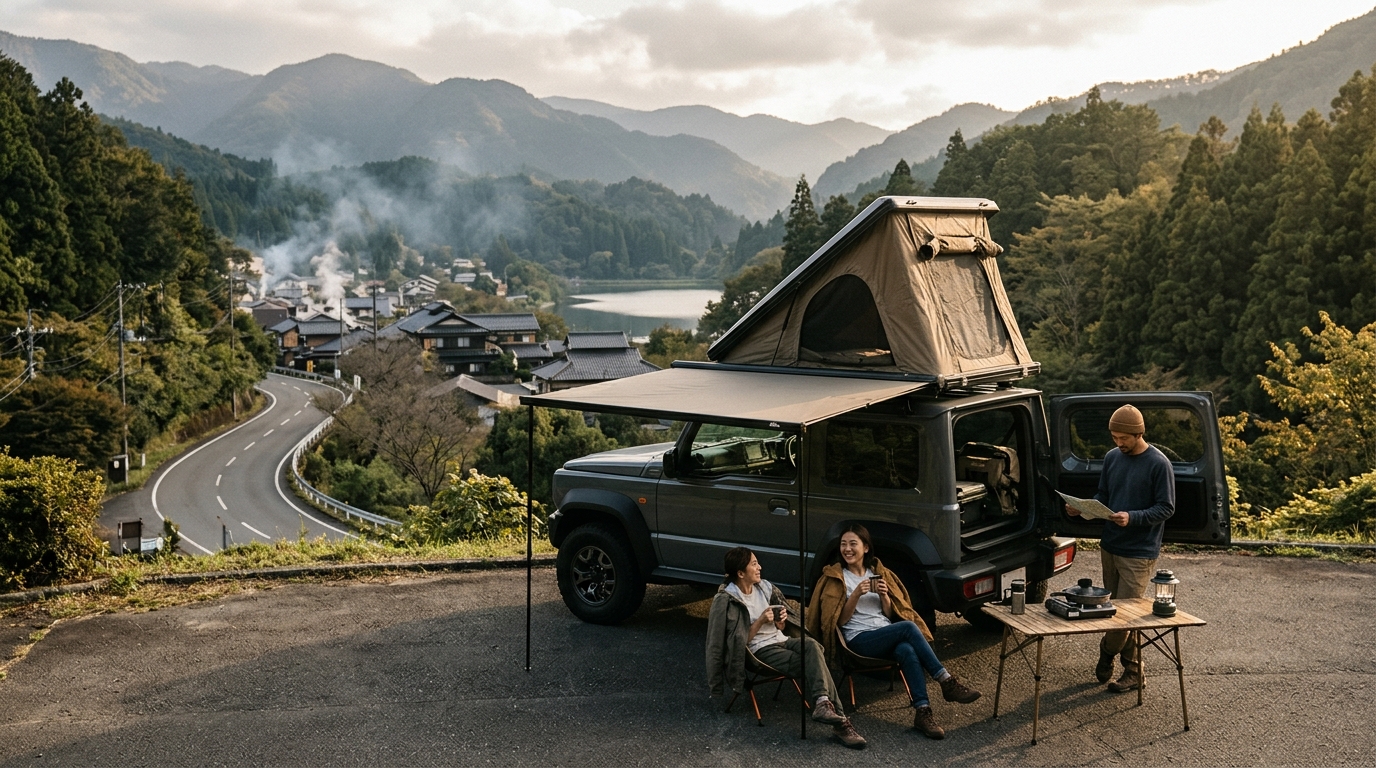
Planning a multi-day overland journey requires precise vehicle selection and route mapping. According to recent tourism data, domestic road trip bookings in Japan increased by 42 percent during 2024, driven by travelers seeking flexible outdoor mobility. Tourism growth directly correlates with the availability of fully equipped 4×4 platforms. This guide outlines the exact steps to secure a reliable vehicle, map a realistic itinerary, and navigate Japanese rental regulations. You will learn how to maximize your time on the road while maintaining strict safety and compliance standards.
Selecting the Right Overland Platform
Vehicle Capacity and Terrain Readiness
An overland camper is a specialized 4×4 vehicle equipped with rooftop sleeping quarters and modular storage systems. Land Rover Defender models offer five passenger seats and a 12km per liter fuel efficiency rating. The FJ Cruiser provides identical rooftop dimensions while utilizing a 4000cc engine for steep mountain passes. Couples often prefer the Suzuki Jimny platform due to its compact chassis and 11km per liter efficiency. Compact SUV camping remains the most popular choice for solo travelers and pairs.
Mapping a Realistic 3 to 5 Day Route
Geographic Routing and Fuel Logistics
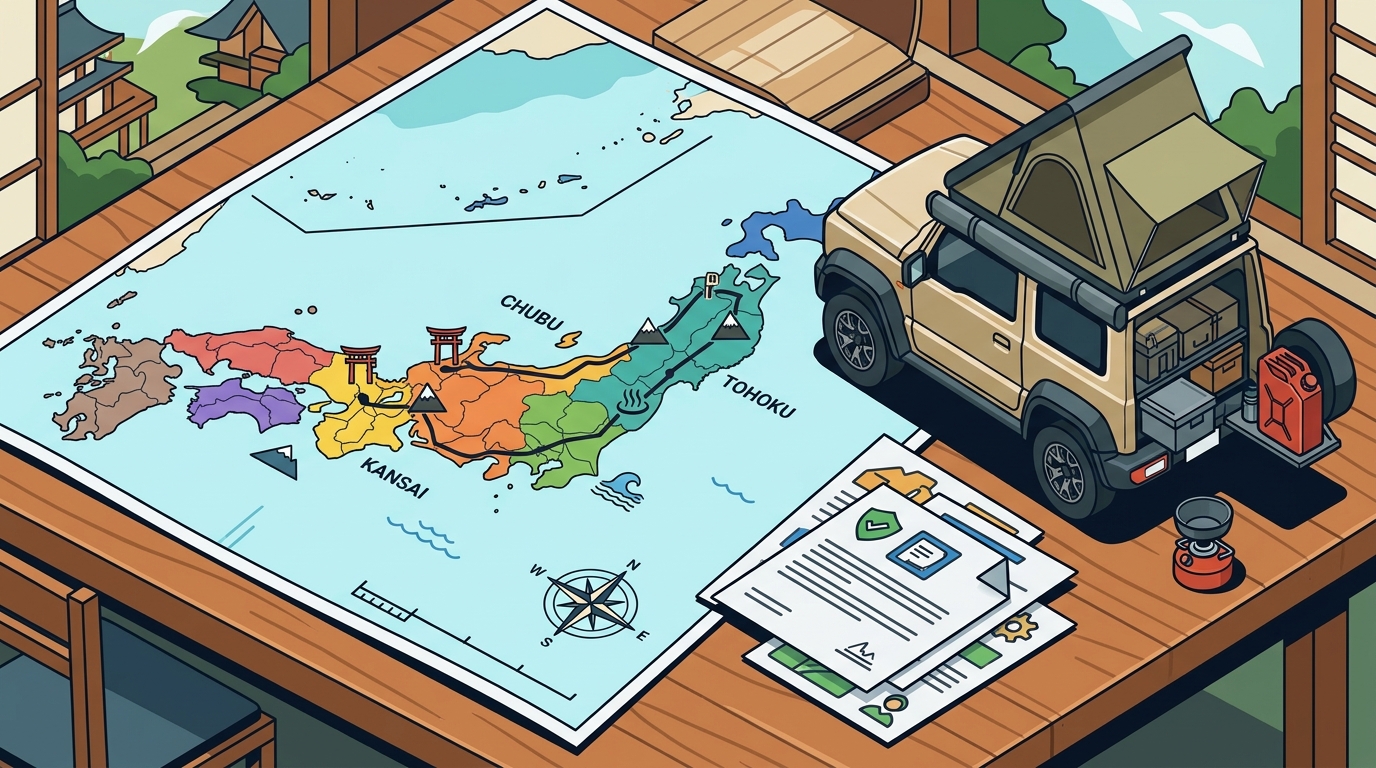
A three to five day Japan road trip requires balancing highway mileage with scenic detour stops. National highway data indicates that average daily driving distances rarely exceed 250 kilometers to preserve rest time. You should structure your itinerary around major toll road networks to minimize navigation stress. Tokyo to Fukuoka one-way rentals allow travelers to drop off vehicles at secondary hubs without backtracking. Flexible booking structures support both return and one-way logistical models.
Understanding Rental Logistics and Pricing
Daily Rates and Minimum Duration Rules
A rental agreement is a legally binding contract outlining vehicle usage limits, insurance coverage, and damage liability. Regulatory compliance mandates that all rental periods must span a minimum of two consecutive days. Base pricing for premium platforms starts at 19,800 Japanese yen per day for compact models. Luxury Defender 110S units command a daily rate of 33,000 Japanese yen while including full rooftop tent setups. Standard terms require full payment upfront before vehicle handover.
Essential Gear and Vehicle Specifications
Standardized Equipment Packages
A rooftop tent is a foldable sleeping module mounted directly above the vehicle cabin to maximize ground space. All rental fleets include standardized bedding, thermal insulation, and weather-resistant canvas covers. You will receive a complete kitchen kit containing portable stoves, water containers, and utensil sets. Optional add-ons allow you to upgrade power stations or expand storage capacity. Verify your specific vehicle configuration before finalizing your reservation.
Navigating Japanese Camping Regulations
Legal Parking and Waste Management
Wild camping is the practice of parking and sleeping outside designated commercial campgrounds without official permits. Local municipal ordinances strictly prohibit overnight parking on public roads or in unmarked rest areas. You must utilize designated overnight parking zones or licensed campgrounds to avoid heavy fines. Environmental guidelines require all waste to be transported back to urban disposal facilities. Always confirm parking permissions before extending your stay beyond daylight hours.
Key Takeaways
- Defender 110S models accommodate three passengers with a 130cm by 215cm rooftop sleeping platform.
- Minimum rental duration is strictly enforced at two consecutive days per contract.
- Base pricing ranges from 19,800 to 33,000 Japanese yen depending on chassis size.
- One-way rentals operate exclusively between Tokyo and Fukuoka branch locations.
- All vehicles feature automatic transmissions and right-hand drive configurations.
- Fuel efficiency averages between 8.4km and 12km per liter across the fleet.
- Full payment and digital confirmation are required before vehicle handover.
Frequently Asked Questions
Can I drive a camper van without an international license?
No. Japanese law requires all foreign drivers to hold a valid International Driving Permit alongside their home country license. You must carry both documents inside the vehicle at all times.
What happens if I return the vehicle late?
Late returns trigger automatic penalty fees calculated per hour. You must contact the dispatch team immediately to request an extension. Extended hours require prior approval and additional payment.
Are rooftop tents safe during heavy rain?
Yes. Modern canvas tents utilize waterproof coatings and reinforced aluminum frames to withstand severe weather. You must secure all ventilation flaps before sleeping to prevent condensation buildup.
Can I modify the vehicle route after booking?
Absolutely. You may adjust your daily destinations without penalty as long as you respect the two-day minimum. Route flexibility is a core feature of the rental program.
What payment methods are accepted for reservations?
The company accepts PayPay and major credit cards including Visa and MasterCard. Full payment must clear before the vehicle is released to your custody.
Is fuel included in the daily rental rate?
No. All platforms require you to refuel the vehicle to the original level before drop-off. Regular gasoline is standard across the entire fleet.
Book Your Adventure Today
Ready to execute your three to five day Japan road trip? Secure your preferred platform by visiting our official reservation portal. Complete your booking to receive a customized itinerary and vehicle handover schedule. Our Tokyo and Fukuoka teams are standing by to prepare your fully equipped 4×4.
| Vehicle Model | Daily Rate | Passenger Capacity | Fuel Efficiency | Roof Tent Dimensions |
|---|---|---|---|---|
| Land Rover Defender 110S | 33,000 JPY | 5 | 12km/L | 130cm x 215cm |
| Land Rover Defender 90SE | 29,800 JPY | 3 | 10km/L | 130cm x 215cm |
| Toyota FJ Cruiser | 23,500 JPY | 5 | 8.4km/L | 130cm x 215cm |
| Suzuki Jimny Sierra | 19,800 JPY | 3 | 11km/L | 140cm x 200cm |