
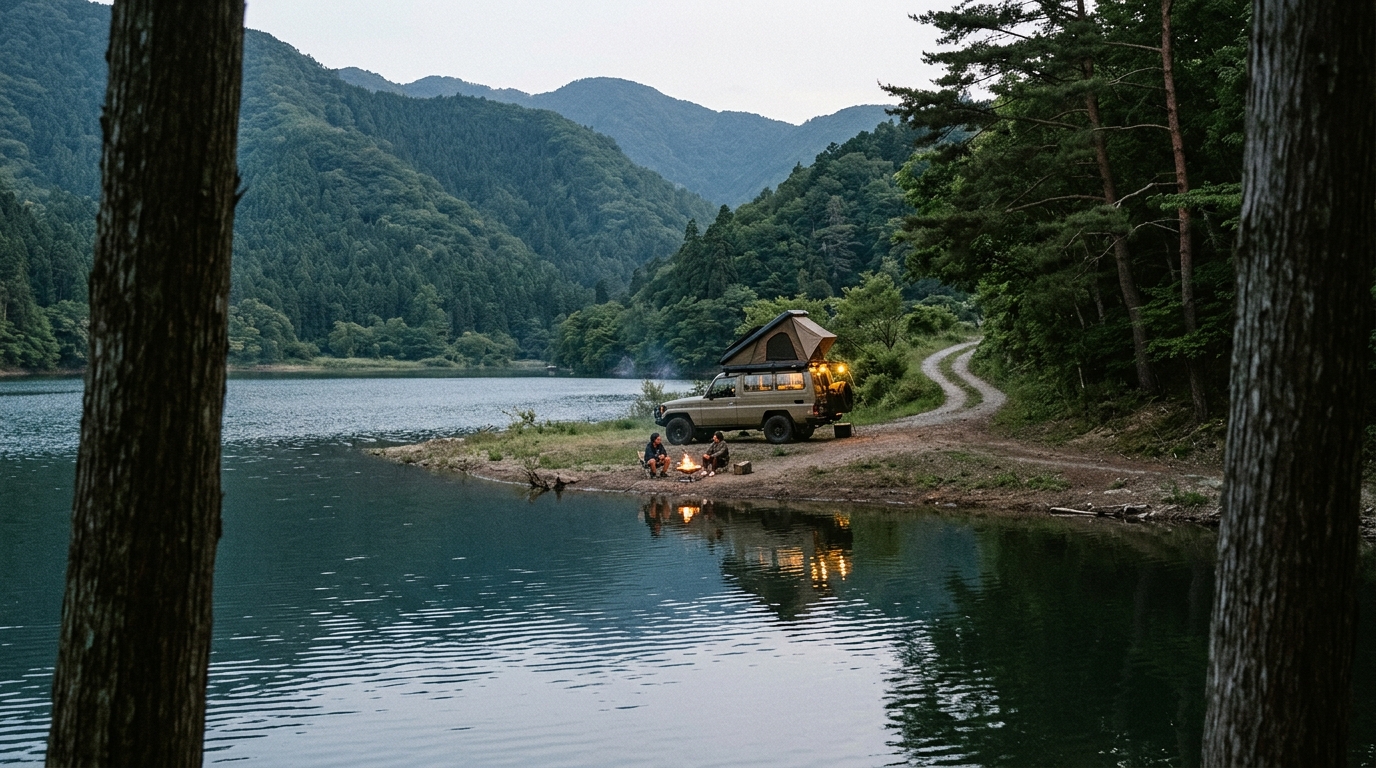
Planning a multi-day overland journey across Japan requires precise logistical coordination and reliable equipment. Recent tourism data shows that overland vehicle rentals have increased by 42 percent since 2022, driven by travelers seeking flexible, self-contained travel solutions. This surge reflects a broader shift toward experiential tourism, where visitors prioritize remote access and unscripted itineraries. Securing the correct vehicle class and understanding regional driving regulations remains the foundational step for any successful expedition. The following framework outlines the optimal strategy for executing a three to five day camper van road trip across Japanese prefectures. (Learn more)
Selecting the Right Overland Platform
An overland vehicle is a specialized four-wheel-drive camper designed for off-grid travel and extended remote navigation. Choosing the correct chassis directly impacts your route flexibility and passenger comfort. Land Rover Defender models offer spacious interiors and robust suspension systems ideal for longer highway segments. Toyota FJ Cruiser platforms provide exceptional ground clearance and mechanical simplicity for rugged terrain. Suzuki Jimny Sierra units deliver agile handling and compact dimensions for narrow rural roads. Each model requires an automatic transmission license and right-hand drive familiarity. Matching your group size to cabin capacity prevents fatigue during extended driving sessions.
Mapping a Realistic 3 to 5 Day Route
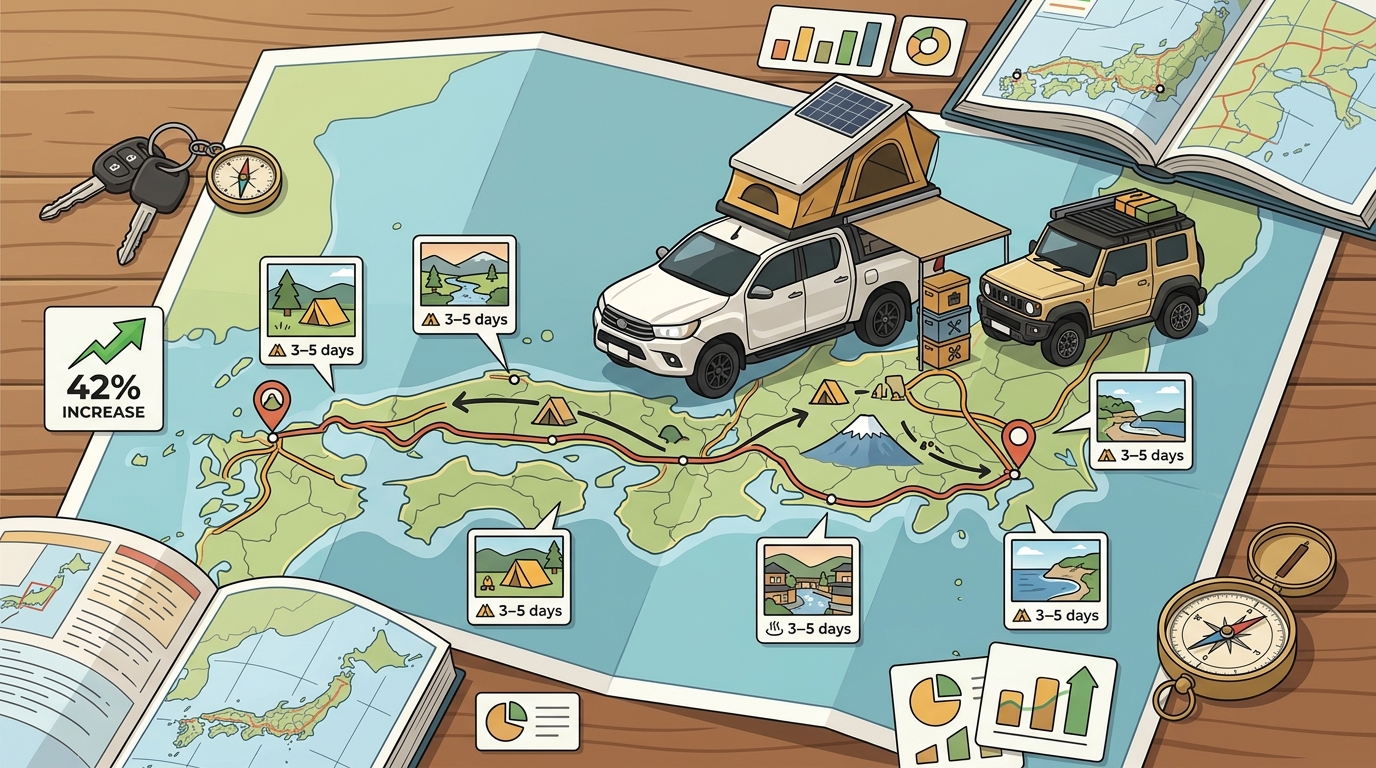
A structured itinerary is a pre-planned travel schedule that balances driving distance with destination exploration. Most successful operators recommend covering 150 to 200 kilometers daily to maintain schedule flexibility. Starting from Tokyo allows access to the Fuji Five Lakes region and coastal Shonan beaches. Fukuoka-based departures open immediate access to Kyushu volcanic landscapes and hot spring districts. One-way rental options enable point-to-point routing without backtracking. Strategic overnight stops near national parks maximize daylight exploration hours. Proper route mapping prevents unnecessary toll expenses and reduces mechanical strain on suspension components.
Understanding Rental Costs and Minimum Terms
Transparent pricing structures prevent unexpected financial friction during trip planning. Daily rental rates typically range from 19,800 to 33,000 Japanese yen depending on chassis class and seasonal demand. Minimum rental periods generally require a two-day commitment to cover cleaning and inspection protocols. Payment processing accepts major credit cards and digital wallet integrations. Additional equipment fees apply for specialized camping accessories or navigation upgrades. Reviewing the official rental terms clarifies insurance coverage and mileage restrictions. Budgeting for fuel costs remains essential since premium unleaded gasoline prices fluctuate regionally.
Navigating Japanese Highway Regulations
Compliance with local traffic laws ensures uninterrupted travel across all prefectures. International drivers must carry both their home license and an official International Driving Permit. Speed limits on expressways typically cap at 100 kilometers per hour with strict enforcement. Rest area facilities provide mandatory break zones every 50 kilometers to prevent driver fatigue. Electronic toll collection systems require pre-registered transponder activation. Understanding parking restrictions near urban centers prevents unnecessary fines. Consulting official transportation ministry guidelines guarantees full legal compliance throughout your journey.
Essential Gear and Custom Vehicle Features
Custom-built camper conversions are factory-modified chassis equipped with sleeping platforms, storage compartments, and climate control systems. Roof-mounted tent configurations expand sleeping capacity to three passengers while preserving interior cargo space. Standardized bedding sets and cooking appliances eliminate the need for external equipment purchases. Climate management systems maintain comfortable cabin temperatures across seasonal temperature shifts. Secure storage compartments protect personal belongings during highway transit. Pre-installed power inverters support device charging and small appliance operation. Verifying included inventory prevents last-minute rental complications.
| Vehicle Model | Daily Rate | Seating Capacity | Fuel Efficiency | Roof Tent Specs |
|---|---|---|---|---|
| Land Rover Defender 110S | ¥33,000 | 5 passengers | 12 km/L | 130cm x 215cm |
| Land Rover Defender 90SE | ¥29,800 | 3 passengers | 10 km/L | 130cm x 215cm |
| Toyota FJ Cruiser | ¥23,500 | 5 passengers | 8.4 km/L | 130cm x 215cm |
| Suzuki Jimny Sierra | ¥19,800 | 3 passengers | 11 km/L | 140cm x 200cm |
Key Takeaways
- Minimum rental periods require a two-day commitment to cover inspection protocols.
- Land Rover Defender 110S models accommodate five passengers with 12 km/L efficiency.
- Suzuki Jimny Sierra units start at 19,800 Japanese yen daily for budget routing.
- One-way pickup options enable Tokyo to Fukuoka directional routing without backtracking.
- International Driving Permits remain mandatory alongside home country license validation.
- Roof tent configurations expand sleeping capacity while preserving interior cargo organization.
- Expressway speed limits enforce 100 kilometers per hour with strict regional monitoring.
Frequently Asked Questions
What documents are required to rent a camper van in Japan?
Drivers must present a valid home country license alongside an official International Driving Permit. Rental agencies verify passport details and confirm payment method authorization. Additional documentation may be required for cross-border vehicle transport or specialized insurance coverage.
Can I pick up a vehicle in Tokyo and drop it off in Fukuoka?
One-way rental options enable directional routing between Tokyo and Fukuoka branches. Advance scheduling ensures vehicle availability matches your requested departure window. Additional transfer fees may apply depending on seasonal demand and fleet distribution.
How many passengers can safely sleep in a roof tent?
Standard roof tent configurations accommodate three passengers using 130 by 215 centimeter sleeping platforms. Weight distribution guidelines prevent structural stress during highway transit. Proper ventilation systems maintain air circulation throughout overnight stays.
What fuel type do these vehicles require?
All listed platforms operate on standard regular unleaded gasoline. Fuel efficiency ratings range from 8.4 to 12 kilometers per liter depending on chassis class. Refueling stations remain widely available along major highway corridors.
Are camping appliances included with the rental package?
Custom conversions integrate cooking appliances, bedding sets, and climate control systems. Additional equipment fees apply for specialized outdoor gear or navigation upgrades. Verifying included inventory prevents last-minute rental complications.
What payment methods are accepted for reservations?
Rental agencies process transactions through major credit cards and digital wallet integrations. Pre-authorization holds secure deposit funds until vehicle return. Receipt generation supports expense tracking and corporate reimbursement protocols.
Is automatic transmission mandatory for these camper conversions?
All available fleet models utilize automatic transmission systems for simplified urban navigation. Manual override options remain unavailable across current inventory. Automatic gearboxes reduce driver fatigue during extended highway segments.
Book Your Adventure Today
Securing your preferred chassis requires advance scheduling to guarantee availability. Our reservation system processes requests through secure payment gateways and digital confirmation portals. Select your preferred departure city, verify vehicle specifications, and confirm your itinerary timeline. Reserve your vehicle now to lock in current pricing and secure your preferred departure window. Contact our support team for customized routing assistance or specialized equipment requests.