
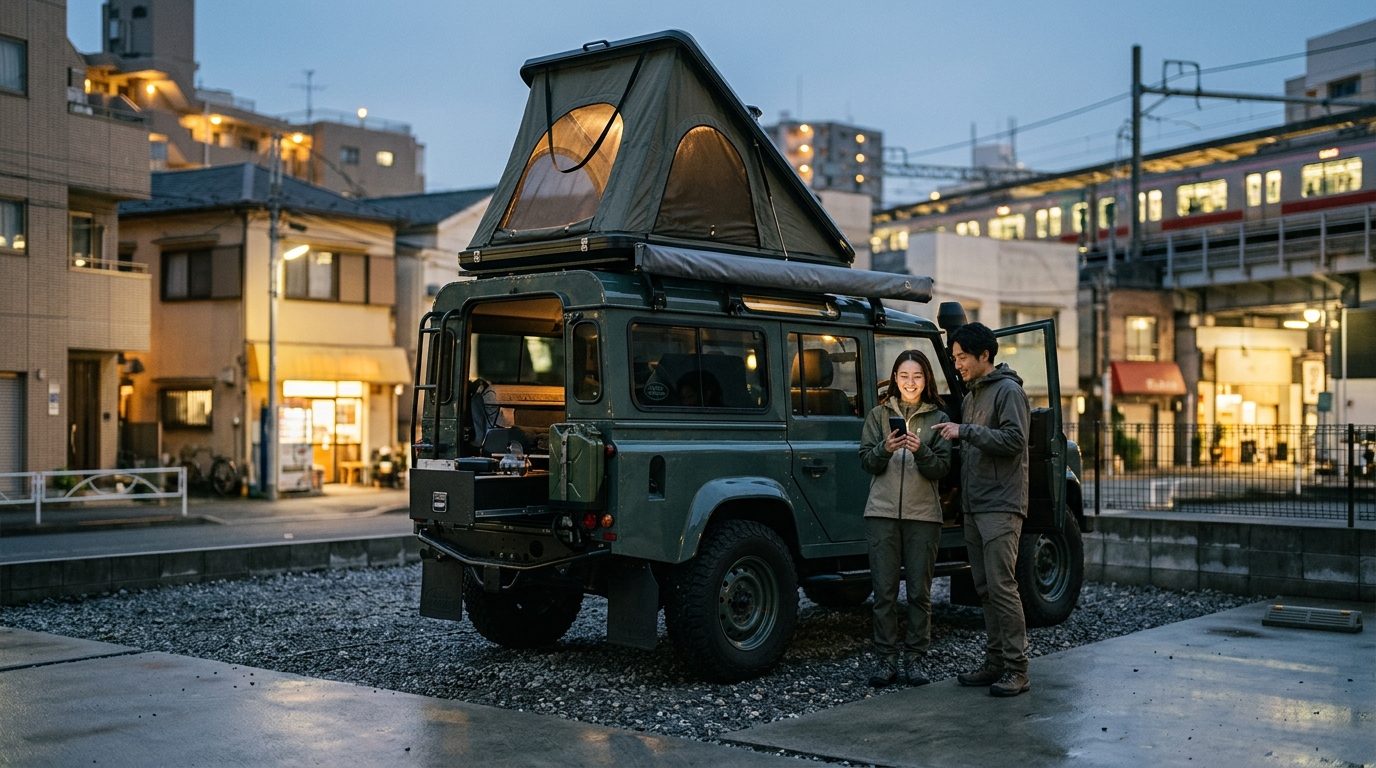
Planning an overland adventure across Japan requires precise logistical coordination, especially when securing your primary mobile base. According to the Japan National Tourism Organization, domestic tourism revenue reached 18 trillion yen in 2023, with a 40 percent surge in recreational vehicle bookings compared to previous years. Domestic tourism has fundamentally shifted toward self-drive exploration, making strategic vehicle acquisition essential. An overland camper is a specialized recreational vehicle engineered for extended off-grid travel. Overland Campers Japan operates a dedicated facility near Nakameguro Station, providing seamless access to premium 4x4 camper conversions. This central Tokyo location eliminates transit friction while granting immediate access to major highway networks. Understanding the exact pickup procedures ensures your journey begins without administrative delays or equipment gaps. (Learn more)
Central Tokyo Pickup Location
Strategic Geographic Positioning
Overland Campers Japan maintains its primary Tokyo facility in the Meguro ward, positioned directly adjacent to Nakameguro Station. This specific district offers exceptional connectivity to the Yamanote Line and multiple subway routes. Transportation hubs in this sector consistently rank among the most accessible for domestic travelers. The facility operates on a flexible schedule that accommodates early morning departures and late evening returns. You can collect your keys, complete the mandatory documentation, and inspect your vehicle without navigating congested commercial districts. This operational model directly addresses the logistical friction that typically plagues first-time Japanese road trips. (FAQ Overland Japan)
Choosing Your Overland Platform
Defender Series Capabilities
The Land Rover Defender 110S and 90SE models represent the flagship offerings for this rental ecosystem. These vehicles feature automatic transmissions, right-hand drive configurations, and reinforced suspension systems designed for unpaved terrain. Vehicle specifications mandated by Japanese regulatory bodies require strict adherence to these mechanical standards. The Defender 110S comfortably seats five passengers while maintaining a 130 by 215 centimeter rooftop tent platform. A rooftop tent is a weather-resistant sleeping platform permanently mounted above the vehicle cabin. The Defender 90SE optimizes interior space for two occupants, prioritizing maneuverability through narrow mountain passes. Both models deliver approximately 10 to 12 kilometers per liter using standard gasoline.
Compact 4x4 Alternatives
Travelers prioritizing fuel efficiency and urban maneuverability should evaluate the Toyota FJ Cruiser or Suzuki Jimny Sierra. The FJ Cruiser provides five-passenger capacity alongside a robust 4000cc engine architecture. The Suzuki Jimny Sierra operates on a 1500cc powertrain that achieves 11 kilometers per liter. Compact platforms consistently demonstrate superior performance in densely populated coastal regions. All four primary models include factory-installed rooftop tents, eliminating the need for external canopy purchases. You can reserve any configuration through the official reservation portal.
Step-by-Step Pickup Procedures
Reservation and Documentation
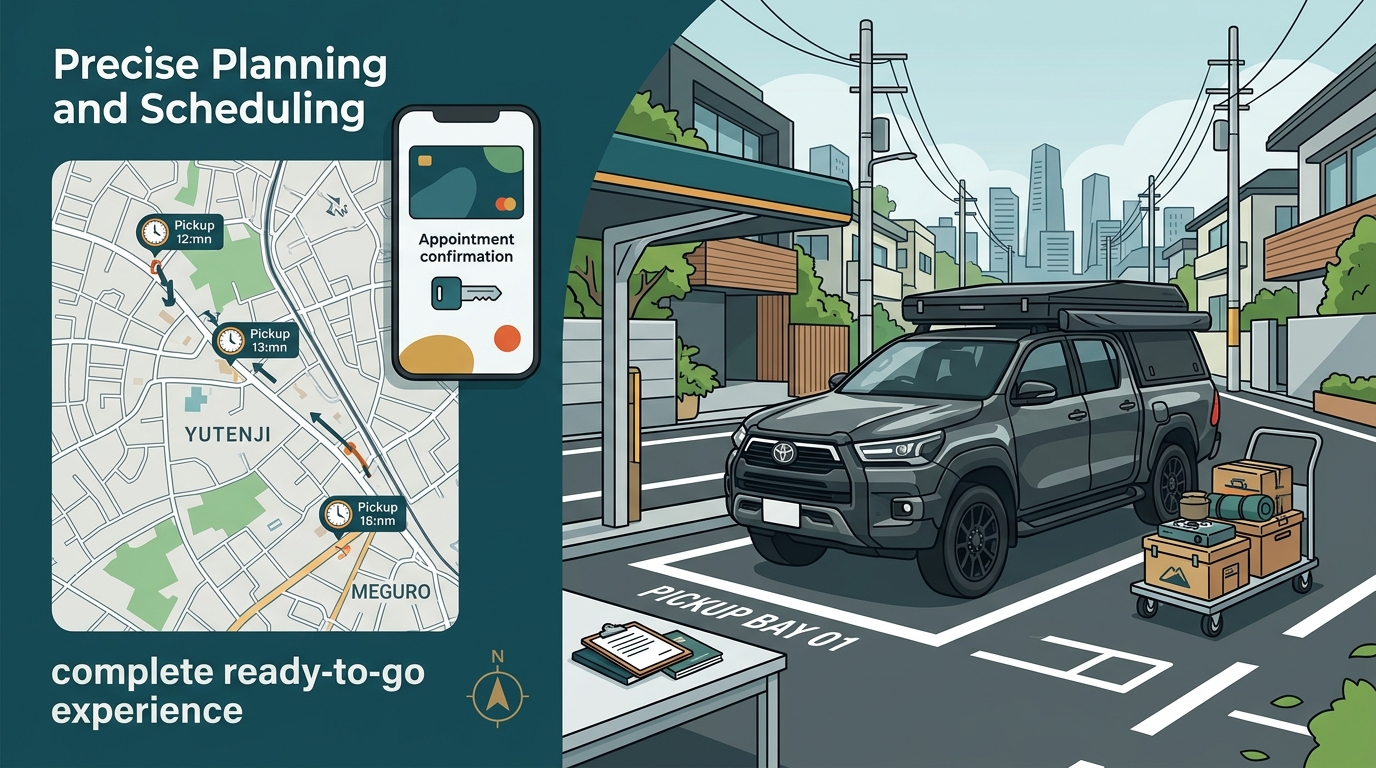
Securing your vehicle requires completing the official reservation form with precise travel dates and passenger counts. Booking protocols mandate a minimum rental duration of two consecutive days. You must submit your preferred vehicle model, optional camping gear requirements, and payment method preferences before finalizing the transaction. The company accepts PayPay and major credit card networks for all transactions. Once payment processes successfully, you will receive written confirmation detailing your exact pickup window. This confirmation guarantees vehicle availability and reserves your preferred configuration.
Vehicle Inspection and Handover
Arrive at the Nakameguro facility during your designated time slot to complete the handover process. Staff members will conduct a comprehensive exterior and interior inspection alongside you. You must verify fuel levels, tire pressure, rooftop tent deployment mechanisms, and all included camping equipment. Liability frameworks require explicit acknowledgment of existing vehicle conditions before departure. You will receive a detailed equipment checklist, emergency contact numbers, and basic operating instructions. The entire handover typically requires twenty minutes, allowing ample time for questions before departure.
Standardized Camping Equipment
Core Gear Inclusions
Every rental package includes a comprehensive camping kit designed for independent overnight stays. Standardized kits contain sleeping bags, portable stoves, cooking utensils, and water storage containers. The rooftop tent features a fixed mattress platform with weather-resistant canvas construction. You receive folding chairs, a compact table, and a portable power station for electronic device charging. This equipment eliminates the need for external supplier coordination or last-minute retail purchases. All items undergo rigorous cleaning and inspection protocols between every rental cycle.
Optional Add-On Inventory
Travelers requiring specialized gear can request additional equipment through the official options portal. Available add-ons include premium bedding sets, advanced cooking appliances, and specialized navigation tools. Customization requests must be submitted at least 48 hours before your scheduled pickup time. The company maintains a centralized inventory system that tracks all optional equipment availability. You can modify your equipment list after booking by contacting the support desk directly. This flexibility ensures your specific travel requirements remain fully satisfied.
Transparent Pricing Models
Base Rental Rates
Overland Campers Japan operates on a straightforward daily rental structure with no hidden administrative fees. Pricing frameworks are published transparently across all vehicle configuration pages. The Suzuki Jimny Sierra starts at 19,800 yen per day, offering optimal value for solo travelers or couples. The Toyota FJ Cruiser requires 23,500 yen daily, providing expanded passenger capacity. The Defender 90SE operates at 29,800 yen per day, while the Defender 110S commands 33,000 yen daily. All rates include comprehensive insurance coverage, roadside assistance, and standard camping equipment.
Additional Cost Considerations
Travelers must account for fuel expenses, which vary significantly based on terrain and driving conditions. Fuel consumption averages between 8.4 and 12 kilometers per liter depending on the selected platform. Highway tolls, parking fees, and optional equipment rentals represent the only additional financial obligations. The company provides a detailed cost calculator on the reservation page to assist with budget planning. You can prepay for optional gear or settle balances upon vehicle return. This transparent financial structure prevents unexpected expenditures during your journey.
Vehicle Comparison Matrix
| Vehicle Model | Daily Rate (Yen) | Passenger Capacity | Engine Displacement | Reserve Now |
|---|---|---|---|---|
| Suzuki Jimny Sierra | 19,800 | 3 | 1500cc | View Details |
| Toyota FJ Cruiser | 23,500 | 5 | 4000cc | View Details |
| Land Rover Defender 90SE | 29,800 | 3 | 2000cc | View Details |
| Land Rover Defender 110S | 33,000 | 5 | 2000cc | View Details |
Key Takeaways
- Pickup occurs at the dedicated Nakameguro facility near Tokyo Station, ensuring seamless urban transit access.
- Minimum rental duration is strictly two consecutive days, optimizing operational efficiency for both parties.
- All vehicles feature automatic transmissions, right-hand drive configurations, and factory-installed rooftop tents.
- Base pricing ranges from 19,800 yen to 33,000 yen daily, covering insurance and standard camping gear.
- Flexible pickup windows accommodate early morning departures and late evening returns without penalty.
- Official reservation portal accepts PayPay and major credit cards for secure transaction processing.
- Comprehensive equipment kits include sleeping bags, portable stoves, and power stations for independent travel.
Frequently Asked Questions
Can international travelers drive these rental vehicles?
Yes, international visitors can operate these vehicles using a valid International Driving Permit alongside their home country license. Japanese law requires this documentation for all foreign drivers operating rental vehicles. You must carry both documents at all times during your journey.
What happens if the rooftop tent malfunctions?
The company provides 24-hour roadside assistance covering all mechanical and structural failures. You must contact the support desk immediately, and a technician will dispatch to your location. Replacement vehicles are available if repairs cannot be completed within four hours.
Are there restrictions on driving to remote mountain regions?
Standard rental agreements permit travel to all designated national parks and mountain routes. Restricted zones requiring specialized permits are clearly marked on the provided route maps. You must avoid unmarked off-road trails to maintain insurance coverage validity.
How do I refuel the vehicle during my trip?
All models operate on standard gasoline, which is widely available at convenience stores and service stations. You must return the vehicle with the same fuel level as pickup to avoid refueling charges. The company provides a fuel gauge monitoring guide during the handover process.
Can I drop off the vehicle in Fukuoka instead of Tokyo?
Yes, one-way rentals are available between the Tokyo and Fukuoka facilities. A one-way rental is a transportation agreement permitting vehicle collection at one geographic point and return at another. Inter-branch transfers require advance scheduling and may incur additional logistical fees. You must specify your preferred drop-off location during the initial reservation process.
What documentation do I need to complete the rental?
You must present your passport, valid International Driving Permit, and a credit card for security deposits. The company processes all documentation digitally to minimize wait times. You will receive a digital contract via email immediately after payment confirmation.
Book Your Adventure
Securing your central Tokyo camper pickup requires minimal administrative effort and maximum flexibility. Visit the official reservation portal to select your preferred vehicle configuration and travel dates. Complete your booking through the secure payment gateway to guarantee vehicle availability. Our team stands ready to assist with route planning, equipment customization, and emergency support. Begin your Japanese overland journey today by securing your preferred platform.