
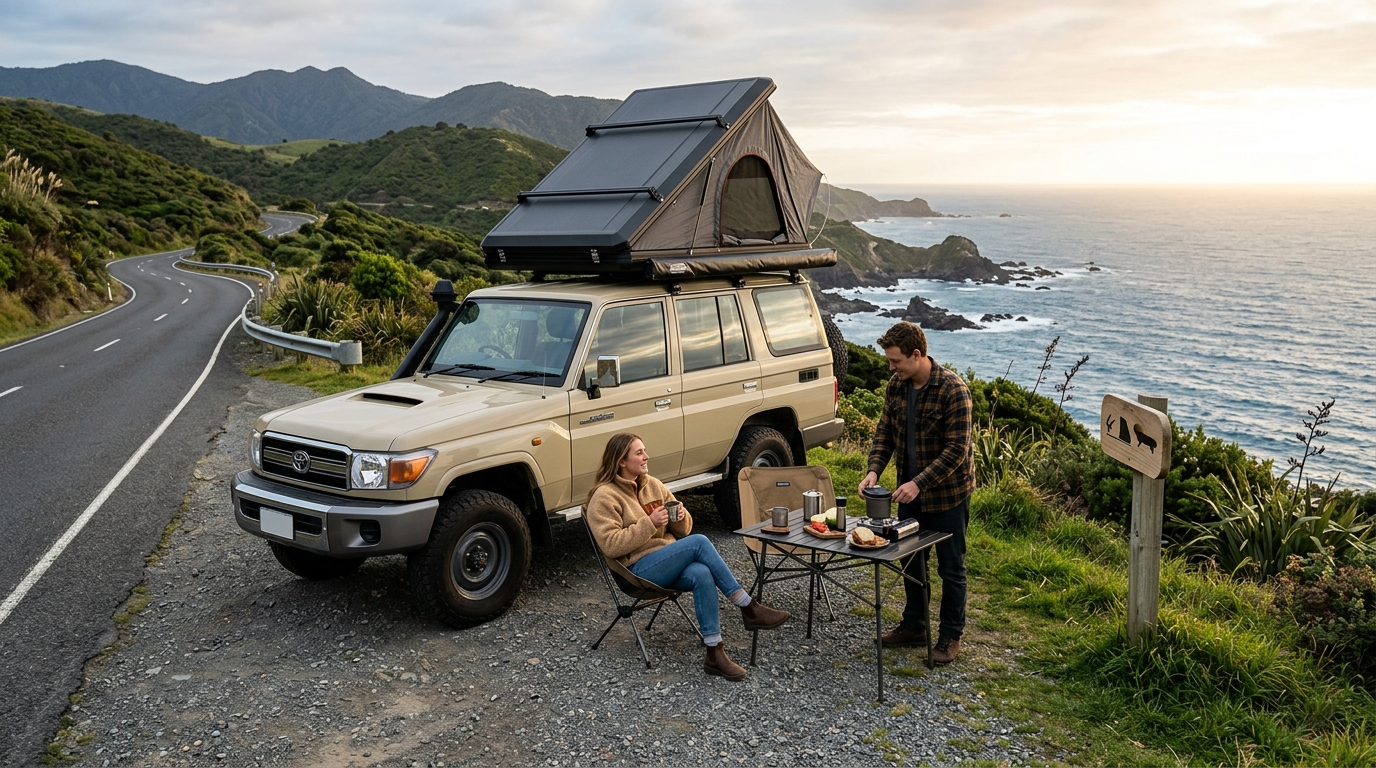
Planning a 3–5 day road trip in Japan by camper van offers an unparalleled level of freedom, allowing travelers to explore remote landscapes and scenic routes at their own pace. According to recent tourism data, overland travel in Japan has seen a significant surge in popularity among international visitors seeking authentic, off-the-beaten-path experiences. This guide details the essential steps for booking, vehicle selection, and route planning to ensure a seamless adventure across the Japanese archipelago. (Japan Emerges as) (Learn more)
\n\n\n\nChoosing the Right Overland Vehicle
\n\nThe foundation of any successful overland trip is the vehicle itself. In Japan, the term \"camper van\" often refers to custom-built 4x4 vehicles equipped with rooftop tents, rather than traditional box-style motorhomes. This distinction is critical for navigating Japan's narrow rural roads and steep mountain passes. (FAQ Overland Japan)
\n\nOverland Campers Japan specializes in these custom-built 4x4 camping vehicles, ready for immediate deployment in Tokyo and Fukuoka. The fleet includes robust options like the Land Rover Defender and the compact Suzuki Jimny, each tailored for specific types of terrain and group sizes. (Overland Campers Japan)
\n\nLand Rover Defender 110S
\nThe Land Rover Defender 110S is the premium choice for groups seeking luxury and space. It features an automatic transmission, right-hand drive, and a fuel efficiency of approximately 12 km/L. The rooftop tent accommodates three people comfortably with dimensions of 130cm x 215cm. This vehicle is ideal for those prioritizing comfort and off-road capability without sacrificing amenities. (Overland Japan)
\n\nSuzuki Jimny Sierra
\nFor couples or solo adventurers, the Suzuki Jimny Sierra offers exceptional maneuverability. Despite its compact size, it is a capable 4x4 with a fuel efficiency of 11 km/L. The rooftop tent measures 140cm x 200cm, providing adequate space for two. Its small footprint makes it easier to park in tight urban areas and navigate narrow mountain roads. (Learn more)
\n\nToyota FJ Cruiser
\nThe Toyota FJ Cruiser is a rugged option for the adventurous traveler. Powered by a 4000cc engine, it delivers strong performance on challenging terrains. With a fuel efficiency of 8.4 km/L, it requires more frequent refueling but offers unmatched durability. The rooftop tent setup is similar to the Defender, accommodating three guests.
\n\n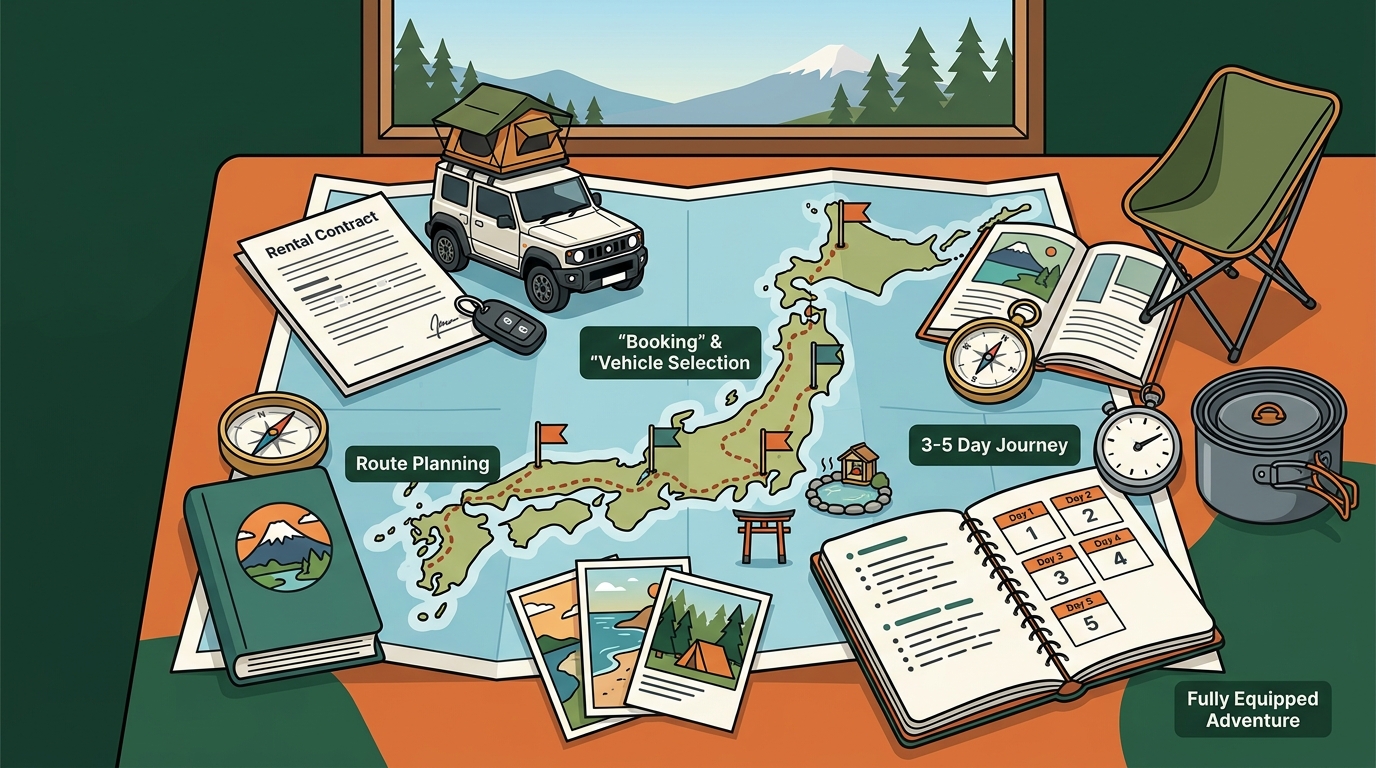
Booking and Pickup Logistics
\n\nSecuring a camper van in Japan requires advance planning, especially during peak seasons like cherry blossom spring and autumn foliage. The booking process is streamlined through online inquiries, with payments accepted via PayPay and major credit cards.
\n\nMinimum Rental Period
\nMost overland rental companies in Japan enforce a minimum rental period of two days. This policy ensures that the vehicle is properly sanitized and prepared between users. When planning a 3–5 day trip, it is advisable to book at least three days to allow for a relaxed pace and unexpected delays. (Japan Emerges as)
\n\nPickup Locations
\nOverland Campers Japan operates from two primary bases: Tokyo and Fukuoka. The Tokyo location is conveniently situated near Nakameguro Station, allowing for early morning departures and late-night returns. This flexibility is crucial for maximizing time on the road. The Fukuoka base provides easy access to Kyushu's diverse landscapes, from volcanic regions to coastal highways.
\n\nOne-Way Rentals
\nOne-way rentals are available, allowing travelers to pick up a vehicle in Tokyo and drop it off in Fukuoka, or vice versa. This option is ideal for those covering long distances across Japan. However, additional fees may apply for inter-city transfers. It is essential to confirm these details during the reservation process.
\n\n3–5 Day Itinerary Framework
\n\nA 3–5 day road trip allows for a focused exploration of a specific region. Below are two recommended frameworks based on the pickup location.
\n\nOption 1: Tokyo Base – Hakone and Fuji Region
\nStarting from Tokyo, the Hakone and Mount Fuji region offers a classic Japanese landscape experience. Day 1 involves driving to Hakone, exploring the volcanic valleys, and camping with views of Mount Fuji. Day 2 can be dedicated to the Fuji Five Lakes area, providing access to hiking trails and hot springs. Day 3 allows for a return journey with stops at traditional towns along the way.
\n\nOption 2: Fukuoka Base – Kyushu Adventure
\nKyushu is Japan's southernmost main island, known for its volcanic activity and hot springs. Starting from Fukuoka, travelers can head south to Aso National Park, home to one of the world's largest calderas. The rugged terrain is perfect for testing the capabilities of a 4x4 camper. Day 3 can include a visit to Beppu's hells (hot springs) and coastal drives along the Bungo Strait.
\n\nCamping and Parking Infrastructure
\n\nJapan has a well-developed camping infrastructure, but it differs significantly from Western standards. Understanding the types of camping sites is essential for a smooth trip.
\n\nCommercial Campgrounds
\nCommercial campgrounds offer full amenities, including electricity, water, showers, and Wi-Fi. These sites are ideal for those seeking comfort and convenience. They often require reservations, especially on weekends.
\n\nWild Camping Regulations
\nWild camping, or camping outside designated areas, is generally prohibited in Japan without explicit permission. However, many overland travelers utilize designated \"free camping\" areas near national parks or rural shrines. It is crucial to respect local customs and leave no trace. Always seek permission from landowners if camping on private property.
\n\nParking for Campers
\nParking large vehicles can be challenging in urban areas. Overland Campers Japan provides guidance on rental options that include parking assistance and route planning. Utilizing rest areas (Michi-no-Eki) is a common practice for overnight stays, offering basic facilities and local produce.
\n\nKey Takeaways
\n\n- \n
- Vehicle Choice: Select a vehicle based on group size and terrain. The Land Rover Defender 110S offers luxury, while the Suzuki Jimny Sierra provides agility. \n
- Minimum Rental: Expect a minimum rental period of two days, with three days recommended for a relaxed 3–5 day trip. \n
- Pickup Flexibility: Overland Campers Japan offers pickup and drop-off in both Tokyo and Fukuoka, supporting one-way trips. \n
- Payment Methods: Reservations can be secured using PayPay or major credit cards like Visa and MasterCard. \n
- Wild Camping: Wild camping is restricted; utilize designated campgrounds or seek permission for rural stays. \n
- Regional Focus: Tokyo bases are ideal for Hakone and Fuji regions, while Fukuoka bases open up Kyushu's volcanic landscapes. \n
- Advance Booking: Secure reservations well in advance, especially during peak tourism seasons. \n
Frequently Asked Questions
\n\nWhat is the best time of year for a camper van trip in Japan?
\nThe best times are spring (March to May) for cherry blossoms and autumn (October to November) for foliage. These seasons offer mild weather and scenic beauty, though they are also peak tourist periods requiring early booking.
\n\nDo I need an international driving permit?
\nYes, foreign visitors must carry an International Driving Permit (IDP) along with their home country's license. Japan requires this for legal driving, and rental companies will verify it at pickup.
\n\nCan I drive a camper van on Japanese highways?
\nYes, camper vans can use expressways. However, toll costs can be significant. Planning routes that balance highway efficiency with scenic local roads can help manage costs and enhance the experience.
\n\nWhat amenities are included in the rental?
\nRentals typically include the vehicle, rooftop tent, and basic camping gear. Overland Campers Japan ensures vehicles are fully equipped for exploration. Additional gear can be rented separately if needed.
\n\nIs it safe to drive in Japan at night?
\nJapanese roads are generally safe, but rural roads can be narrow and poorly lit. It is advisable to drive during daylight hours and use rest areas for overnight stops rather than parking on the roadside.
\n\nHow do I refuel the camper van?
\nRefueling is straightforward, with gas stations widely available. Most accept credit cards. Ensure you have the correct fuel type, as regular gasoline is standard for these vehicles.
\n\nWhat is the cancellation policy?
\nCancellation policies vary by rental company. Overland Campers Japan outlines specific terms in their Rental Terms and Conditions. It is crucial to review these before booking.
\n\nStart Your Adventure
\n\nReady to explore Japan on your own terms? Contact Overland Campers Japan today to book your custom 4x4 camper van. Whether you choose the rugged Suzuki Jimny or the luxurious Land Rover Defender, your journey across Japan begins with the right vehicle and preparation.
\n\n