
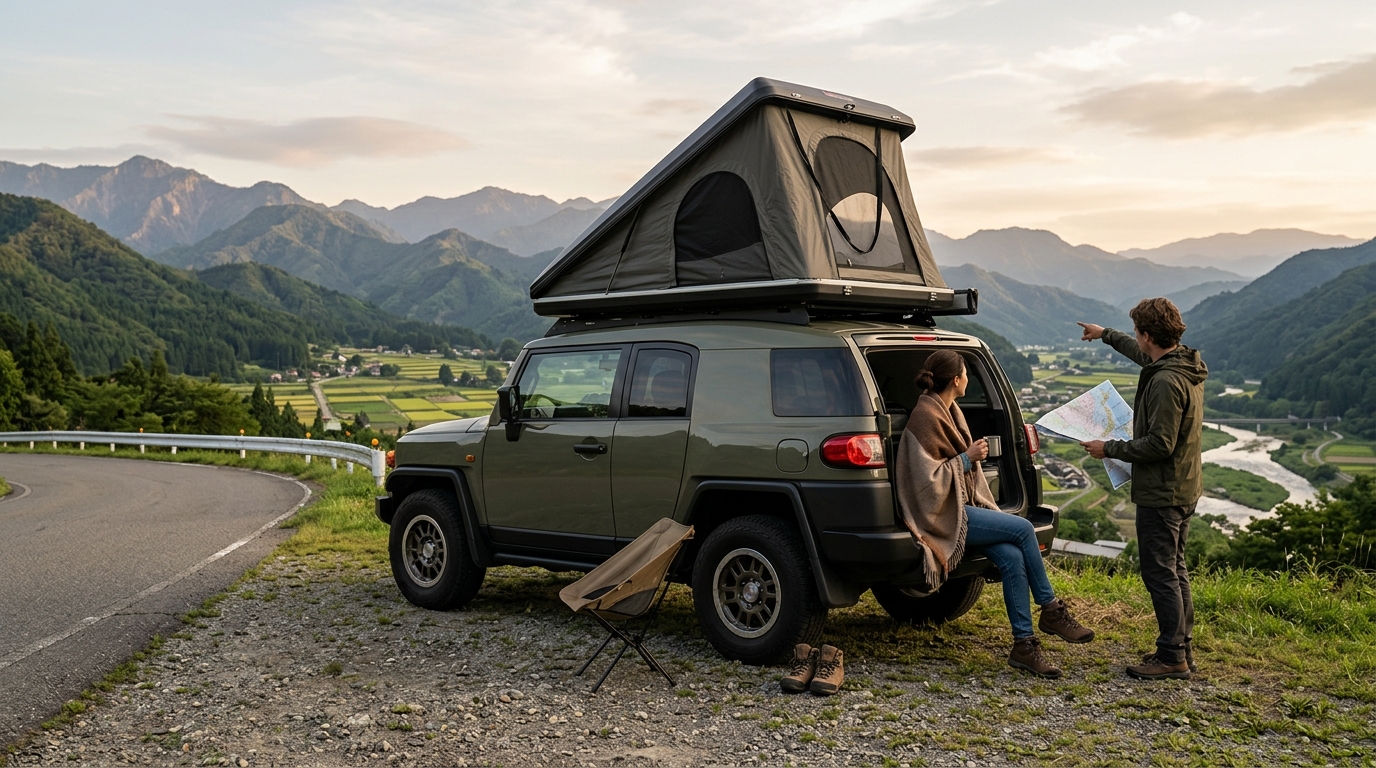
Planning a 3 to 5 day road trip in Japan by camper van offers an unparalleled level of freedom, allowing you to escape crowded tourist hubs and discover the country's rugged landscapes at your own pace. According to recent tourism data, overland travel has surged in popularity among international visitors seeking authentic, unscripted experiences across Japan's diverse regions. This guide details the optimal strategies for vehicle selection, route planning, and logistical execution to ensure your adventure is both safe and memorable.
Choosing the Right Overland Vehicle
The foundation of any successful overland trip is selecting the correct vehicle. In Japan, the term "camper van" often refers to custom-built 4x4 vehicles equipped with rooftop tents, rather than traditional motorhomes. This distinction is critical because it affects your driving experience, parking capabilities, and camping options.
Understanding the 4x4 Advantage
Overland vehicles are designed for off-road capability. Unlike standard rental cars, these vehicles feature high ground clearance and four-wheel drive systems. This allows you to access remote campsites, mountain passes, and coastal trails that are inaccessible to regular vehicles. The Overland Campers Japan fleet exemplifies this approach by offering fully equipped, custom-built 4x4s ready for immediate deployment.
Vehicle Types and Capabilities
When selecting a vehicle, consider the number of travelers and the terrain you intend to navigate. Smaller vehicles like the Suzuki Jimny are ideal for couples or solo travelers seeking agility. Larger vehicles like the Land Rover Defender offer more interior space and comfort for groups. Each vehicle type has specific fuel efficiency and capacity metrics that impact your daily budget and range.
Strategic Itinerary Planning
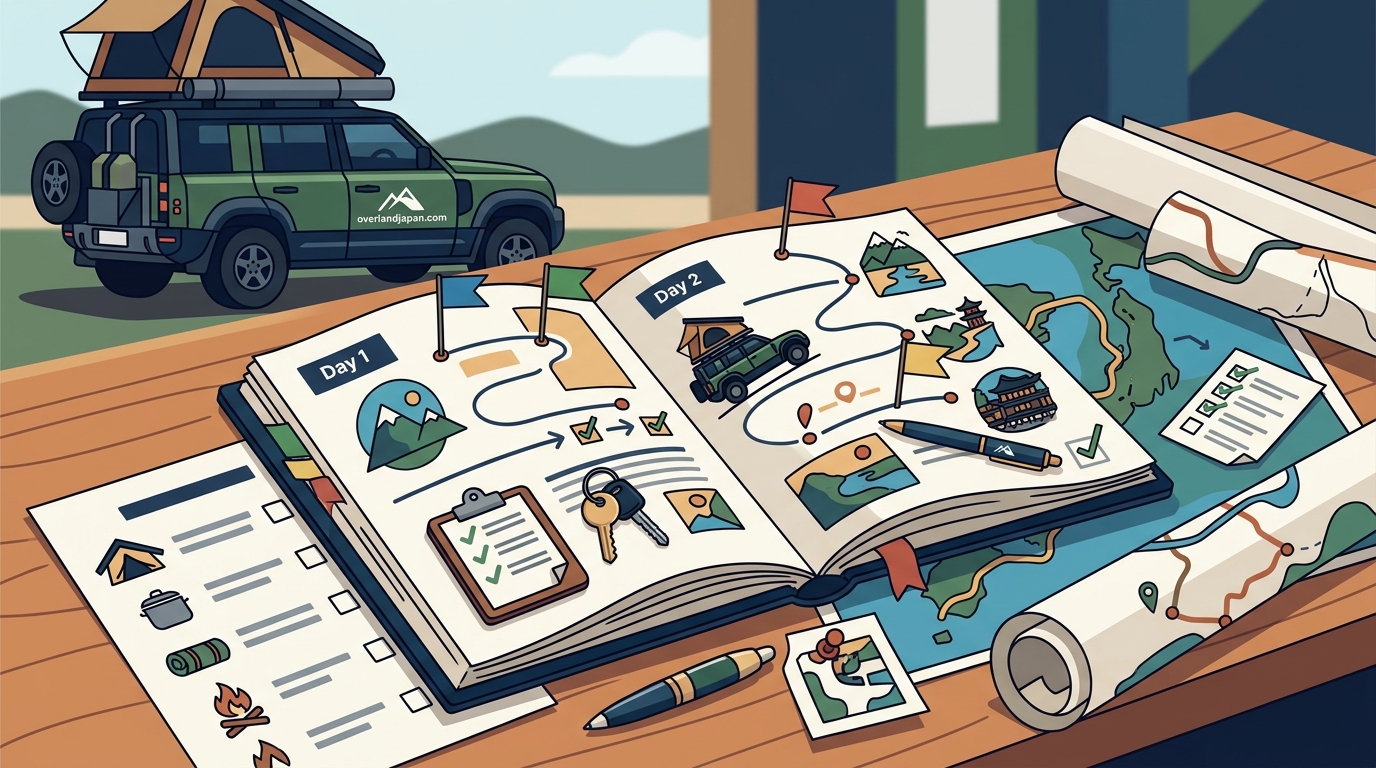
A 3 to 5 day window is the sweet spot for a first-time overland trip. It is long enough to cover significant ground but short enough to maintain high energy levels. The two primary operational bases for these rentals are Tokyo and Fukuoka, which serve as gateways to different regions of Japan.
Tokyo-Based Routes
Starting in Tokyo allows you to explore the central and eastern regions of Honshu. A common route involves heading north towards the Japanese Alps or east towards the Izu Peninsula. The proximity to Mount Fuji and the Hakone region provides stunning volcanic landscapes and hot springs. Pickup and drop-off locations are strategically situated near major transit hubs, such as near Shimokitazawa Station, facilitating easy access for international travelers.
Fukuoka-Based Routes
Fukuoka serves as the gateway to Kyushu, Japan's southernmost main island. This region offers a subtropical climate and distinct cultural heritage. Routes often include visits to Aso National Park, one of the largest calderas in the world, or the coastal roads of the Shimabara Peninsula. The Fukuoka base provides a unique starting point for exploring volcanic terrain and hot spring resorts.
One-Way vs. Return Rentals
Flexibility is a key advantage of overland travel. Overland Campers Japan offers both one-way and return rental options. A one-way trip allows you to start in Tokyo and end in Fukuoka, or vice versa, maximizing your exploration time. However, this option may incur additional logistics fees. Return rentals are generally more cost-effective and simplify the drop-off process.
Essential Rental Logistics
Understanding the rental terms is crucial for a smooth experience. Japanese rental laws and company policies are strict regarding vehicle usage and safety.
Minimum Rental Period
Most overland rentals have a minimum period of two days. This ensures that the vehicle can be properly cleaned, inspected, and prepared between customers. For a 3 to 5 day trip, you will likely rent the vehicle for three to six days, depending on your travel speed and desired stops.
Payment and Insurance
Payments are typically processed via credit card or digital payment methods like PayPay. It is essential to review the Rental Terms and Conditions carefully. These documents outline liability, fuel policies, and emergency procedures. Comprehensive insurance is often available as an optional add-on to protect against off-road damage.
Camping Gear and Supplies
Overland vehicles come fully equipped with rooftop tents, cooking gear, and lighting. However, you must bring your own food, water, and personal items. Many travelers choose to purchase supplies at local supermarkets before heading out. The Equipment Rental page provides details on additional items you can borrow, such as chairs, tables, and extra bedding.
Vehicle Comparison Matrix
Selecting the right vehicle depends on your group size and budget. The following table compares the primary options available through Overland Campers Japan.
| Vehicle Model | Daily Rate (JPY) | Capacity | Fuel Efficiency | Best For |
|---|---|---|---|---|
| Land Rover Defender 110S | ¥33,000+ | 3 Sleepers | 12 km/L | Groups seeking luxury and space |
| Land Rover Defender 90SE | ¥29,800+ | 3 Sleepers | 10 km/L | Couples wanting a classic look |
| Toyota FJ Cruiser | ¥23,500+ | 3 Sleepers | 8.4 km/L | Adventure enthusiasts |
| Suzuki Jimny Sierra | ¥19,800+ | 3 Sleepers | 11 km/L | Couples on a budget |
Key Takeaways
- Vehicle Selection: Choose based on group size and terrain. The Suzuki Jimny is the most affordable, while the Defender offers premium comfort.
- Base Locations: Tokyo and Fukuoka are the only operational bases, offering access to distinct regions of Japan.
- Minimum Rental: The minimum rental period is two days, making 3-5 days an ideal duration for a comprehensive trip.
- Flexibility: One-way rentals are available, allowing for multi-region exploration without backtracking.
- Preparation: Vehicles are fully equipped with rooftop tents and gear, but food and water must be sourced locally.
- Booking: Reservations should be made well in advance, especially during peak cherry blossom and autumn foliage seasons.
- Safety: Always review the Rental Terms and ensure you are comfortable with off-road driving conditions.
Frequently Asked Questions
Can I drive a camper van in Japan without an international driving permit?
No, you must have a valid driver's license from your home country and an International Driving Permit (IDP) to legally drive in Japan. The IDP must be obtained in your home country before arrival.
What is the best time of year for a camper van trip?
Spring (March to May) and autumn (October to November) offer the most pleasant weather and stunning natural scenery. Summer can be hot and humid, while winter may bring snow to northern regions, limiting access.
Do I need to bring my own bedding?
No, the rooftop tents are equipped with mattresses and basic bedding. However, bringing your own sleeping bag liner or pillow can enhance comfort.
How do I find campsites in Japan?
Japan has a network of designated campsites and wild camping areas. Many overland rental companies provide maps and recommendations for safe and legal camping spots.
Is it safe to drive off-road in a Suzuki Jimny?
Yes, the Suzuki Jimny is a capable 4x4 vehicle designed for off-road use. However, drivers should exercise caution and avoid steep or technical terrain if they are inexperienced.
Can I drop off the vehicle in a different city?
Yes, one-way rentals are available between Tokyo and Fukuoka. Additional fees may apply depending on the direction and distance of the drop-off.
What payment methods are accepted?
Overland Campers Japan accepts PayPay and major credit cards such as Visa and MasterCard. Payment is typically required at the time of booking or upon pickup.
Book Your Adventure
Ready to explore Japan on your own terms? Start your journey by booking your camper van today. Whether you choose the rugged Suzuki Jimny or the luxurious Land Rover Defender, Overland Campers Japan ensures a seamless and unforgettable experience.