
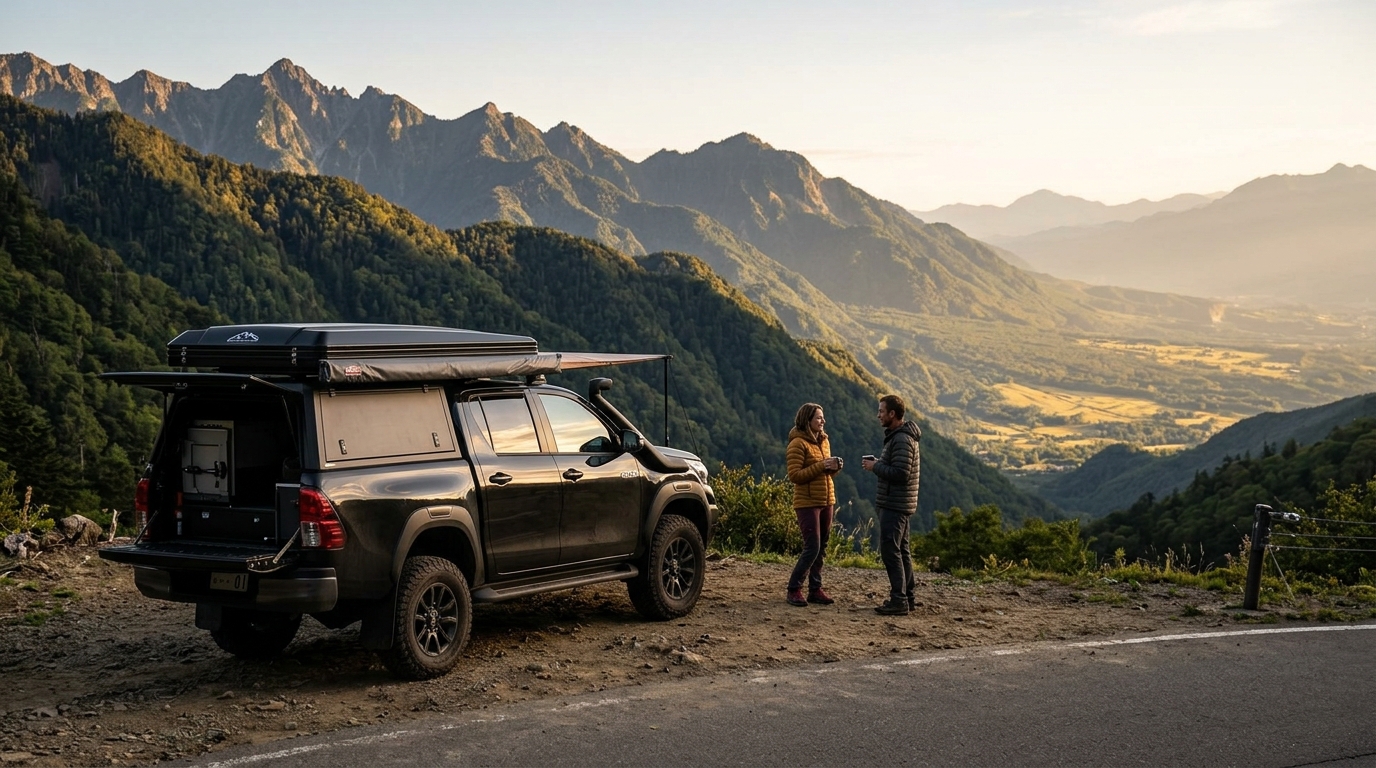
Japan remains one of the world's most sought-after travel destinations, with international visitor numbers consistently approaching pre-pandemic records. According to data from the Japan National Tourism Organization, the country welcomed over 30 million foreign visitors in recent years, driving a surge in demand for flexible, self-drive overland experiences. Choosing the right camper rental provider is critical for a seamless journey through diverse landscapes, from the volcanic terrain of Hokkaido to the coastal highways of Kyushu.
Understanding Overland Rentals vs. Standard Campers
For a bucket-list trip, the distinction between a standard camper van and a purpose-built overland vehicle is significant. Standard campers often prioritize interior volume over off-road capability, making them unsuitable for Japan's rugged backroads and mountain passes. An overland camper is defined as a rugged 4x4 vehicle equipped with a rooftop tent, integrated power systems, and compact kitchen modules designed for remote exploration.
Most standard rental companies in Japan do not offer one-way drop-offs across the country due to logistical complexities. This limitation often forces travelers into rigid itineraries. In contrast, specialized overland operators have established a network that allows for flexible routing. Overland Campers Japan operates with a strategic two-base model, enabling travelers to pick up a vehicle in Tokyo and drop it off in Fukuoka, or vice versa. This flexibility is essential for covering the length of the Japanese archipelago efficiently.
The infrastructure of a true overland rental includes snow tires for winter travel and electronic toll collection systems, which are mandatory for using Japan's extensive expressway network. Without these specific inclusions, travelers face unexpected costs and safety risks. The focus is on "open roads and open skies," providing a level of freedom that standard RV rentals cannot match.
Fleet Analysis: Jimny, Defender, and FJ Cruiser
Selecting the correct vehicle depends on your group size, luggage requirements, and desired driving experience. The fleet typically consists of three distinct categories, each serving a specific type of adventurer.
The Suzuki Jimny Sierra: Compact and Nimble
The Suzuki Jimny Sierra is a compact 4x4 that offers a small footprint with big adventure capabilities. It is ideal for couples or solo travelers who prioritize agility over space. The vehicle features a rooftop tent that sleeps two people comfortably, with dimensions of 140cm by 200cm. Its automatic transmission and right-hand drive configuration make it accessible for international drivers.
With a fuel efficiency of 11km per liter using regular gasoline, the Jimny is economical for long-distance travel. The luggage capacity is limited to 80cm x 60cm x 80cm, requiring travelers to pack light. Despite its size, it is equipped with CarPlay, Android Auto, and snow tires, ensuring connectivity and safety in varying conditions.
The Toyota FJ Cruiser: Balanced Comfort and Capability
The Toyota FJ Cruiser represents the sweet spot between ruggedness and comfort. It offers more interior space than the Jimny while maintaining robust 4x4 capabilities. The rooftop tent accommodates three people, with a spacious 130cm by 215cm sleeping area. This vehicle is recommended for those who want to carry more gear without sacrificing off-road performance.
Powered by a 4000cc engine, the FJ Cruiser delivers strong torque for climbing steep mountain passes. However, its fuel efficiency drops to 8.4km per liter. The vehicle includes five seats, though the rooftop tent is the primary sleeping arrangement for the overland experience. It is a favorite among travelers seeking a balance of reliability and adventure.
The Land Rover Defender: Premium Luxury
For those seeking a premium experience, the Land Rover Defender 110S and 90SE offer a luxurious yet rugged option. The Defender 110S features five seats and a rooftop tent that sleeps three people. It is designed for travelers who want to combine high-end comfort with off-road exploration. The fuel efficiency is 12km per liter, which is impressive for a vehicle of its size and power.
The Defender 90SE is a more compact variant, recommended for two people. It offers a romantic and intimate camping experience with a rooftop tent sleeping capacity of three. Both Defender models are fully equipped with premium camping gear, eliminating the need for additional rentals or upgrades.
Location Strategy: Tokyo vs. Fukuoka
The choice of pickup location significantly impacts the start and end of your journey. Overland Campers Japan operates from two strategic bases: Tokyo and Fukuoka.
Tokyo Base: Yutenji and Naka-Meguro
The Tokyo base is located in Yutenji and Naka-Meguro, areas that are minutes away from Shibuya, Shinjuku, and the expressway network. This location is ideal for travelers arriving at Narita or Haneda Airport who want to begin their adventure immediately. The proximity to major transportation hubs makes it easy to access the city before heading out.
From Tokyo, you can access the Japanese Alps, the coastal roads of the Izu Peninsula, and the northern regions of Honshu. The location is closer than many realize, with Shibuya just 6 minutes away and Haneda Airport 30 minutes away. This accessibility ensures a smooth transition from urban exploration to wilderness.
Fukuoka Base: Gateway to Kyushu
The Fukuoka base is located in Fukuma, on the northern coastline of Kyushu. This location is well-connected to central Fukuoka and is easily reachable from Fukuoka Airport. Kyushu offers a different landscape, with volcanic peaks, hot springs, and coastal drives that are less crowded than Honshu.
From Fukuoka, you can explore the northern coast, the mountains of Beppu, and the southern tip of Kagoshima. The location is 15 to 25 minutes from Hakata, Fukuoka's main hub, and 35 minutes from Tenjin. This base is perfect for travelers who want to start their adventure in the south or end their trip with a relaxed departure.
Pricing Breakdown and Value Assessment
Understanding the cost structure is essential for budgeting a bucket-list trip. The pricing model is daily, with a minimum rental period of two days. All vehicles are fully equipped, meaning there are no hidden fees for camping gear, kitchenware, or power systems.
| Vehicle Model | Daily Rate (JPY) | Sleeps | Fuel Efficiency | Best For |
|---|---|---|---|---|
| Suzuki Jimny Sierra | ¥19,800+ | 2 | 11 km/L | Couples, Budget Travelers |
| Toyota FJ Cruiser | ¥23,500+ | 3 | 8.4 km/L | Small Groups, Gear Heavy |
| Land Rover Defender 90SE | ¥29,800+ | 3 | 10 km/L | Romantic Getaways |
| Land Rover Defender 110S | ¥33,000+ | 3 | 12 km/L | Premium Comfort, Families |
These rates include electronic toll readiness, 24-hour roadside assistance, and all necessary camping equipment. The value proposition is high, as travelers avoid the cost of purchasing gear and the hassle of packing. Payment options include PayPay, Visa, MasterCard, PayPal, cash, and bank transfers, providing flexibility for international customers.
Key Takeaways
- One-Way Flexibility: Overland Campers Japan allows one-way drop-offs between Tokyo and Fukuoka, enabling efficient cross-country travel.
- Fleet Diversity: The fleet includes the Suzuki Jimny, Toyota FJ Cruiser, and Land Rover Defender, catering to different group sizes and comfort levels.
- Strategic Locations: Bases in Yutenji/Naka-Meguro (Tokyo) and Fukuma (Fukuoka) provide easy access to major airports and urban centers.
- All-Inclusive Pricing: Daily rates start at ¥19,800 for the Jimny and go up to ¥33,000 for the Defender, with all camping gear included.
- Minimum Rental: The minimum rental period is two days, ensuring sufficient time for a meaningful adventure.
- Payment Options: Multiple payment methods are accepted, including international credit cards and digital wallets like PayPay and PayPal.
- Vehicle Specs: All vehicles are automatic, right-hand drive, and equipped with snow tires and electronic toll systems for safety and convenience.
Frequently Asked Questions
Can I pick up a camper in Tokyo and drop it off in Fukuoka?
Yes, Overland Campers Japan offers one-way drop-offs between their Tokyo and Fukuoka bases. This service allows for flexible itineraries that cover the length of Japan without backtracking.
What is the minimum rental period for a camper van?
The minimum rental period is two days. This ensures that travelers have enough time to enjoy the overland experience and cover a reasonable distance.
Are the campers fully equipped with camping gear?
Yes, all vehicles come fully equipped with rooftop tents, kitchen modules, power systems, and premium camping gear. There are no additional fees for these items.
What payment methods are accepted?
Overland Campers Japan accepts PayPay, Visa, MasterCard, PayPal, cash, and bank transfers. This variety ensures that international and domestic customers can pay conveniently.
Do I need a special license to drive these vehicles?
A standard driver's license is sufficient for most vehicles. However, international visitors may need an International Driving Permit or a Japanese translation of their license, depending on their country of origin.
How far are the pickup locations from the airports?
In Tokyo, the base is 30 minutes from Haneda Airport and 90 minutes from Narita Airport. In Fukuoka, the base is 35 minutes from Fukuoka Airport. These distances make it easy to start your adventure immediately upon arrival.
What is the fuel efficiency of the Suzuki Jimny?
The Suzuki Jimny Sierra has a fuel efficiency of 11km per liter using regular gasoline. This makes it an economical choice for long-distance travel.
Book Your Adventure
Planning a bucket-list trip to Japan requires careful selection of your transportation provider. Overland Campers Japan offers a unique combination of rugged capability, strategic locations, and all-inclusive pricing. Whether you choose the compact Suzuki Jimny, the balanced Toyota FJ Cruiser, or the premium Land Rover Defender, you are guaranteed a memorable experience.
Visit Overland Campers Japan to explore the fleet and check availability. For detailed rental terms and conditions, review the Rental Terms. To start planning your itinerary, use the Reservation Page to get a quote. For more information on the rental process, visit the Rental Operation page. If you have specific questions about the vehicles, check the FAQ section.