
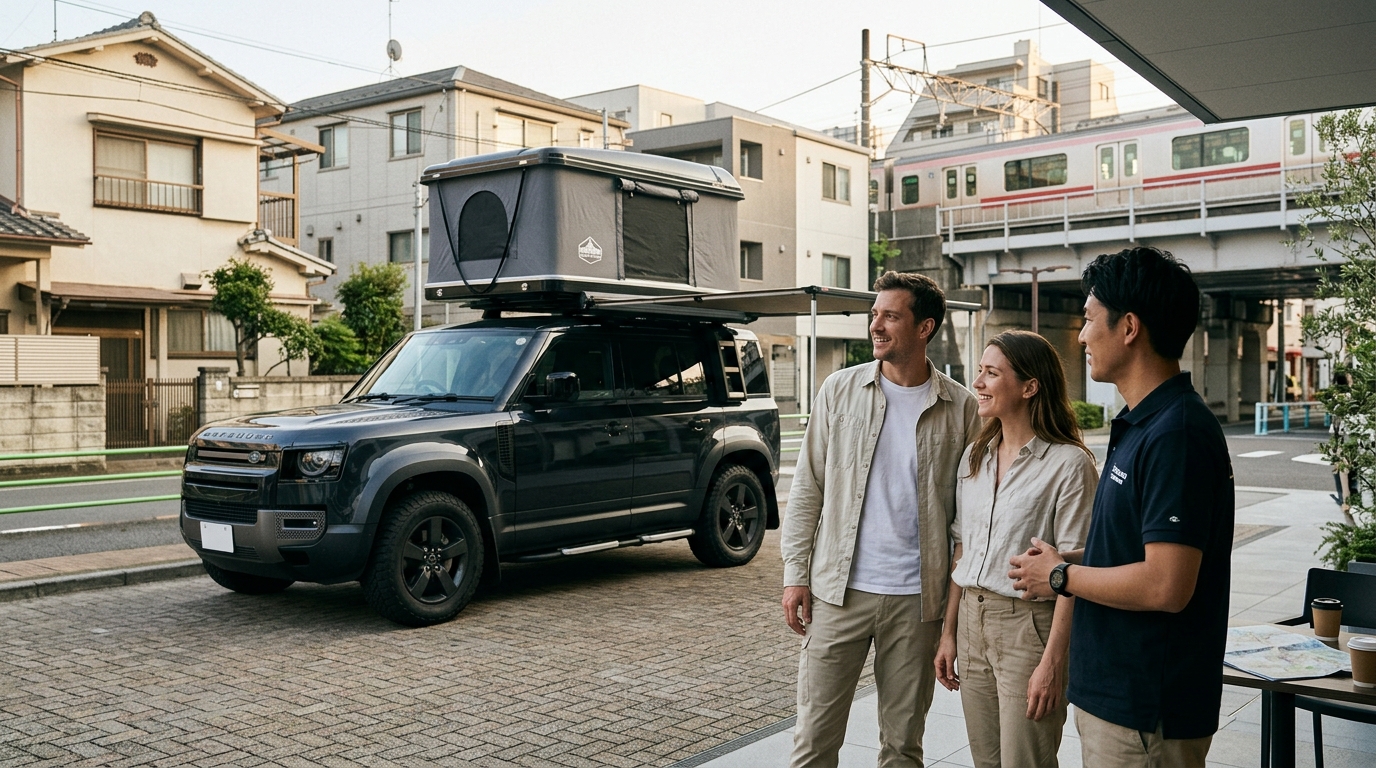
Planning an overland adventure across Japan requires precise logistical coordination, especially regarding vehicle acquisition. Overland Campers Japan operates two primary pickup hubs in Tokyo, strategically positioned to minimize transit time for international travelers. The Yutenji and Naka-Meguro branches offer seamless access to the national expressway network, allowing drivers to leave the urban density behind within minutes. This guide details the exact locations, booking protocols, and vehicle fleet options available for your journey.
Tokyo Pickup Locations: Yutenji and Naka-Meguro
Overland Japan distinguishes itself by offering dual pickup points in Tokyo, ensuring flexibility for travelers based on their accommodation or flight arrival times. Both locations are situated in the southern part of the city, providing rapid access to major arterial roads.
Yutenji Branch
The Yutenji location is ideal for travelers seeking proximity to the southern expressway entrances. It serves as a critical logistical node for those heading toward Mount Fuji, the Japanese Alps, or the Kanto region's northern prefectures. The area is well-connected by local train lines, making it accessible for those staying in central wards.
Naka-Meguro Branch
The Naka-Meguro branch is positioned in one of Tokyo's most vibrant districts. This location is particularly advantageous for travelers who wish to explore the city's renowned shopping and dining scenes before embarking on their road trip. The proximity to Shibuya and Shinjuku allows for easy last-minute supply runs. According to recent tourism data, the majority of international visitors spend their first few days in the Greater Tokyo Area before moving to rural destinations. Japan National Tourism Organization reports indicate that road trip tourism has seen a significant resurgence in post-pandemic travel patterns.
Both branches allow for one-way drop-offs in Fukuoka, enabling a cross-country journey from the east to the west of Japan. This flexibility is a core component of the Overland Japan service model. Japan Guide highlights the logistical benefits of one-way rentals for long-distance overland routes.
Choosing Your Overland Vehicle
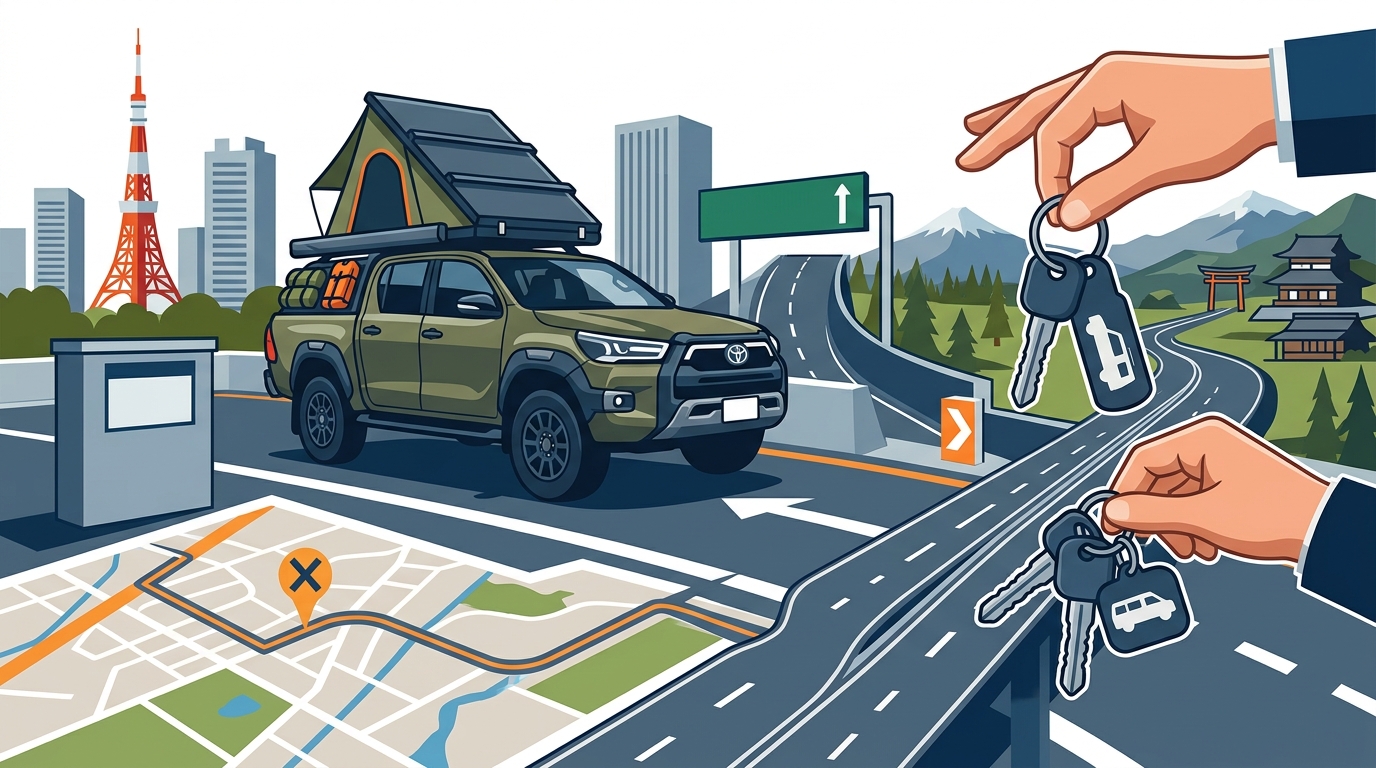
Overland Japan does not offer traditional "camper vans" in the European sense. Instead, the fleet consists of custom-built 4x4 off-road vehicles equipped with rooftop tents and integrated camping systems. This approach prioritizes accessibility to remote trails and rugged terrain that standard vans cannot navigate.
The fleet is divided into two main categories: the compact Suzuki Jimny and the robust Land Rover Defender and Toyota FJ Cruiser. Each vehicle is fully equipped with a kitchen, power supply, and premium bedding, eliminating the need for external gear purchases.
The Suzuki Jimny Sierra
The Jimny is the entry-level option, designed for couples or solo travelers. It features a small footprint that excels in narrow mountain roads and tight forest trails. Despite its size, it offers impressive 4x4 capability. The rooftop tent provides a secure sleeping platform with panoramic views. Suzuki Motor Corporation designs the Jimny specifically for high-clearance off-road performance.
Land Rover Defender 110S and 90SE
For those seeking luxury and space, the Defender series offers a premium overland experience. The 110S provides five seats and ample interior storage, while the 90SE offers a more compact, rugged profile. Both models feature powerful engines and advanced suspension systems suitable for long-distance highway driving and off-road exploration. The Land Rover Defender is historically renowned for its durability in extreme environments.
Toyota FJ Cruiser
The FJ Cruiser bridges the gap between the Jimny and the Defender. It offers a retro aesthetic combined with modern 4x4 technology. The vehicle is spacious enough for three adults to sleep comfortably in the rooftop tent, making it ideal for small families or groups of friends.
The Reservation and Payment Workflow
Booking a vehicle requires a structured process to ensure availability and compliance with Japanese rental regulations. The minimum rental period is two days, which is standard for overland trips to allow for adequate travel time.
Reservations are made through the online inquiry system. Users must select their desired vehicle, pickup date, and branch location. Payment is processed via credit card (Visa, MasterCard) or PayPay. The pricing structure is daily, with rates varying by vehicle class and season. For example, the Suzuki Jimny starts at approximately ¥19,800 per day, while the Land Rover Defender 110S starts at ¥33,000 per day. Japan Travel provides detailed guides on seasonal travel costs in Japan.
It is crucial to book well in advance, particularly during peak seasons such as Golden Week, Obon, and the autumn foliage period. Vehicle availability is limited, and the custom nature of the fleet means that last-minute bookings are rarely possible.
Documentation and Driver Requirements
Operating a rental vehicle in Japan requires specific documentation. International visitors must present a valid passport and an appropriate driving permit.
International Driving Permit (IDP)
Most international tourists require an International Driving Permit (IDP) alongside their home country license. The IDP must be obtained in the traveler's home country before arrival in Japan. It is not issued within Japan. The permit must be valid for the category of vehicle being rented. Japan Automobile Federation outlines the strict requirements for IDP issuance and usage.
Foreign Driver's License
Citizens of certain countries with reciprocal agreements may use their foreign license directly, often with a Japanese translation. However, the IDP remains the most universally accepted document for rental agencies. Overland Japan requires the presentation of the original license and permit at the time of pickup.
Age and Experience
Drivers must typically be at least 20 years old. Some vehicle classes may have higher age requirements or additional fees for younger drivers. The rental agreement includes comprehensive insurance, but drivers are responsible for any damages not covered by the policy.
Vehicle Comparison: Jimny vs. Defender vs. FJ
Selecting the right vehicle depends on your travel style, group size, and budget. The following table summarizes the key differences between the primary fleet options.
| Vehicle Model | Capacity | Best For | Starting Price (Daily) | Key Feature |
|---|---|---|---|---|
| Suzuki Jimny Sierra | 2 Sleepers | Couples, Solo Travelers | ¥19,800 | Compact Off-Road Agility |
| Land Rover Defender 110S | 3 Sleepers | Luxury, Long-Distance | ¥33,000 | Premium Comfort & Space |
| Land Rover Defender 90SE | 3 Sleepers | Rugged Adventure | ¥29,800 | Compact Luxury |
| Toyota FJ Cruiser | 3 Sleepers | Groups, Versatility | ¥23,500 | Retro Style & Power |
The Jimny is the most fuel-efficient option, with a rating of approximately 11 km/L. The Defender and FJ Cruiser offer more power but consume more fuel. All vehicles are equipped with electronic toll payment systems, simplifying highway travel. NEXCO East Japan provides information on electronic toll collection systems.
Key Takeaways
- Overland Japan operates two Tokyo pickup branches: Yutenji and Naka-Meguro.
- The fleet consists of custom 4x4 vehicles with rooftop tents, not traditional camper vans.
- Minimum rental period is two days, with daily rates starting at ¥19,800.
- An International Driving Permit (IDP) is required for most international visitors.
- One-way drop-offs are available in Fukuoka, enabling cross-country travel.
- Booking must be made in advance via the online inquiry system.
- All vehicles include kitchen, power, and bedding, requiring no external gear.
Frequently Asked Questions
Can I pick up the vehicle at Narita or Haneda Airport?
No, Overland Japan does not offer airport pickup. You must travel to the Yutenji or Naka-Meguro branches. Both locations are accessible by train and taxi from the airports.
What is the cancellation policy?
Cancellations are subject to a fee based on the timing of the cancellation relative to the pickup date. Detailed terms are available in the Rental Terms and Conditions.
Is the Jimny suitable for snow driving?
Yes, the Jimny is equipped with snow tires during the winter season. However, drivers must be experienced in winter driving conditions. Japan Automobile Federation provides winter driving safety guidelines.
Can I drop off the vehicle in a different city?
Yes, one-way drop-offs are available in Fukuoka. This allows for a unique east-to-west journey across Japan.
Do I need to bring my own food and water?
The vehicles are equipped with basic kitchenware and water storage. However, you must purchase your own groceries and fuel. Japan Guide offers tips on grocery shopping in Japan.
How far in advance should I book?
It is recommended to book at least one to three months in advance, especially for peak travel seasons. Vehicles are limited in number.
Is insurance included in the rental price?
Yes, comprehensive insurance is included. However, there may be a deductible or excess fee for certain types of damage. Review the Rental Terms and Conditions for details.
Start Your Adventure
Ready to explore Japan on your own terms? Overland Campers Japan provides the vehicles and expertise to make your overland dream a reality. Visit the Reservation Page to check availability and book your vehicle today. Experience the freedom of the open road with a fully equipped overland setup.