
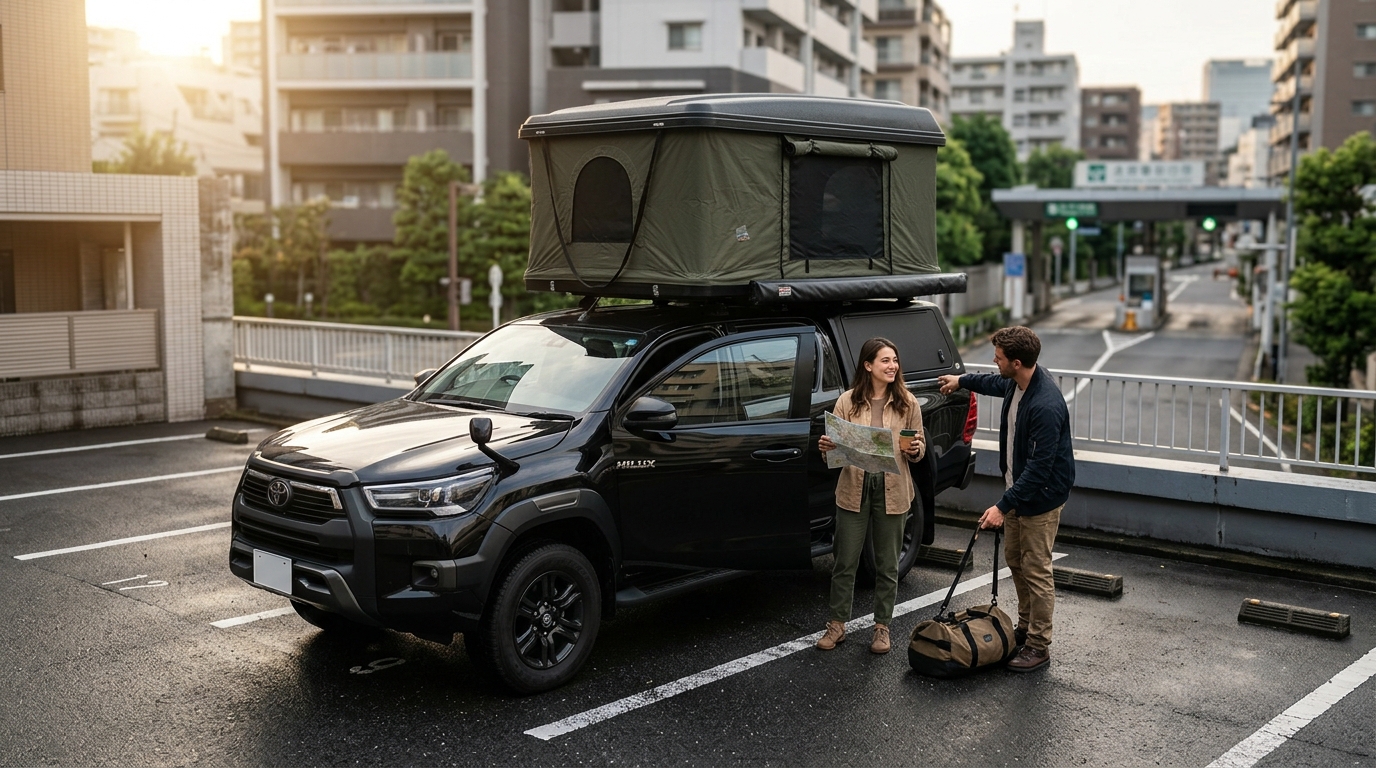
Yes, you can collect a fully equipped 4x4 camper in central Tokyo rather than traveling to a distant airport depot or industrial-area rental yard. Overland Campers Japan’s Tokyo base is in the Yutenji and Naka-Meguro area of Meguro City, close to Shibuya, Shinjuku, Haneda Airport, and the expressway network. The location is designed for travelers who want to move from Tokyo sightseeing to a self-drive adventure with minimal transfer time.
The Tokyo branch is especially useful when your itinerary includes Mount Fuji, Hakone, the Japanese Alps, Nikko, the Tohoku coastline, or rural areas that are difficult to reach efficiently by train. You collect a ready-to-camp vehicle with a rooftop tent and outdoor equipment, complete the handover, and begin your Japan road trip from a central urban location.
The central Tokyo pickup location: Yutenji and Naka-Meguro
Overland Campers Japan’s Tokyo pickup and drop-off base is located at 2-Chome 38-10, Nishimura Building, Nakacho, Meguro City, Tokyo 153-0065. The location is described as Yutenji / Naka-Meguro and is a short walk from Yutenji Station. It is also near Naka-Meguro, making it convenient for visitors staying around Shibuya, Daikanyama, Nakameguro, Ebisu, and central Meguro.
The Tokyo branch lists approximate access times of six minutes from Shibuya, fifteen minutes from Shinjuku, thirty minutes from Haneda Airport, and ninety minutes from Narita Airport. These are useful planning estimates rather than guaranteed journey times, because Tokyo traffic, train connections, airport procedures, and the time of day can change the actual duration. ([overlandjapan.com](https://overlandjapan.com/en/tokyo/?utm_source=openai))
Tokyo pickup address
2-Chome 38-10, Nishimura BuildingNakacho, Meguro City, Tokyo 153-0065
〒153-0065 東京都目黒区中町2丁目38-10 西村ビル
Pickup and return times should be arranged in advance. The rental office operates seven days per week, with standard office hours listed as 08:30 to 18:30. ([overlandjapan.com](https://overlandjapan.com/en/rental-terms-and-conditions/?utm_source=openai))
How to get there from the main Tokyo arrival areas
From Shibuya
Shibuya is the most convenient major reference point. The Tokyo base is approximately six minutes from Shibuya according to the branch information, although you should allow extra time for walking, luggage, train transfers, and the scheduled handover appointment.
From Shinjuku
Travelers staying in Shinjuku can generally reach the area in approximately fifteen minutes under normal conditions. If you are carrying large luggage or camping supplies, allow additional time so you arrive before the agreed collection time.
From Haneda Airport
Haneda is the closest major airport, with an estimated travel time of around thirty minutes. A practical plan is to collect your luggage, complete immigration and customs, travel to the Tokyo base, and leave enough margin for the vehicle briefing before beginning the road trip.
From Narita Airport
Narita is farther away, with an estimated journey of approximately ninety minutes. Travelers arriving at Narita may prefer to spend their first night in Tokyo and collect the camper the following morning, especially after a long international flight.
The Tokyo location is not an airport parking lot. You should use the confirmed meeting instructions supplied with your reservation and avoid assuming that an unannounced walk-in collection will be possible.
What you collect: more than a standard rental car
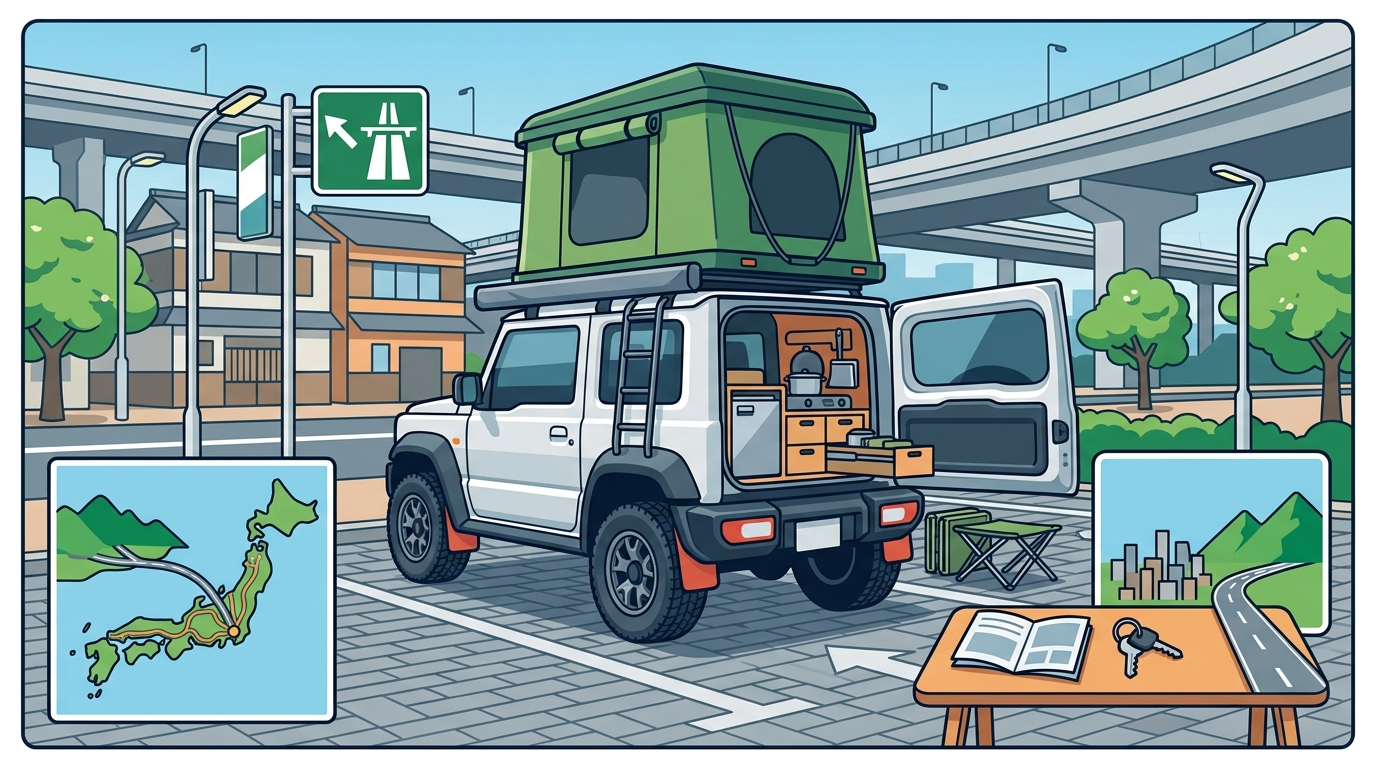
Overland Campers Japan specializes in custom-built 4x4 camping vehicles rather than ordinary cars or empty camper shells. The vehicles are prepared with rooftop tents and camping equipment intended to make the first day straightforward for international visitors and local travelers alike.
Depending on the vehicle and selected options, equipment may include a roof tent, bedding, kitchen equipment, refrigerator, fixed awning, portable battery, cooking utensils, camp chairs, and exterior lighting. The rental terms define camping equipment as additional equipment that can include these items, so confirm the exact contents of your chosen vehicle and reservation before arrival. ([overlandjapan.com](https://overlandjapan.com/en/rental-terms-and-conditions/?utm_source=openai))
- Rooftop sleeping accommodation
- Bedding and camping essentials
- Cooking and food-preparation equipment
- Power and lighting equipment
- Outdoor shelter or awning equipment, where included
- Vehicle-specific safety and operating instructions
This format is useful for travelers who want to camp in Japan without purchasing a tent, transporting bulky equipment on an airplane, or learning an unfamiliar setup after arriving.
Choosing the right Tokyo camper for your group
The best vehicle depends on the number of passengers, sleeping requirements, luggage volume, road conditions, and the type of experience you want. Overland Campers Japan’s Tokyo lineup includes compact Suzuki Jimny Sierra models, Toyota FJ Cruisers, and Land Rover Defenders. A Toyota Hilux overland pickup is also identified as joining the Tokyo fleet soon, so check current availability when making an enquiry. ([overlandjapan.com](https://overlandjapan.com/tokyo/?utm_source=openai))
Suzuki Jimny Sierra: best for two travelers and narrow roads
The Suzuki Jimny Sierra is a strong choice for a couple or solo traveler who values a small footprint. Its compact dimensions make it easier to handle on narrow village roads, mountain approaches, and crowded rural parking areas. The rooftop tent sleeps two people, and individual vehicles are offered in several color options.
Review the dedicated Suzuki Jimny Sierra camper page for the current specification, equipment, availability, and booking options.
Toyota FJ Cruiser: useful for longer trips and extra luggage
The Toyota FJ Cruiser offers more interior room and a larger-engine 4x4 platform than the Jimny. It can suit travelers who want additional storage, a more substantial road-trip vehicle, or flexibility for a small family or group. Confirm the permitted passenger and sleeping capacity for the specific vehicle assigned to your booking.
Land Rover Defender: a premium overland option
The Land Rover Defender range combines a distinctive design with automatic transmission, right-hand drive, and a comfortable platform for a memorable Japan itinerary. The Defender 110 is suited to travelers who need more interior space, while a shorter Defender model may appeal to couples looking for a compact premium 4x4.
You can review the available Land Rover Defender 110 information before deciding which model fits your group.
| Vehicle | Best suited to | Main advantage | Before booking |
|---|---|---|---|
| Suzuki Jimny Sierra | Solo travelers and couples | Compact size and agility | Check sleeping space and luggage capacity |
| Toyota FJ Cruiser | Adventure travelers and small groups | Interior room and robust 4x4 character | Confirm passenger and rooftop sleeping limits |
| Land Rover Defender | Premium road trips and comfort-focused travel | Distinctive design and capable long-distance platform | Compare model, bed dimensions, and equipment |
How to reserve a camper for pickup in Tokyo
- Choose a vehicle: Compare the available Tokyo campers, sleeping capacity, transmission, dimensions, equipment, and rates.
- Submit a reservation enquiry: Enter your intended dates, preferred vehicle, and any options or extras.
- Review the quotation: The team provides the applicable rental price and booking details. Rates are payable in Japanese yen, and confirmed bookings are protected from later rate changes under the rental terms. ([overlandjapan.com](https://overlandjapan.com/en/rental-terms-and-conditions/?utm_source=openai))
- Pay and confirm: The reservation is confirmed after the required payment is received. The current reservation page states that major credit cards and Wise payments are accepted.
- Arrange the handover: Confirm the pickup time, meeting instructions, additional drivers, deposit requirements, and return location.
- Allow time for the briefing: The collection process includes paperwork, an explanation of the vehicle and equipment, insurance or protection information, and the signing of the rental agreement.
Begin with the Overland Campers Japan reservation page to request a quote and check current Tokyo availability.
For cancellations, changes, deposits, liability, and other contractual details, read the Rental Terms and Conditions before paying. The terms state that pickup and return destinations must be arranged in advance and cannot be changed without prior authorization. ([overlandjapan.com](https://overlandjapan.com/en/rental-terms-and-conditions/?utm_source=openai))
What documents do you need at pickup?
Every driver must bring the physical documents required to drive legally in Japan. Electronic copies, scans, or printouts may not be accepted for the driving-document check, so prepare the originals before leaving your home country.
For most international visitors
- Valid passport
- Original, current domestic driver’s license
- Valid International Driving Permit issued under the applicable 1949 Geneva Convention requirements
The IDP must be presented together with the original home-country license and passport. An IDP is not a replacement for the original license. Overland Campers Japan’s published requirements state that all drivers must present the relevant license, IDP, and passport at vehicle collection. ([overlandjapan.com](https://overlandjapan.com/en/rental-terms-and-conditions/?utm_source=openai))
For eligible license holders using a Japanese translation
Drivers from Switzerland, Germany, France, Belgium, Monaco, and Taiwan may use an accredited Japanese translation with their valid original license and passport, subject to Japan’s applicable rules. Confirm the current requirements with the Japan Automobile Federation or the relevant Japanese authority before traveling.
Age and additional drivers
The rental terms specify that drivers must generally be at least 21 years old. Drivers under 21 or over 70 may be accepted with an additional vehicle deposit and higher excess fee. All additional drivers must be registered during pickup; the terms state that there is no additional-driver fee, but an unregistered person should not drive the vehicle. ([overlandjapan.com](https://overlandjapan.com/en/rental-terms-and-conditions/?utm_source=openai))
How to plan the day you collect the camper
Central Tokyo is a convenient pickup point, but it is still a large and busy city. The easiest first day is usually one that avoids an ambitious long-distance drive immediately after arrival.
Recommended first-day pattern
- Stay near the Tokyo pickup area or allow generous travel time from your hotel or airport.
- Arrive with every driver and all physical documents.
- Complete the vehicle inspection, paperwork, equipment demonstration, and deposit process.
- Buy food, drinks, and any personal items before leaving the city.
- Use the first night to reach a reserved campsite or a planned destination outside central Tokyo.
Possible first-trip directions include Mount Fuji and the Fuji Five Lakes, Hakone, the Izu Peninsula, Nikko, the Chichibu area, or the coast of Chiba. Your choice should reflect the season, weather, road conditions, campsite availability, and how comfortable you are driving a right-hand-drive vehicle on Japanese roads.
Japan has many campsites, roadside stations, and highway service areas, but overnight use rules differ. Confirm whether a location permits sleeping, camping equipment, cooking, or awnings before settling in. Avoid treating a roadside rest stop as a campsite, and follow local signs and instructions.
Can you pick up in Tokyo and return elsewhere?
Overland Campers Japan promotes Tokyo and Fukuoka as two bases, with one-way and return-trip options subject to prior arrangement. A Tokyo-to-Fukuoka journey can support a longer cross-country itinerary through central Japan, the Kansai region, Chugoku, and northern Kyushu. Availability, fees, vehicle selection, and the approved return location must be confirmed before booking.
The rental terms currently state that one-way rentals are available only by prior arrangement. Do not assume that a one-way return is automatically included in the daily rental rate. ([overlandjapan.com](https://overlandjapan.com/en/rental-terms-and-conditions/?utm_source=openai))
Key takeaways for central Tokyo camper pickup
- Pickup area: Yutenji / Naka-Meguro in Meguro City, at 2-Chome 38-10, Nishimura Building, Nakacho.
- Convenient access: The base is approximately six minutes from Shibuya, fifteen minutes from Shinjuku, thirty minutes from Haneda, and ninety minutes from Narita under the published estimates.
- Vehicle choice: Tokyo availability includes Suzuki Jimny Sierra, Toyota FJ Cruiser, and Land Rover Defender models, with other vehicles subject to current fleet status.
- Camping setup: Vehicles are prepared with rooftop tents and camping equipment; confirm the exact included items for your selected model.
- Documents: Bring your physical passport, original domestic license, and valid IDP or qualifying Japanese translation.
- Driver age: The rental terms specify a standard minimum age of 21, with additional conditions possible for younger or older drivers.
- One-way travel: Tokyo-to-Fukuoka returns may be possible, but they require advance approval and arrangement.
- Best planning practice: Schedule a realistic first driving day and allow time for the vehicle briefing.
Frequently asked questions
Where can I pick up a camper van in central Tokyo?
You can pick up an Overland Campers Japan vehicle in the Yutenji / Naka-Meguro area of Meguro City. The listed address is 2-Chome 38-10, Nishimura Building, Nakacho, Meguro City, Tokyo 153-0065.
How close is the Tokyo pickup location to Shibuya?
The Tokyo branch is approximately six minutes from Shibuya according to the company’s published access information. Actual travel time depends on traffic, train connections, walking, and your scheduled handover time.
How far is the camper pickup from Haneda Airport?
The published estimate is approximately thirty minutes from Haneda Airport. Allow additional time for immigration, baggage collection, airport transfers, and the vehicle handover.
What must I bring to collect the camper?
Bring your passport, original home-country driver’s license, and the valid legal document required to drive in Japan, usually an International Driving Permit. Drivers from certain countries may use an accredited Japanese translation instead. Physical documents are required; electronic copies may not be accepted.
Can I rent a camper in Tokyo and return it in Fukuoka?
Tokyo-to-Fukuoka one-way rentals may be available by prior arrangement. Confirm the vehicle, dates, return point, availability, and any one-way charges before paying for the reservation.
What types of campers are available from Tokyo?
The Tokyo lineup includes Suzuki Jimny Sierra, Toyota FJ Cruiser, and Land Rover Defender vehicles. The company also identifies a Toyota Hilux overland pickup as joining the Tokyo fleet soon, so check the current lineup and availability for your dates.
Are the vehicles equipped for sleeping and cooking?
Yes. Overland Campers Japan rents custom-built 4x4 vehicles with rooftop tents and camping equipment. The exact package varies by vehicle and selected options, so review the individual vehicle listing and quotation.
What is the minimum age to rent?
The published rental terms state that drivers must generally be at least 21 years old. Drivers under 21 or over 70 may be accepted under additional deposit and excess-fee conditions.
Where should I go on the first day after pickup?
Popular directions from Tokyo include Mount Fuji, Hakone, Izu, Nikko, Chichibu, and the Chiba coast. Choose a destination that matches the season, weather, traffic, campsite availability, and your driving experience.
Start your Japan road trip from central Tokyo
A central Tokyo camper pickup gives you a practical bridge between city travel and outdoor exploration. Instead of organizing a car, tent, bedding, cooking equipment, and specialist gear separately, you can collect one prepared 4x4 vehicle near Yutenji and begin exploring Japan beyond the standard hotel-and-train route.
Check the available vehicles, enter your travel dates, and submit a request through the Tokyo camper reservation page. Before departure, read the Rental Terms and Conditions and confirm your driving documents, pickup appointment, equipment list, and planned return location.