
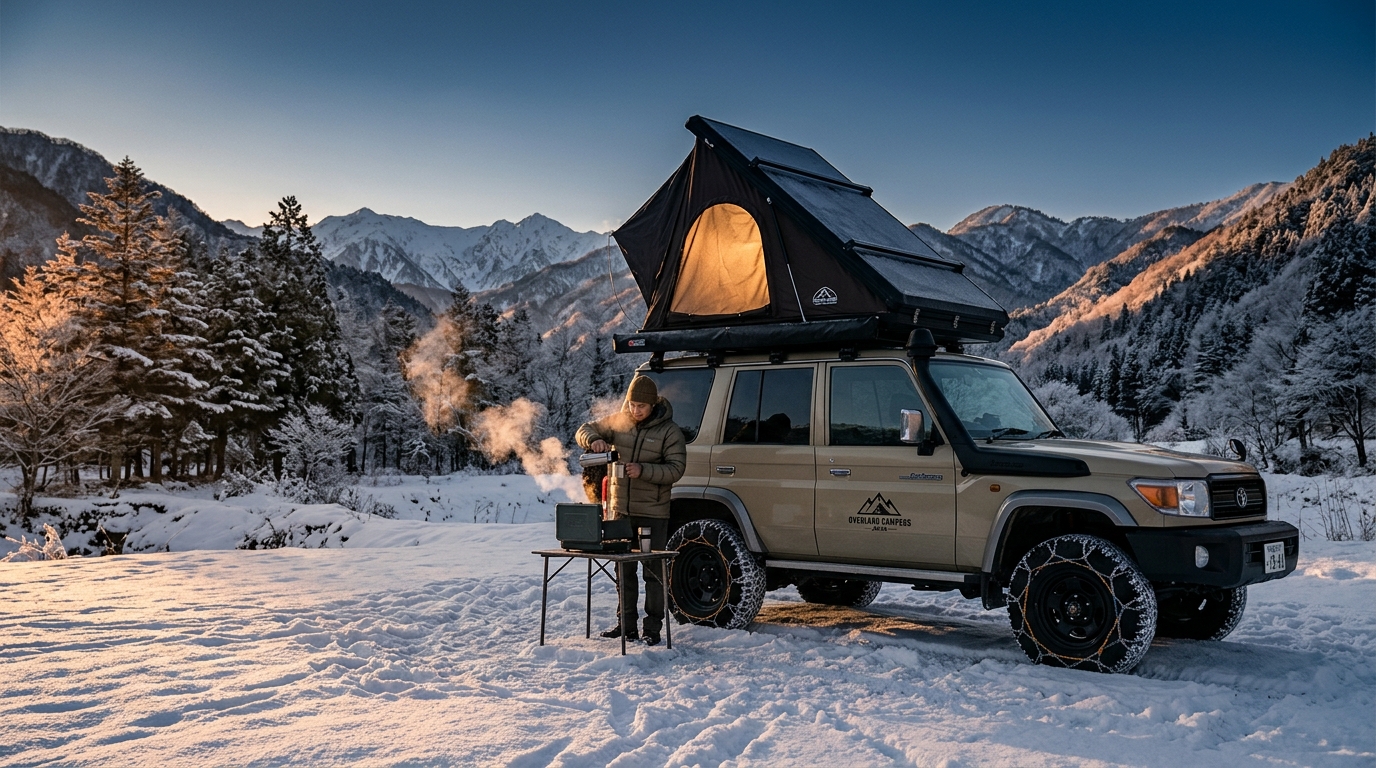
Winter in Japan transforms the landscape into a pristine, snow-covered wonderland, but it also introduces significant logistical challenges for travelers. According to recent tourism data, over 4.6 million international visitors explore Japan annually, with a growing segment seeking off-the-beaten-path winter adventures in regions like Hokkaido and the Japanese Alps. Navigating these conditions requires more than just a standard rental car; it demands a specialized overland vehicle equipped for extreme weather. This guide outlines the critical features you must verify before booking a camper van in Tokyo or Fukuoka to ensure your journey remains safe, comfortable, and unforgettable. (Get in Touch with)
Snow Tires and 4WD Capability
The most non-negotiable feature for any winter camper rental in Japan is the presence of proper snow tires. Standard all-season tires lose grip rapidly when temperatures drop below 7 degrees Celsius or when snow accumulation begins. Snow tires are designed with specific rubber compounds that remain flexible in freezing conditions, providing the traction necessary to navigate icy mountain passes and unplowed rural roads. (Renting a Camper Van)
While 4WD (Four-Wheel Drive) systems help with acceleration and climbing steep inclines, they do not aid in braking. Therefore, the quality of your tires is the primary determinant of your safety. Overland Campers Japan equips its fleet, including the Suzuki Jimny Sierra and Toyota FJ Cruiser, with dedicated snow tires for winter operations. This ensures that whether you are driving through the snowy streets of Niseko or navigating the coastal roads of Kyushu, your vehicle maintains optimal contact with the road surface. (Renting a Camper Van)
When reviewing your rental agreement, explicitly confirm that snow tires are included in the base price. Some budget rental companies charge extra for winterization, but premium providers like Overland Japan build this into their standard offering. This eliminates hidden costs and ensures that the vehicle you receive is immediately ready for winter conditions without delay. (Learn more)
Rooftop Tent Insulation and Heating
One of the most appealing aspects of camper van travel is the ability to sleep under the stars. However, in winter, the rooftop tent becomes your primary shelter against the elements. A standard rooftop tent offers minimal insulation, leading to rapid heat loss and potential condensation issues that can dampen your sleeping bag and gear. (Japan Campervan Rental 4x4)
Effective winter camping requires a tent system with robust thermal insulation layers. Overland Japan’s custom-built vehicles feature rooftop tents designed to withstand harsh weather. These tents are not merely add-ons but integral parts of the vehicle’s camping ecosystem. They are constructed with materials that resist wind penetration and retain heat generated by portable heaters.
Additionally, the setup process in freezing temperatures can be challenging. Look for vehicles that offer easy-access ladders and stable mounting points. The Suzuki Jimny Sierra, for instance, is praised for its nimble handling and compact footprint, making it easier to park in tight, snowy spots while still providing a stable platform for the rooftop tent. The tent’s design must also allow for proper ventilation to prevent carbon monoxide buildup if you are using any heating devices nearby.
Power and Heating Systems
Winter camping in Japan requires reliable power sources for both heating and device charging. Cold weather drains batteries faster than usual, and you cannot rely on standard car chargers to keep your phones and cameras functional for navigation and communication.
A high-capacity auxiliary power system is essential. Overland Japan vehicles come with complete camping systems that include power banks and inverters. These systems allow you to run small electric heaters, charge devices, and power LED lighting without draining the vehicle’s starter battery. This separation of power sources is critical for safety, ensuring that your vehicle can always start even after a long night of camping.
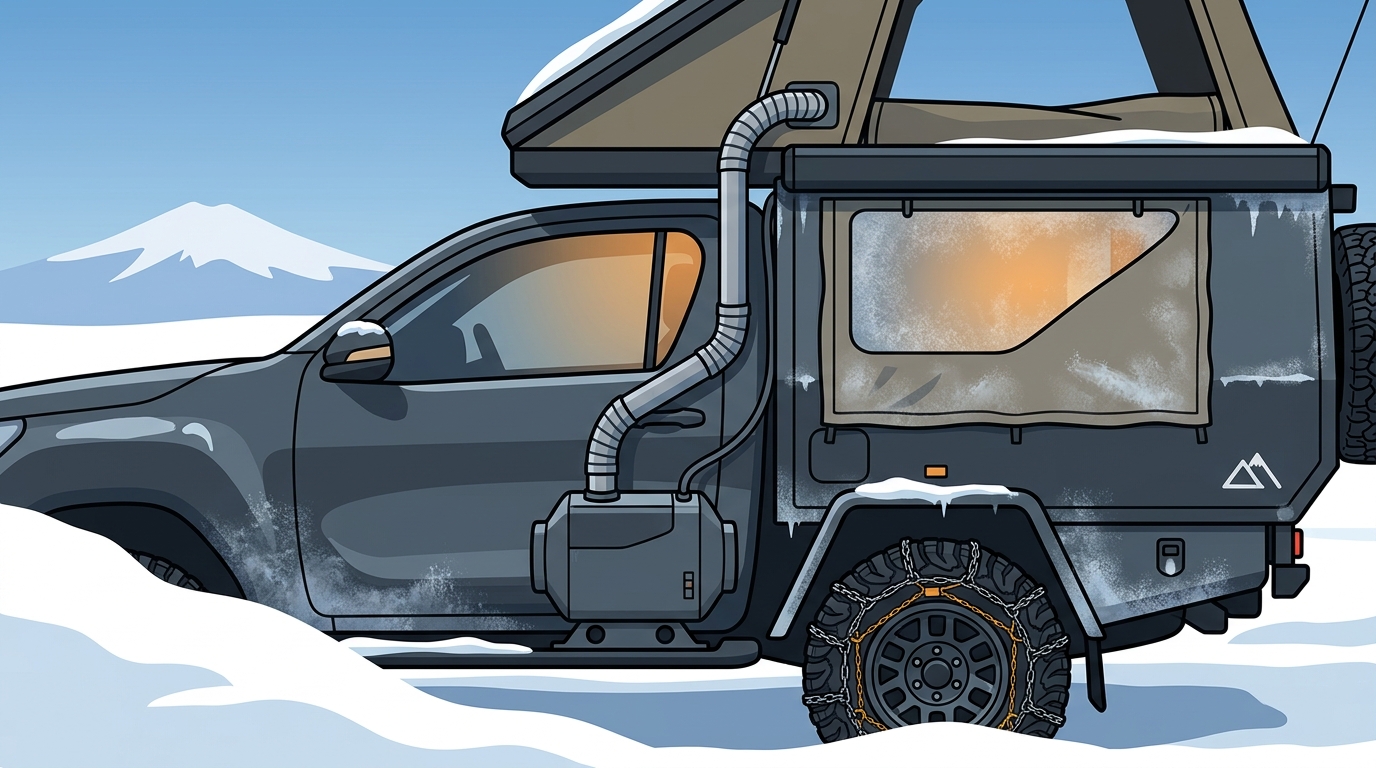
For heating, many winter campers use portable propane heaters or diesel heaters. These devices must be used with extreme caution in enclosed spaces. Ensure your rental vehicle provides adequate ventilation options and that you have access to safe fuel sources. The Toyota FJ Cruiser, with its larger interior volume, often provides more space for safe heater placement compared to the compact Jimny, offering a slight advantage in thermal comfort for longer stays.
Vehicle Selection: Jimny vs. Defender
Choosing the right vehicle depends on your balance of agility, space, and comfort. Overland Japan offers two primary categories of campers: the compact Suzuki Jimny Sierra and the robust Toyota Defender or FJ Cruiser.
| Feature | Suzuki Jimny Sierra | Toyota Defender / FJ Cruiser |
|---|---|---|
| Size & Agility | Compact, easy to park in tight urban and rural spots. | Larger footprint, requires more space for maneuvering. |
| Winter Capability | Lightweight, excellent traction on snow with proper tires. | Heavy-duty 4WD, superior for deep snow and steep grades. |
| Interior Space | Compact, suitable for 2 travelers with minimal luggage. | Spacious, allows for more gear and comfort. |
| Best For | Adventure-focused couples, narrow mountain roads. | Longer expeditions, families, or heavy gear loads. |
The Jimny is ideal for travelers who prioritize the joy of driving through narrow, snow-covered forest roads. Its small size allows it to access areas that larger vehicles cannot. Conversely, the Defender and FJ Cruiser offer a more traditional overland experience with greater comfort and storage capacity. If you plan to spend extended periods in remote areas, the larger vehicle’s ability to carry more fuel and water becomes a significant advantage.
Booking and Logistics for Winter
Winter travel in Japan requires advanced planning. Popular winter destinations such as Hokkaido and the Japanese Alps fill up quickly. Overland Japan recommends booking at least several months in advance to secure your preferred vehicle and dates. The booking process is straightforward, but winter conditions can impact travel times.
When you book, you will receive a detailed quote within three business days. Payment is typically processed via bank transfer or international credit card. It is crucial to understand the cancellation policy, as winter weather can sometimes force changes to your itinerary. Overland Japan’s flexible approach to one-way drop-offs allows you to start in Tokyo and end in Fukuoka, or vice versa, providing flexibility if your plans change due to weather.
Additionally, familiarize yourself with Japanese winter driving laws. Snow chains may be required on certain highways, and some roads are closed entirely during heavy snowfall. Always check local road conditions before setting out. The team at Overland Japan provides pre-departure briefings to ensure you are aware of current road statuses and safety protocols.
Key Takeaways
- Snow Tires are Mandatory: Ensure your rental includes dedicated snow tires, not just all-season tires, for safe braking and traction.
- Insulated Rooftop Tents: Verify that the rooftop tent has thermal insulation to retain heat and resist wind in freezing conditions.
- Independent Power Systems: Choose vehicles with auxiliary power banks to keep devices charged and run heaters without draining the starter battery.
- Vehicle Choice Matters: The Suzuki Jimny offers agility for narrow roads, while the Toyota Defender provides space and power for deep snow.
- Book Early: Winter campers are in high demand; book months in advance to secure availability.
- One-Way Options: Utilize one-way drop-off services to create flexible itineraries between Tokyo and Fukuoka.
- Pre-Departure Briefing: Always attend the vehicle walkthrough to understand heater usage and emergency protocols.
Frequently Asked Questions
Do I need snow chains for a camper van in Japan?
While Overland Japan vehicles come with snow tires, snow chains may be required on specific highways or mountain passes during heavy snowfall. It is essential to check real-time road conditions and carry chains if recommended by local authorities.
Can I rent a camper van in Tokyo for a winter trip?
Yes, Overland Japan offers camper rentals in Tokyo, with pick-up locations near Yutenji and Naka-Meguro. These vehicles are fully equipped for winter travel and can be driven to snowy regions like Nagano or Niigata.
How cold does it get in a rooftop tent in winter?
Temperatures in a rooftop tent can drop significantly at night. Using an insulated tent liner and a safe, portable heater is crucial. Overland Japan’s tents are designed to mitigate heat loss, but proper clothing and sleeping bags rated for sub-zero temperatures are still necessary.
Is the Suzuki Jimny safe in deep snow?
Yes, the Suzuki Jimny is highly capable in snow due to its lightweight design and 4WD system. Its small size allows it to navigate narrow, unplowed roads that larger vehicles cannot. However, it has less ground clearance than the Defender, so deep powder requires careful driving.
What is the cancellation policy for winter bookings?
Cancellation policies vary based on the booking time. Generally, cancellations made well in advance incur lower fees. Overland Japan provides clear terms upon confirmation, and it is advisable to purchase travel insurance to cover weather-related disruptions.
Can I drop off the camper in Fukuoka if I start in Tokyo?
Yes, Overland Japan offers one-way drop-off services between Tokyo and Fukuoka. This allows for flexible itineraries, such as exploring the north of Japan and ending in the south, though additional fees may apply.
How do I heat the camper van at night?
Most Overland Japan vehicles are equipped with portable heating solutions. You can use propane heaters or electric heaters powered by the vehicle’s auxiliary battery. Always ensure proper ventilation to prevent carbon monoxide buildup.
Book Your Adventure
Winter in Japan offers a unique and magical experience, but it requires the right preparation. By choosing a fully equipped overland camper from Overland Japan, you ensure that your adventure is safe, comfortable, and tailored to the challenges of the season. Whether you opt for the agile Suzuki Jimny or the robust Toyota Defender, you are ready to explore Japan’s snowy landscapes with confidence.
Ready to plan your winter expedition? Book your camper van today and secure your spot for an unforgettable journey across Japan’s winter wonderlands.