
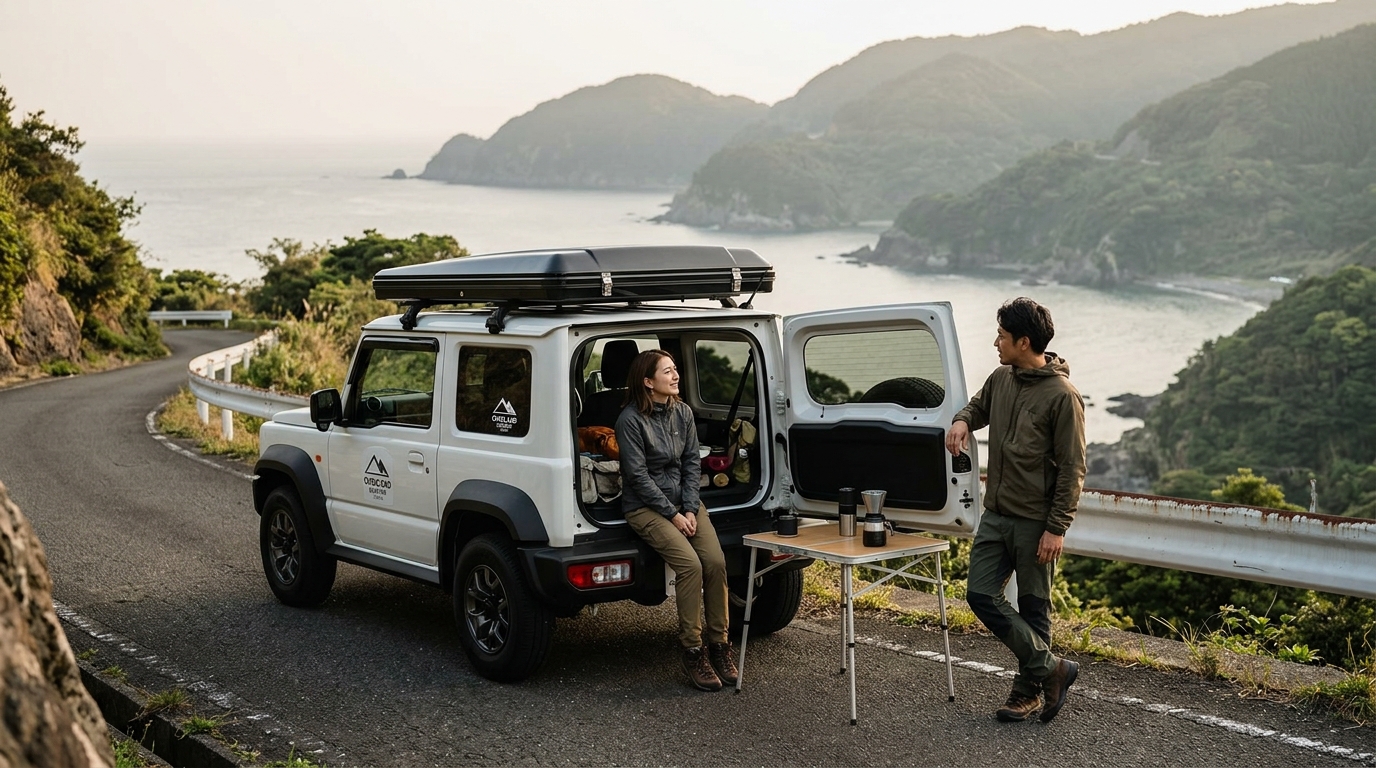
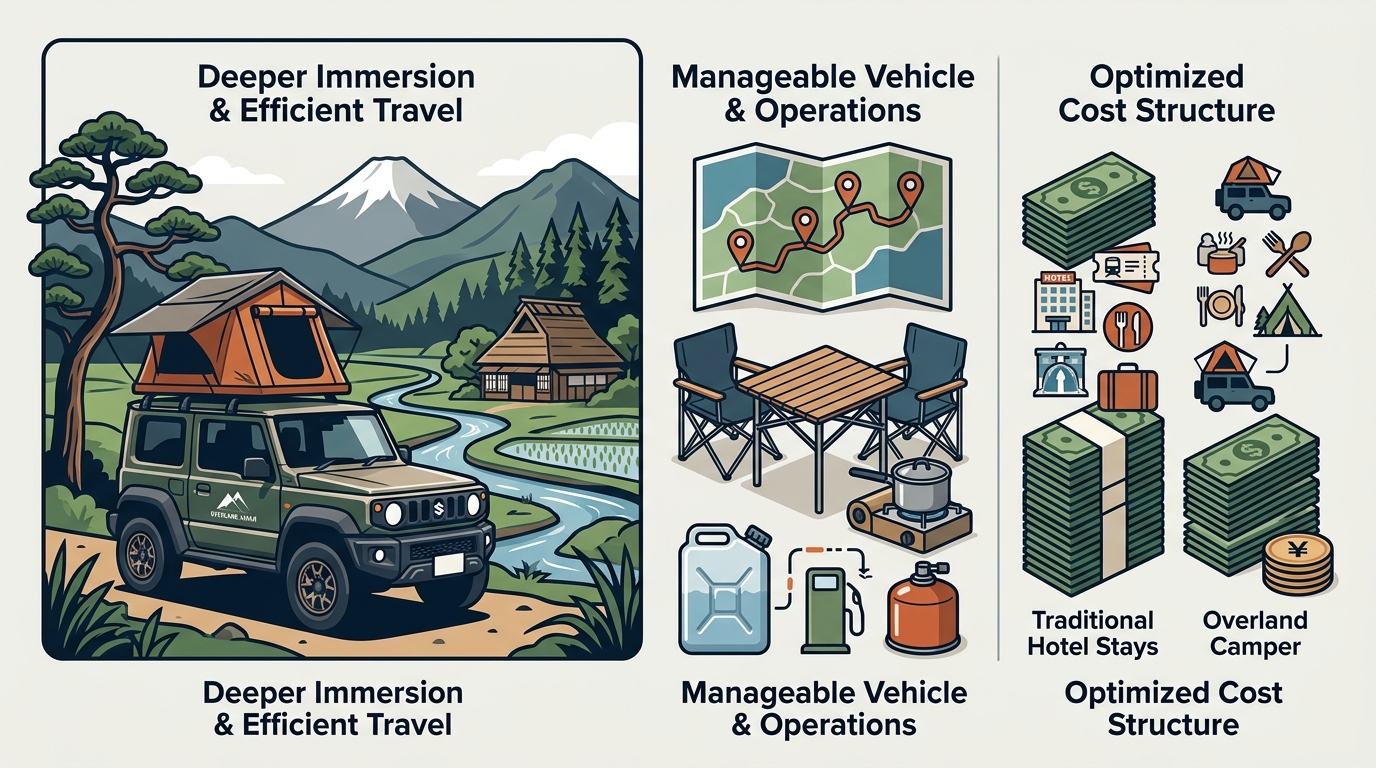
Overland camping in Japan has evolved from a niche hobby into a primary method for exploring the archipelago's remote landscapes. According to recent tourism data, the demand for self-drive camping vehicles has surged, with many travelers reporting that a 3 to 5 day window provides the optimal balance between adventure and logistical feasibility. This specific duration allows travelers to escape urban congestion without facing the fatigue of extended highway driving. The tangible benefits of this timeframe include deeper immersion in regional cultures, manageable vehicle maintenance, and a cost structure that often undercuts traditional hotel stays.
Strategic Route Planning for Short Durations
When limiting a trip to three to five days, the primary constraint is time. Overland Campers Japan operates from two strategic bases in Tokyo and Fukuoka, allowing for flexible one-way drop-offs. This flexibility is critical for maximizing the 3–5 day window. A trip starting in Tokyo can extend into the Japanese Alps or the Pacific coast, while a Fukuoka start opens up the volcanic landscapes of Kyushu.
For a three-day trip, the focus must be on proximity. Travelers should select a base within 30 minutes of major expressway entrances. Overland Japan's FAQ resources provide detailed guidance on pick-up logistics, ensuring that the first day is not lost to administrative delays. The tangible benefit here is the preservation of daylight hours for exploration rather than bureaucracy.
For a five-day trip, the scope expands significantly. Travelers can cross regional boundaries, moving from coastal plains to mountainous interiors. This duration allows for a "hub and spoke" approach, where a central campsite serves as a base for daily excursions. This method reduces the cognitive load of packing and unpacking daily, a common pain point in shorter trips.
Vehicle Selection and Capability
The choice of vehicle directly impacts the tangible benefits of the trip. Overland Campers Japan offers a fleet of custom-built 4x4s, including the Suzuki Jimny Sierra, Toyota FJ Cruiser, and Land Rover Defender. Each vehicle offers distinct advantages for short-duration overlanding.
The Suzuki Jimny Sierra is ideal for couples or solo travelers seeking agility. Its small footprint allows access to narrow forest roads and steep mountain passes that larger vehicles cannot navigate. The Jimny Sierra specifications highlight its compact dimensions, which are crucial for finding legal parking spots at remote trailheads. Despite its size, the Jimny is equipped with a rooftop tent and full camping gear, making it a self-contained unit.
The Toyota FJ Cruiser and Land Rover Defender offer more space and comfort for groups. The FJ Cruiser, with its robust 4x4 capability, is suited for rougher terrain. The Land Rover Defender 110S provides a luxurious experience with ample interior space. The Defender 110S is particularly noted for its ability to sleep three people comfortably in the rooftop tent, making it a strong choice for small families.
Understanding the vehicle's capabilities is essential for safety. All vehicles come with 24-hour roadside assistance, a critical benefit for short trips where mechanical issues can derail the entire itinerary. Overland Japan's rental options ensure that every vehicle is inspected and prepared for off-road use, reducing the risk of breakdowns.
Cost Efficiency and Hidden Savings
One of the most significant tangible benefits of a 3–5 day overland trip is cost efficiency. Traditional hotel stays in Japan can be expensive, particularly in tourist-heavy areas like Hakone or Karuizawa. By combining accommodation and transportation into a single rental fee, travelers can often reduce overall costs.
The rental rates for Overland Campers Japan vehicles start at approximately ¥19,800 per day for the Suzuki Jimny and go up to ¥33,000 per day for the Land Rover Defender. Booking details indicate that these rates include all camping gear, eliminating the need for additional equipment purchases or rentals. This all-inclusive model simplifies budgeting and prevents unexpected expenses.
Furthermore, overlanding allows for flexible dining options. Travelers can cook their own meals using the provided kitchen equipment, significantly reducing food costs. This is particularly beneficial in remote areas where restaurant options are limited and prices are inflated. The ability to prepare meals on-site also enhances the authenticity of the experience, connecting travelers with local ingredients and traditions.
Hidden savings also come from the avoidance of parking fees. Many designated overland campsites offer free or low-cost parking, whereas urban hotels charge substantial fees for vehicle storage. This benefit is often overlooked but adds up significantly over a multi-day trip.
Camping Logistics and Gear
Logistics are the backbone of a successful overland trip. Overland Campers Japan provides fully equipped vehicles, meaning travelers do not need to worry about purchasing tents, sleeping bags, or cooking utensils. This "gachi tebura" (no gear needed) approach is a major benefit for beginners.
The rooftop tents are a key feature of these vehicles. They provide elevated sleeping quarters, which offer protection from wildlife and damp ground. Common questions about rooftop tents often address safety and comfort, with users reporting high satisfaction with the stability and insulation of the provided units.
Power management is another critical logistical aspect. The vehicles are equipped with power systems that can charge devices and run small appliances. This ensures that travelers can stay connected and comfortable, even in remote locations. Understanding the power limits is essential to avoid depletion, and the provided documentation offers clear guidelines on usage.
Waste management is also handled through the provided gear. Travelers are equipped with containers for gray water and solid waste, ensuring that campsites remain clean and environmentally friendly. This responsibility is part of the overland ethos and contributes to the preservation of Japan's natural beauty.
Regional Itinerary Examples
Different regions offer unique benefits for short-duration overland trips. The following table summarizes three popular routes suitable for a 3–5 day itinerary.
| Region | Base City | Key Attractions | Vehicle Recommendation |
|---|---|---|---|
| Kanto | Tokyo | Hakone, Nikko, Japanese Alps | Land Rover Defender 110S |
| Kyushu | Fukuoka | Aso Caldera, Yufuin, Beppu | Toyota FJ Cruiser |
| Chubu | Tokyo | Karuizawa, Shiga Kogen | Suzuki Jimny Sierra |
The Kanto region, accessible from Tokyo, offers a mix of mountain and coastal experiences. The Japanese Alps provide stunning autumn foliage and hiking trails. Overland Campers Japan recommends the Defender for this route due to the varied terrain and potential for snow in higher elevations.
Kyushu, accessible from Fukuoka, is known for its volcanic activity and hot springs. The Aso Caldera is a must-visit destination, offering vast open spaces ideal for overlanding. The FJ Cruiser is well-suited for the rugged roads leading to these sites. Reservations for Kyushu trips should be made well in advance, especially during peak seasons.
The Chubu region, also accessible from Tokyo, offers alpine resorts and lakes. The Jimny Sierra is ideal for this route due to its agility on narrow mountain roads. The region is particularly popular for winter sports, and the Jimny's snow tires make it a safe choice for these conditions.
Key Takeaways
- A 3–5 day trip offers the optimal balance between adventure and logistical feasibility for overlanding in Japan.
- Overland Campers Japan operates from Tokyo and Fukuoka, providing flexible one-way drop-off options.
- The Suzuki Jimny Sierra starts at approximately ¥19,800 per day, offering a cost-effective entry point.
- All vehicles come fully equipped with rooftop tents, kitchen gear, and power systems, eliminating the need for external rentals.
- Regional routes in Kanto, Kyushu, and Chubu offer diverse landscapes suitable for short-duration trips.
- 24-hour roadside assistance is included with all rentals, providing peace of mind for travelers.
- Booking in advance is crucial, especially for peak seasons and popular vehicle models.
Frequently Asked Questions
What is the minimum rental period for an overland vehicle?
The minimum rental period is typically two days. This ensures that travelers have enough time to set up camp and enjoy the experience without feeling rushed. Rental terms and conditions outline the specific policies regarding duration and cancellation.
Do I need a special license to drive an overland vehicle in Japan?
A standard driver's license is sufficient for most overland vehicles. However, international visitors may need an International Driving Permit (IDP) along with their home country license. FAQ resources provide detailed information on licensing requirements.
Can I drop off the vehicle in a different city?
Yes, one-way drop-offs are available between Tokyo and Fukuoka. This flexibility allows for multi-region itineraries without the need to return to the starting point. Booking options include details on one-way fees and availability.
What happens if the vehicle breaks down?
All vehicles come with 24-hour roadside assistance. In the event of a breakdown, travelers can contact the support team for immediate help. Rental options include comprehensive support to ensure a safe trip.
Are rooftop tents safe for sleeping?
Yes, the rooftop tents are designed for safety and comfort. They are securely mounted to the vehicle and provide protection from wildlife and damp ground. Customer reviews highlight the stability and comfort of the provided tents.
Can I cook on the vehicle?
Yes, all vehicles are equipped with kitchen gear, including stoves and utensils. Travelers can prepare their own meals using the provided equipment. Reservation details confirm that all necessary cooking equipment is included.
How do I charge my devices?
The vehicles are equipped with power systems that can charge devices and run small appliances. Travelers should follow the provided guidelines to manage power usage effectively. FAQ resources offer tips on power management.
Start Your Adventure
The tangible benefits of a 3–5 day overland trip in Japan are clear. From cost efficiency to deep cultural immersion, this mode of travel offers a unique way to explore the country. Overland Campers Japan provides the vehicles, gear, and support needed to make this experience seamless. Book your overland adventure today and discover the beauty of Japan on your own terms.