
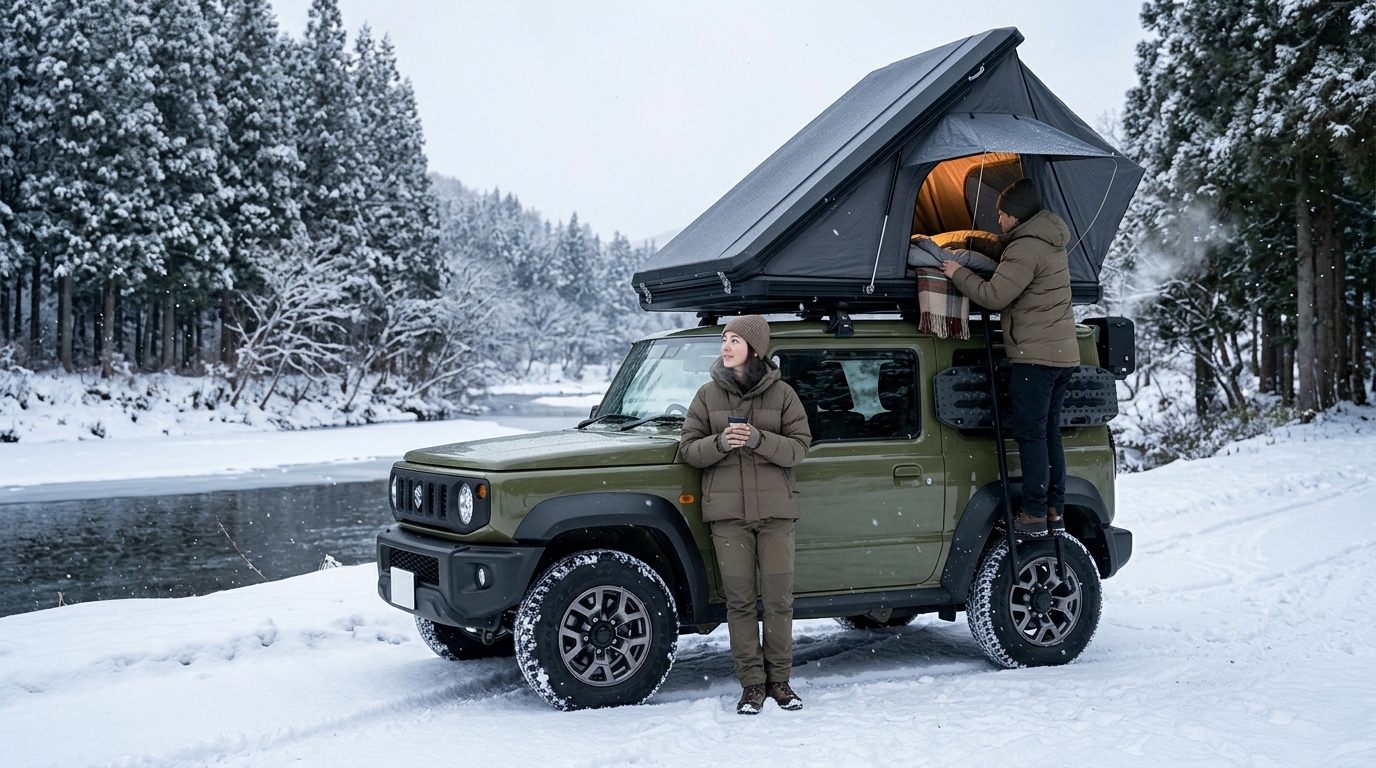
Winter camping in Japan demands rigorous vehicle preparation to ensure safety and comfort. Overland Campers Japan maintains a fleet of fully equipped 4x4 vehicles, including the Suzuki Jimny Sierra and Toyota FJ Cruiser, designed to handle snow and cold temperatures. This article details the specific protocols used to prepare these vehicles for winter expeditions across Japan's diverse landscapes.
Tire Selection and Traction Standards
The foundation of any winter-ready vehicle is its tires. Overland Campers Japan equips its fleet with specialized snow tires to ensure maximum grip on icy roads and packed snow. This is not merely a suggestion but a critical safety requirement for driving in Japan's mountainous regions during the winter months.
Why Snow Tires Matter
Standard all-terrain tires lose flexibility in freezing temperatures, reducing traction. Snow tires remain pliable in cold conditions, providing essential grip. According to automotive safety data, vehicles equipped with proper winter tires significantly reduce stopping distances on snow-covered roads. This is a vital statistic for anyone planning to drive in Hokkaido or the Japanese Alps.
Fleet Tire Specifications
Each vehicle in the Overland Japan fleet undergoes a strict tire inspection before winter deployment. The Suzuki Jimny Sierra, known for its compact size and agility, is fitted with high-quality snow tires that balance off-road capability with on-road stability. Similarly, the larger Land Rover Defender 110S and Toyota FJ Cruiser receive heavy-duty snow tires capable of handling deep snow drifts.
For more details on the specific tire setups for each vehicle, you can explore the Suzuki Jimny Sierra specifications or the Land Rover Defender 110S details.
Heating Systems and Cabin Comfort
Keeping the interior of a camping vehicle warm is essential for preventing hypothermia and ensuring a restful night. Overland Campers Japan utilizes advanced heating solutions to maintain cabin temperature even in sub-zero conditions.
Integrated Cabin Heaters
The fleet vehicles are equipped with reliable cabin heaters that draw power from the vehicle's battery or engine. These systems are tested extensively to ensure they can raise the interior temperature quickly. The Toyota FJ Cruiser, with its robust engine, provides efficient heating even when idling in remote locations.
Supplementary Heating Options
In addition to the primary heating systems, Overland Japan provides supplementary heating gear. This includes portable diesel heaters that can be safely used inside the vehicle or tent. These heaters are designed to burn fuel efficiently without producing dangerous levels of carbon monoxide, provided they are used in well-ventilated areas.
For information on the comfort features of the Suzuki Jimny Sierra camping setup, please refer to the vehicle page.
Roof Tent Insulation and Weatherproofing
The rooftop tent is a signature feature of Overland Campers Japan. It offers a unique sleeping experience but requires specific preparation for winter use. The company ensures that each tent is fully insulated and weatherproofed to withstand harsh winter elements.
Insulation Materials
High-density foam insulation is installed in the walls and floor of the rooftop tent. This material traps heat effectively, reducing the energy required to keep the sleeping area warm. The insulation also dampens wind noise, creating a quieter environment for rest.
Weatherproofing Seals
All zippers and seams are treated with waterproof sealants to prevent snow and rain from entering the tent. The tent fabric is made from heavy-duty, water-resistant material that sheds snow easily. This prevents the tent from becoming waterlogged and heavy, which could compromise the vehicle's roof rack.
For a visual overview of the rental options including rooftop tents, visit the fleet page.
Power Management in Cold Weather
Batteries lose capacity in cold temperatures, making power management a critical aspect of winter vehicle preparation. Overland Campers Japan implements strict protocols to ensure that all electrical systems remain functional throughout the trip.
Battery Health Checks
Before each winter season, all vehicle batteries undergo a comprehensive health check. Weak or aging batteries are replaced to prevent unexpected failures. The company uses high-capacity lithium batteries that perform better in cold conditions compared to traditional lead-acid batteries.
Power Distribution Systems
The fleet is equipped with intelligent power distribution systems that monitor battery levels and prioritize essential loads. This ensures that heating and lighting systems have power even if auxiliary devices are turned off. The system also includes solar charging capabilities to supplement power during daylight hours.
Learn more about the Suzuki Jimny Sierra technical specs to understand its power capabilities.
Safety Protocols and Emergency Gear
Winter driving in Japan requires additional safety measures. Overland Campers Japan includes essential emergency gear in every rental to handle unexpected situations.
Emergency Kit Contents
Each vehicle is equipped with a winter emergency kit that includes snow shovels, traction mats, and warm blankets. These items are crucial for freeing the vehicle if it becomes stuck in snow. The kit also includes a first-aid kit and a fire extinguisher for general safety.
Communication Devices
Reliable communication is vital in remote winter locations. Overland Japan provides satellite communication devices or ensures that vehicles have strong cellular connectivity in most areas. This allows guests to contact roadside assistance if needed.
For details on the rental process and safety briefings, please check the FAQ section.
Key Takeaways
- Overland Campers Japan uses specialized snow tires on all fleet vehicles for winter traction.
- Vehicles include integrated cabin heaters and supplementary diesel heaters for warmth.
- Rooftop tents are insulated with high-density foam and sealed against weather.
- Battery health is rigorously checked, and high-capacity lithium batteries are used.
- Emergency kits include snow shovels, traction mats, and communication devices.
- The fleet includes the Suzuki Jimny Sierra, Toyota FJ Cruiser, and Land Rover Defender.
- Preparation protocols ensure safety and comfort in Japan's harsh winter conditions.
Frequently Asked Questions
Are the vehicles suitable for deep snow?
Yes, the 4x4 vehicles in the Overland Japan fleet are specifically equipped with snow tires and high ground clearance to handle deep snow conditions safely.
Do you provide heating for the rooftop tent?
While the tent itself is insulated, we recommend using the vehicle's cabin heater or a portable diesel heater for additional warmth inside the tent.
What happens if the vehicle gets stuck in snow?
Each vehicle comes with a snow shovel and traction mats. Additionally, 24-hour roadside assistance is available for all rentals.
Can I rent these vehicles year-round?
Yes, the vehicles are available for rent throughout the year. However, winter rentals require adherence to specific safety protocols.
How do you maintain the batteries in cold weather?
We use high-capacity lithium batteries and perform regular health checks to ensure they can withstand cold temperatures without losing charge.
Is the rooftop tent waterproof?
Yes, the rooftop tents are made from heavy-duty, water-resistant materials and are sealed to prevent snow and rain from entering.
What emergency gear is included?
Emergency kits include snow shovels, traction mats, warm blankets, first-aid supplies, and fire extinguishers.
Book Your Winter Adventure
Experience the beauty of Japan's winter landscapes with confidence. Overland Campers Japan ensures that every vehicle is meticulously prepared for your journey. Book your winter rental today and explore the snow-covered roads of Japan in comfort and safety.