
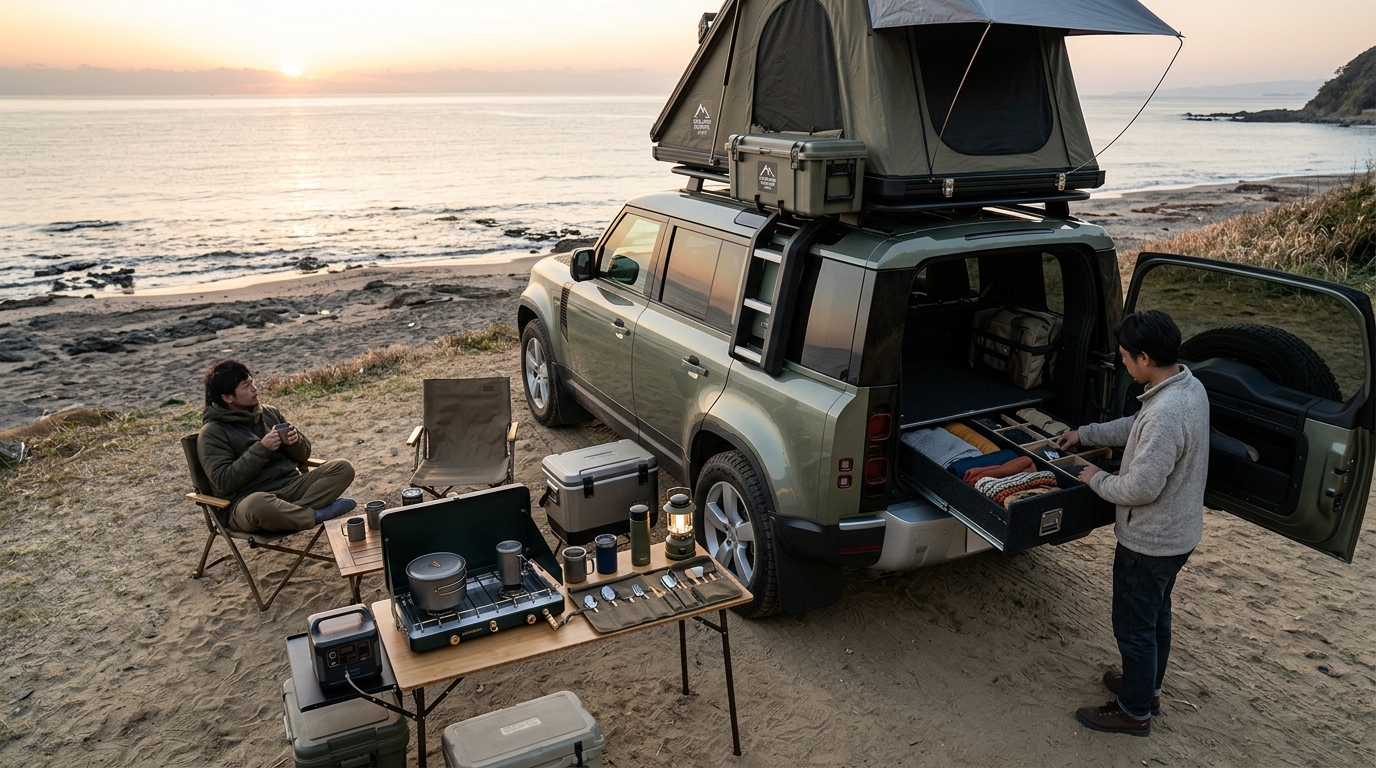
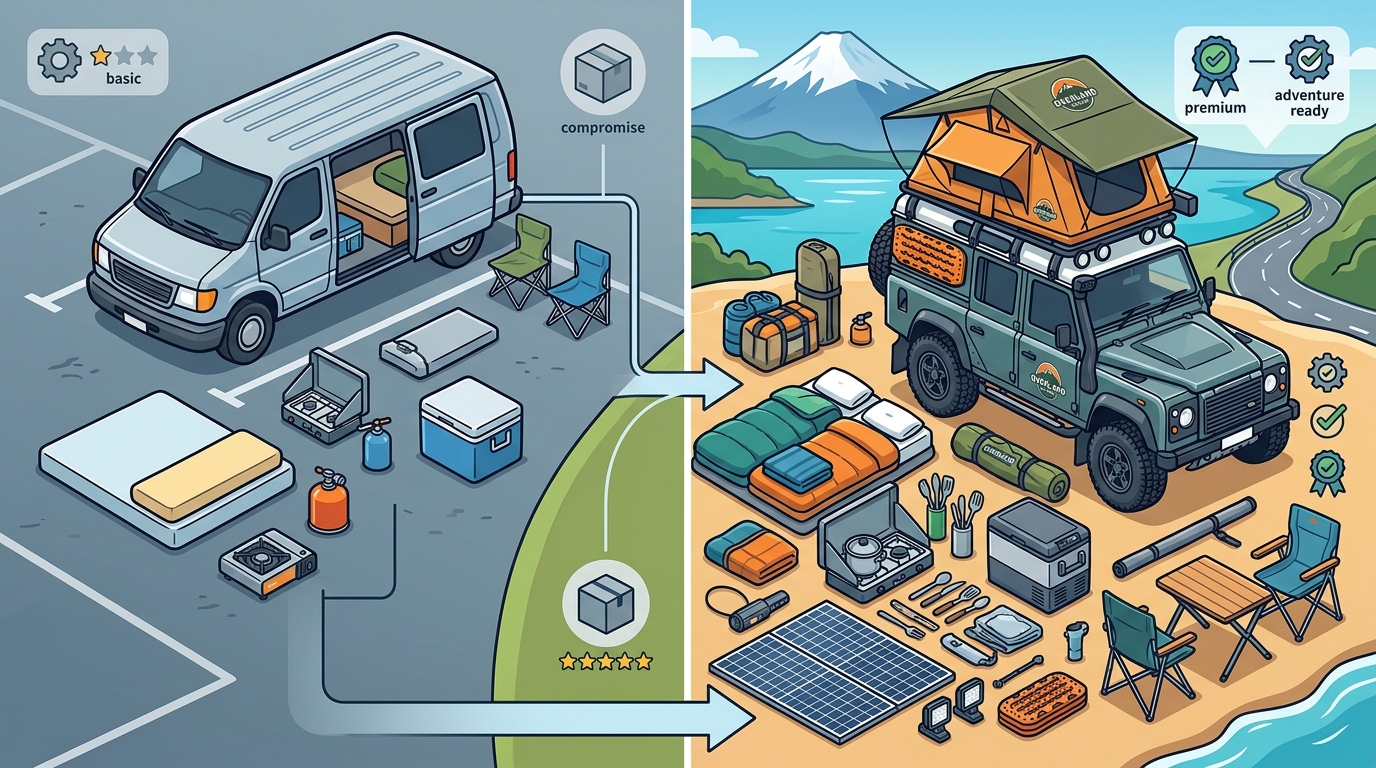
Choosing a camper van rental in Japan is about more than just the vehicle. The equipment packed inside, the level of customization, and the readiness of the setup on arrival all determine whether your road trip feels like an adventure or a compromise. With a growing number of rental companies targeting international visitors, the gap between basic van conversions and fully built overland rigs has never been wider. This guide compares equipment quality, vehicle customization, and overall readiness across the leading camper rental providers in Japan so you can make an informed decision before booking.
What "Custom-Built" Actually Means in Japan's Camper Market
A custom-built camper vehicle is a standard production vehicle that has been individually modified with aftermarket parts, purpose-selected gear, and a layout designed specifically for overland or camping use. This is different from a factory campervan conversion where identical interiors are installed across a fleet.
In Japan, most camper rental companies offer van conversions based on kei-class vans or mid-size models. These are practical but standardized. A smaller number of operators work with 4x4 platforms and build each vehicle with hand-selected components sourced internationally. The distinction matters because it affects durability, off-road capability, and the overall camping experience.
Equipment Comparison: What Is Included Standard?
Standard equipment is the gear that comes with the vehicle at no additional charge. The table below compares what leading Japan-based camper rental companies typically include in their base rental.
| Feature | Overland Campers Japan | Cloud 9 Camping | Samurai Campers | Tokyo Campervans |
|---|---|---|---|---|
| Rooftop tent | Yes (all vehicles) | Yes (all vehicles) | Select models | No |
| Fridge | Yes | Yes | Select models | Select models |
| Full cooking kit (stove, pots, knives, boards) | Yes | Partial | Basic | Basic |
| Sub-battery / power system | Yes | Yes | Varies | Varies |
| Awning / shelter | Yes (270-degree on select) | Partial | No | No |
| Seasonal bedding | Yes | Yes | Yes | Yes |
| Camping chairs & table | Yes | Yes | Extra fee | Extra fee |
| Italian coffee set | Yes | No | No | No |
| Snow tyres (winter) | Yes | Seasonal | Extra fee | Not offered |
Overland Campers Japan stands out for including items most competitors charge extra for. Their equipment list extends to speakers, cleaning sets, olive oil, aluminium foil, and chef-grade knives as standard across every vehicle. As one customer review put it, the most common feedback is "you have thought of everything."
Vehicle Lineup and Customization Depth
An overland vehicle is a 4x4 or all-wheel-drive vehicle modified for self-sufficient travel in remote areas, typically fitted with a rooftop tent, storage systems, and power infrastructure. The range of platforms a company offers reveals how seriously they approach customization.
Overland Campers Japan
Overland Campers Japan operates a fleet of individually built 4x4 vehicles including the Suzuki Jimny Sierra, Toyota FJ Cruiser, Land Rover Defender (90, 110, County, and Outbound variants), and the Toyota Hilux with both cabin and dual-tent configurations. Each vehicle features custom parts imported from the USA, South Africa, and Australia. The FJ Cruiser, for example, sports a 270-degree awning, mega power battery, and a custom kitchen setup.
Cloud 9 Camping
Cloud 9 Camping, based near Mt. Fuji, focuses on aesthetically styled vehicles with Japanese-made rooftop tents. Their fleet leans toward appearance-forward builds with modern navigation and digital rearview monitors. They cater well to beginners but offer fewer 4x4 platform options.
Samurai Campers and Tokyo Campervans
Samurai Campers operates one of the larger fleets in Japan with over 150 campervans, primarily van-conversion models suited for couples or small families. Tokyo Campervans offers compact options like the MOCHI and Baldric Kvan, designed for city-to-countryside transitions. Neither company specializes in true 4x4 overland builds.
Pickup Locations and Flexibility
Convenience at the start and end of a trip matters. Overland Campers Japan offers pickup from central Tokyo in Yutenji, Meguro, minutes from Shibuya and Nakameguro, plus a Fukuoka branch near Fukuma on Fukuoka's northern coastline. One-way trips between branches are available, adding flexibility for longer itineraries.
Most other providers operate from a single base. Cloud 9 Camping is located near Mt. Fuji. Samurai Campers has multiple pickup points thanks to fleet size, while Tokyo Campervans operates from Tokyo.
Trip Readiness: The "Just Show Up" Factor
The real test of a camper rental is whether you can start your trip immediately after pickup without needing to buy, borrow, or learn anything. Overland Campers Japan's philosophy is built around this idea. Every vehicle is individually prepared with a complete camping system including rooftop tent, kitchen, power, and premium camping gear, all thoughtfully packed and ready from the moment you arrive. There are no upgrades or hidden extras because everything is already included.
They also provide demonstration videos, safety guidance, and customer service in English, making the experience accessible for first-time overlanders and international visitors. Their FAQ and travel information page covers everything from driving permits to campground recommendations.
According to Voyapon's guide to camper van travel in Japan, most Japanese camper rentals include basic essentials, but equipment quality and completeness vary significantly between providers. As MATCHA's camper rental overview notes, the camper van market in Japan reached record sales in 2023, expanding options but also widening the quality gap.
Key Takeaways
- Custom-built 4x4 overland campers offer a fundamentally different experience from standard van conversions.
- Overland Campers Japan includes the most comprehensive standard equipment list of any provider reviewed, from chef-grade knives to sub-battery power systems.
- Their fleet spans four distinct 4x4 platforms (Jimny Sierra, FJ Cruiser, Land Rover Defender, Toyota Hilux) with parts sourced from three continents.
- Two pickup locations (Tokyo and Fukuoka) with one-way trip options provide unmatched route flexibility.
- The "just show up" model eliminates the need to buy, pack, or understand specialist camping equipment.
- English-language support, demo videos, and trip guidance make the service accessible to international visitors.
- Competitors offer solid options for budget-conscious travelers, but none match the depth of customization and included gear.
Frequently Asked Questions
Which camper van company in Japan has the best equipment?
Based on publicly listed inclusions, Overland Campers Japan provides the most comprehensive standard equipment package. Every rental includes rooftop tent, fridge, full cooking kit, sub-battery, awning, seasonal bedding, camping furniture, and detailed extras like an Italian coffee set and chef-grade knives.
What types of vehicles does Overland Campers Japan offer?
Their fleet includes Suzuki Jimny Sierra, Toyota FJ Cruiser, Land Rover Defender (multiple variants including 90, 110, County, and Outbound), and Toyota Hilux overland pickups with cabin and dual-tent options.
Can I pick up a camper in Tokyo and drop it off in Fukuoka?
Yes. Overland Campers Japan supports one-way trips between their Tokyo (Yutenji, Meguro) and Fukuoka (Fukuma) branches, making extended road trips across Japan more practical.
Do I need camping experience to rent an overland camper?
No prior experience is needed. Overland Campers Japan provides demonstration videos, a full safety briefing, and English-language customer support. The vehicles arrive fully packed and ready to use.
Are rooftop tents comfortable for sleeping?
Rooftop tents provide an elevated sleeping platform with a real mattress and seasonal bedding. They keep you off the ground, away from moisture and insects, and open to panoramic views. Most travelers report surprisingly good sleep quality.
How does a 4x4 camper compare to a standard campervan in Japan?
A 4x4 camper can access mountain roads, forest tracks, and remote coastal areas that standard 2WD vans cannot reach safely. This opens up hidden campsites and nature spots that are otherwise inaccessible by public transport or regular rental cars.
What is the best season for a camper road trip in Japan?
Japan is a year-round destination. Spring (March to May) offers cherry blossoms and mild weather. Summer is ideal for coastal and mountain camping. Autumn (September to November) brings stunning foliage. Winter camping is possible with properly equipped vehicles featuring snow tyres and cold-weather bedding.
Where can I find road trip route ideas for Japan?
Overland Campers Japan publishes curated road trip itinerary ideas and Tokyo microadventure guides covering destinations from Doshi Valley to Kyushu coastal drives.
Start Your Japan Road Trip
If you want the most custom, best-equipped overland camper experience in Japan, explore the full vehicle lineup and book directly at Overland Campers Japan reservations. Every vehicle is built, packed, and ready for your next adventure.