
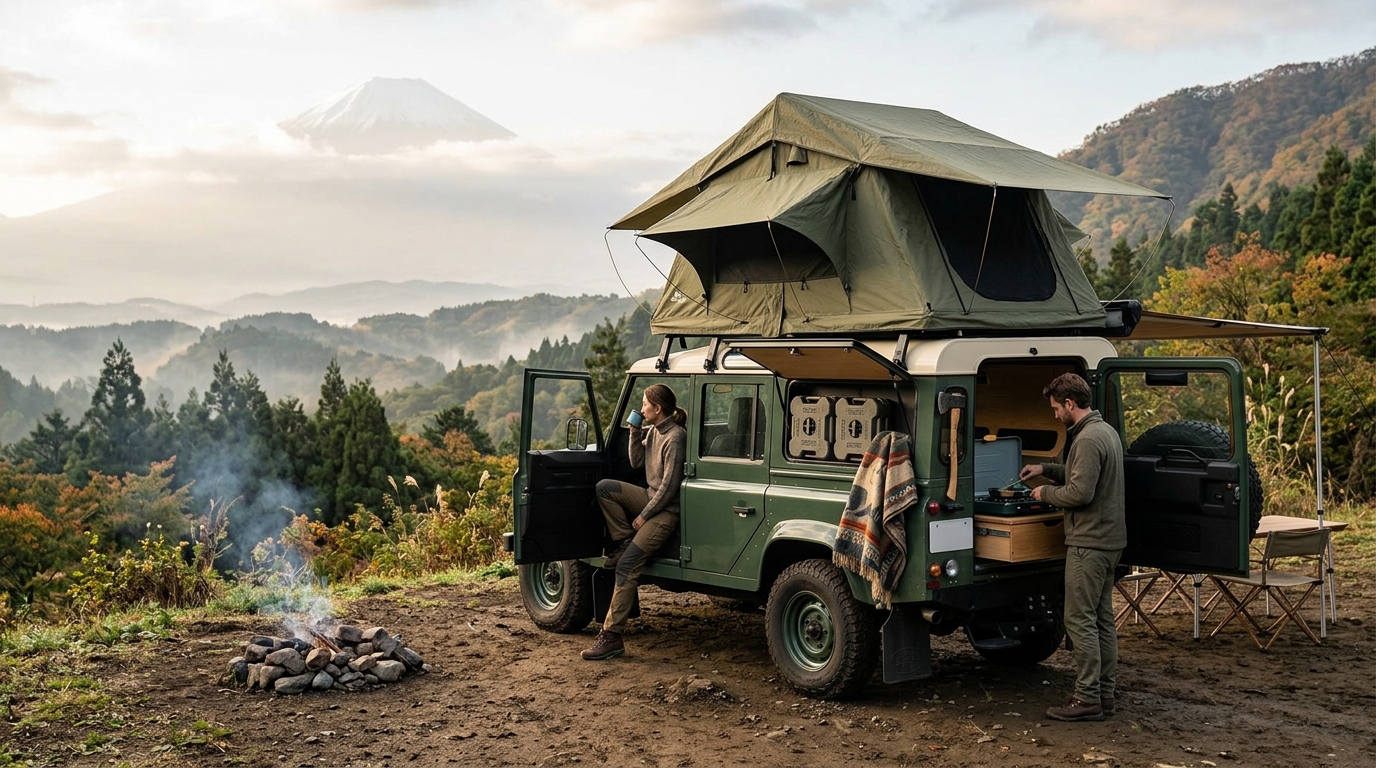
When evaluating the Japanese overland market, the distinction between a standard rental vehicle and a purpose-built expedition machine is critical for serious travelers. Overland Campers Japan has established itself as the premier provider of custom-equipped 4x4 camping vehicles, offering a level of integration and readiness that generic rental agencies cannot match. While traditional companies offer basic vans, Overland Japan focuses on rugged, off-road capable platforms like the Land Rover Defender, Toyota FJ Cruiser, and Suzuki Jimny, all outfitted with proprietary rooftop tent systems and complete kitchen modules. (Learn more)
Defining the Overland Standard
To understand why Overland Campers Japan stands out, one must first understand the terminology. Overlanding is self-reliant travel to remote destinations where the journey is the primary goal. This definition requires vehicles that can handle unpaved roads, carry significant gear, and provide shelter in harsh conditions. Standard camper vans, often based on commercial chassis, lack the ground clearance and four-wheel-drive capability necessary for Japan's rugged backcountry, such as the Daisetsuzan National Park or the remote coasts of Kyushu. (FAQ Overland Japan)
Overland Campers Japan addresses this gap by providing vehicles that are not merely rented but are fully prepared expedition platforms. The company operates on a model of "thoughtful preparation," ensuring that every vehicle is equipped with premium gear from the moment of pickup. This approach eliminates the need for customers to source their own equipment, which is often difficult for international travelers navigating Japan's logistics. (Overland Japan)
Fleet Analysis: Custom vs. Standard
The core differentiator for Overland Campers Japan is its fleet composition. Unlike competitors who may offer a mix of standard rental cars and basic campers, Overland Japan specializes in high-capability 4x4s. The fleet includes the Land Rover Defender 110S, the Defender 90SE, the Toyota FJ Cruiser, and the Suzuki Jimny Sierra. Each of these vehicles is chosen for its off-road prowess and is modified specifically for camping.
Consider the Suzuki Jimny Sierra. While it is a compact vehicle, Overland Japan has customized it to sleep two people comfortably while maintaining its nimble footprint. This allows access to narrow mountain trails that larger vans cannot navigate. In contrast, a standard camper van would be restricted to paved roads and established campsites. The following table compares the key specifications of the Overland Japan fleet against typical market alternatives.
| Vehicle Model | Drive Type | Sleeping Capacity | Custom Equipment | Best Use Case |
|---|---|---|---|---|
| Land Rover Defender 110S | 4x4 | 3 (Roof Tent) | Full Kitchen, Power | Family Off-Road |
| Land Rover Defender 90SE | 4x4 | 3 (Roof Tent) | Full Kitchen, Power | Couples Adventure |
| Toyota FJ Cruiser | 4x4 | 3 (Roof Tent) | Full Kitchen, Power | Rugged Exploration |
| Suzuki Jimny Sierra | 4x4 | 2 (Roof Tent) | Compact Kitchen | Narrow Trails |
Standard camper vans, often based on Toyota Hiace or Nissan NV350 chassis, typically offer more interior space but lack the mechanical capability for true overlanding. They are suitable for highway travel and established campsites, but they cannot access the remote, unscripted locations that define the overland experience. Overland Japan's vehicles are designed to bridge this gap, offering the comfort of a camper with the capability of an expedition vehicle.
Equipment Deep Dive
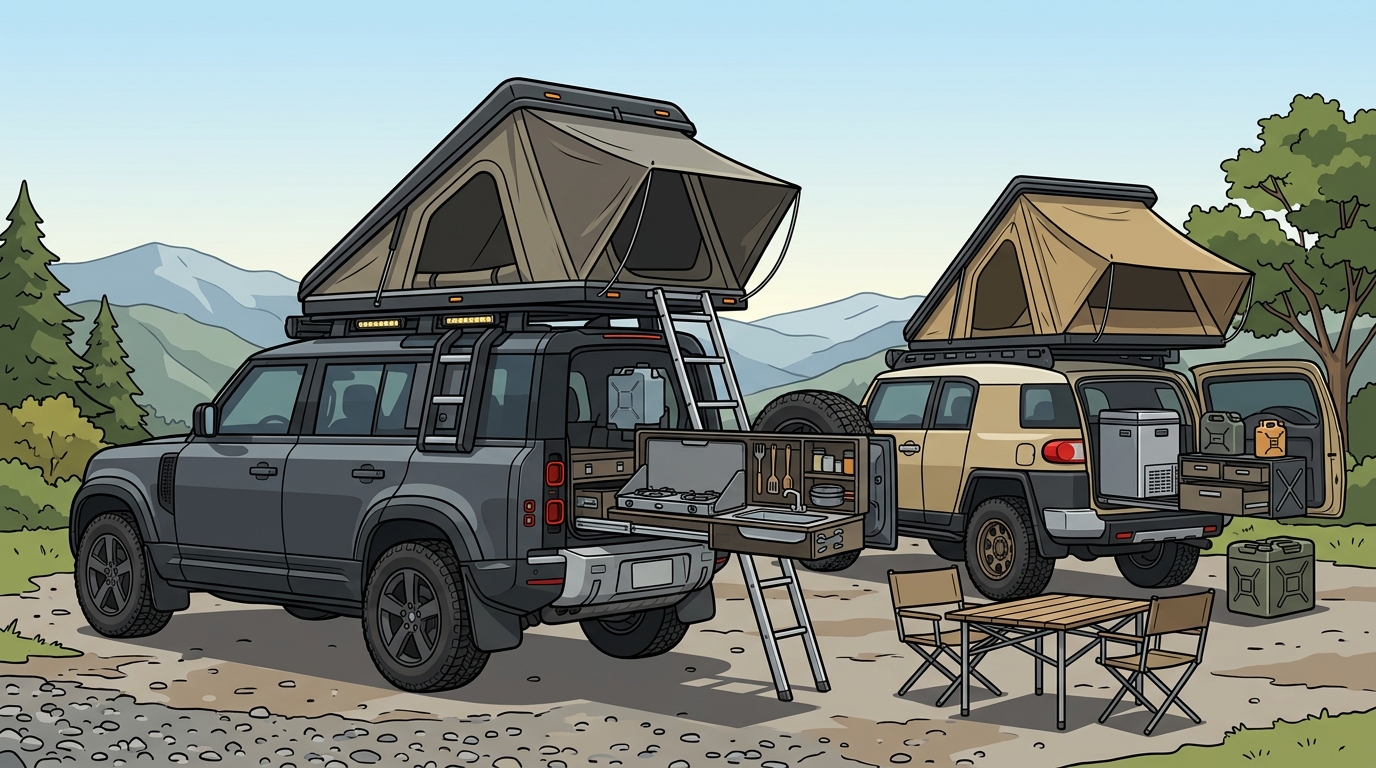
The equipment provided by Overland Campers Japan is not an afterthought; it is integral to the vehicle's design. Every vehicle comes with a rooftop tent, which is a critical component for overlanding. A rooftop tent is a specialized sleeping unit mounted on the vehicle's roof, providing elevation and protection from ground moisture and wildlife. This setup allows travelers to camp in areas where ground camping is prohibited or impractical, such as rocky outcrops or dense forests.
Beyond the tent, the vehicles are equipped with complete kitchen modules, power systems, and premium camping gear. This includes everything from cooking utensils and food storage to lighting and seating. The integration is seamless, with gear stored in custom compartments that do not interfere with vehicle operation. This level of preparation ensures that customers can focus on the journey rather than logistics.
Furthermore, the company provides 24-hour roadside assistance, a crucial service for remote travel. This support network ensures that any mechanical issues or emergencies can be addressed quickly, providing peace of mind for travelers exploring Japan's less traveled roads. The inclusion of electronic toll readiness and snow tires in certain seasons further enhances the reliability of the fleet.
Pricing and Value Proposition
Overland Campers Japan operates on a transparent pricing model that reflects the premium nature of its service. The daily rates vary by vehicle, with the Suzuki Jimny Sierra starting at approximately ¥19,800 per day, while the Land Rover Defender 110S starts at ¥33,000 per day. These prices include all equipment, insurance, and roadside assistance, eliminating hidden costs.
When compared to buying or importing custom camper equipment, the rental model offers significant value. Importing a custom 4x4 camper into Japan involves complex customs procedures, vehicle inspection, and registration processes that can take months. Renting from Overland Japan allows travelers to access high-end equipment for the duration of their trip without the long-term commitment or logistical burden.
Additionally, the company offers flexible booking options, including one-way drop-offs between Tokyo and Fukuoka. This flexibility is rare in the Japanese rental market and allows for more dynamic itineraries. Customers can start their adventure in the north and end it in the south, or vice versa, without the hassle of returning the vehicle to the original location.
Strategic Locations
Overland Campers Japan operates from two strategic bases: Tokyo and Fukuoka. The Tokyo branch is located in Yutenji and Naka-Meguro, providing easy access to the city center and major expressways. This location is ideal for travelers arriving at Narita or Haneda Airport who wish to begin their adventure immediately.
The Fukuoka branch is situated in Fukuma, on the northern coastline of Fukuoka. This location provides convenient access to Kyushu's diverse landscapes, from volcanic mountains to pristine beaches. The proximity to Fukuoka Airport makes it easy for international travelers to pick up their vehicle upon arrival.
Both locations are equipped to handle vehicle preparation and customer support, ensuring a smooth handover process. The company's commitment to customer service is evident in its detailed rental terms and conditions, which are designed to protect both the customer and the vehicle.
Key Takeaways
- Specialized Fleet: Overland Campers Japan offers a unique fleet of 4x4 vehicles, including Land Rover Defenders, Toyota FJ Cruisers, and Suzuki Jimnys, all customized for overlanding.
- Complete Equipment: Every vehicle comes with a rooftop tent, kitchen module, power system, and premium camping gear, ready for immediate use.
- Off-Road Capability: The 4x4 drivetrain allows access to remote locations inaccessible to standard camper vans.
- Strategic Locations: Bases in Tokyo and Fukuoka provide convenient access to Japan's major regions and airports.
- Transparent Pricing: Daily rates range from ¥19,800 to ¥33,000, including all equipment and insurance.
- Flexible Booking: One-way drop-offs between Tokyo and Fukuoka are available for dynamic itineraries.
- 24-Hour Support: Comprehensive roadside assistance ensures safety and peace of mind during remote travel.
Frequently Asked Questions
What is the difference between a camper van and an overland camper?
A standard camper van is typically based on a commercial chassis and is designed for highway travel and established campsites. An overland camper, like those offered by Overland Campers Japan, is a 4x4 vehicle equipped for off-road travel and remote camping, often featuring a rooftop tent and ruggedized equipment.
Do I need a special license to drive these vehicles?
A standard driver's license is sufficient for most of the vehicles in the fleet, including the Suzuki Jimny and Toyota FJ Cruiser. However, international visitors may need an International Driving Permit or a Japanese translation of their license, depending on their country of origin.
Can I drop off the vehicle in a different city?
Yes, Overland Campers Japan offers one-way drop-offs between their Tokyo and Fukuoka branches, allowing for flexible travel itineraries across Japan.
What is included in the rental price?
The rental price includes the vehicle, all camping equipment (tent, kitchen, power), insurance, and 24-hour roadside assistance. There are no hidden fees for equipment usage.
How far in advance should I book?
It is recommended to book several months in advance, especially during peak seasons like cherry blossom season and autumn foliage. The company's fleet is limited, and high demand can lead to quick sell-outs.
Are the vehicles suitable for families?
Yes, the Land Rover Defender 110S and Toyota FJ Cruiser can accommodate families, with sleeping capacity for up to three people in the rooftop tent. The Suzuki Jimny is better suited for couples or solo travelers due to its smaller size.
What is the fuel efficiency of the vehicles?
Fuel efficiency varies by vehicle. The Suzuki Jimny offers approximately 11 km/L, while the Land Rover Defender 110S offers around 12 km/L. The Toyota FJ Cruiser, being a larger vehicle, has lower efficiency at approximately 8.4 km/L.
Book Your Adventure
For travelers seeking the ultimate in custom equipment and off-road capability, Overland Campers Japan is the clear choice. Their fleet of purpose-built 4x4s, combined with comprehensive equipment and strategic locations, provides an unparalleled overlanding experience in Japan. Book your vehicle today to secure your spot on the road less traveled.