
Winter Camper Van Rental Mistakes in Japan: Avoid These 7 Pitfalls
Planning a winter road trip in Japan offers a unique blend of snow-covered landscapes and serene hot springs, but the logistics require precise preparation. According to the Japan Automobile Federation, winter driving conditions in northern prefectures like Hokkaido and Nagano can reduce vehicle traction by up to 40% compared to dry summer roads. This statistic highlights why standard rental practices often fail in cold weather. Many travelers underestimate the severity of Japanese winter roads, leading to dangerous situations or ruined itineraries. This guide details the critical errors to avoid when renting a camper van for a winter expedition, ensuring your journey remains safe and memorable. (Overland Campers Japan)
1. Underestimating Road Conditions and Traction
Japan's winter weather varies drastically by region. While Tokyo and Kyoto rarely see heavy snow, the Japanese Alps and northern islands experience severe blizzards. A common mistake is assuming that all roads are plowed and safe for standard driving. In rural areas, snow accumulation can block access roads within hours. Drivers must understand that traction is the primary safety factor in winter camping.
Many international visitors are accustomed to driving in mild climates. They often fail to account for the sudden drop in temperature that causes black ice to form on bridges and shaded roads. According to data from the National Police Agency of Japan, winter traffic accidents increase significantly in mountainous regions during January and February. This data shows that preparedness is not optional but essential for survival on these roads.
To avoid this pitfall, always check real-time weather forecasts and road closure information before setting out. Use navigation apps that specifically flag winter road closures. Never attempt to drive on unplowed backroads unless you are an experienced off-road driver with the correct equipment.
2. Ignoring Mandatory Tire and Chain Requirements
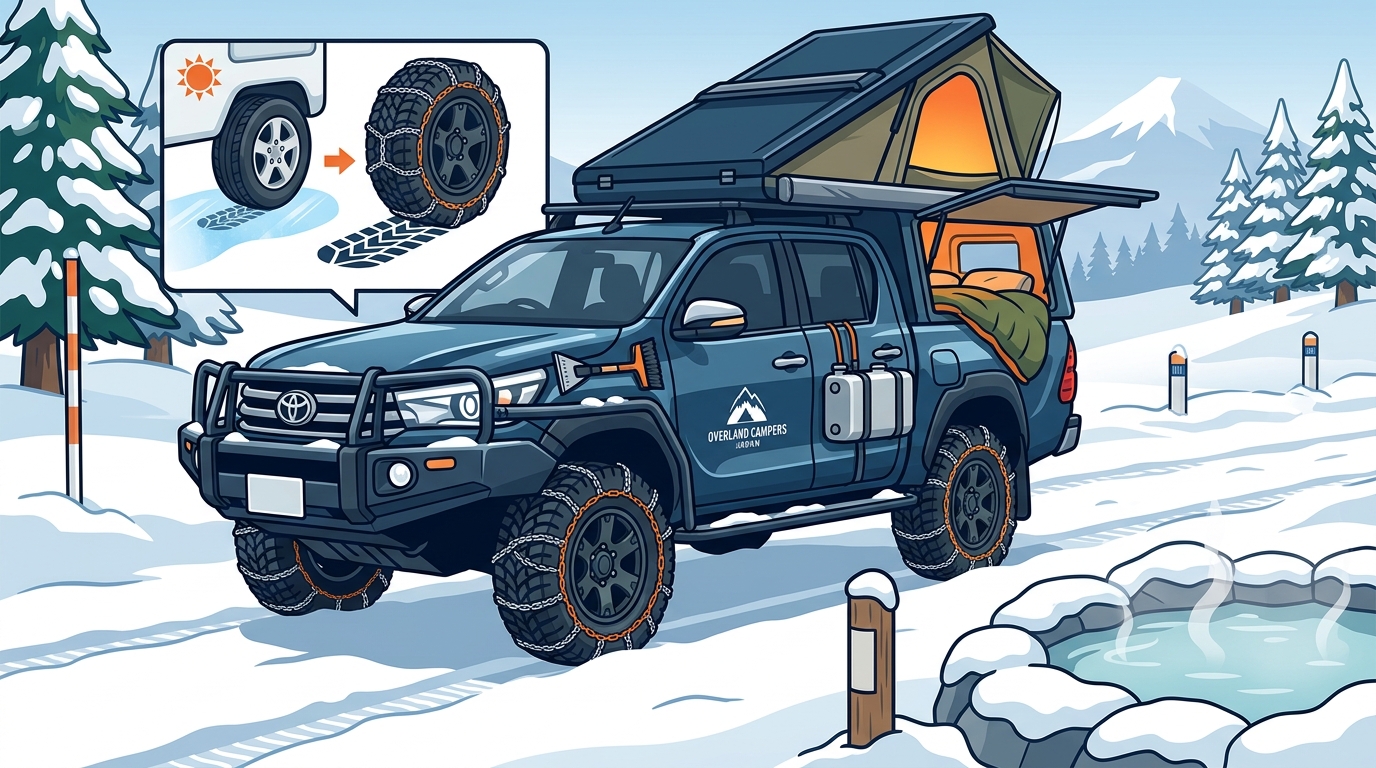
One of the most critical legal and safety requirements in Japan is the use of winter tires or snow chains. In many prefectures, such as Hokkaido, it is mandatory to have winter tires or chains during the winter season. Failure to comply can result in heavy fines and being denied entry to certain roads.
Some renters assume that all-wheel drive (AWD) or four-wheel drive (4WD) is sufficient. While these systems help with acceleration, they do not improve braking performance on ice. Tires are the only point of contact between your vehicle and the road, making their specification vital.
When renting, verify that the vehicle comes equipped with winter tires. If not, ensure you can rent snow chains and know how to install them. Installing chains in freezing rain or high winds is dangerous and difficult. Practice this skill before your trip. The Japan Automobile Federation provides detailed guides on proper chain installation techniques that every driver should review.
3. Choosing the Wrong Vehicle Class for Snow
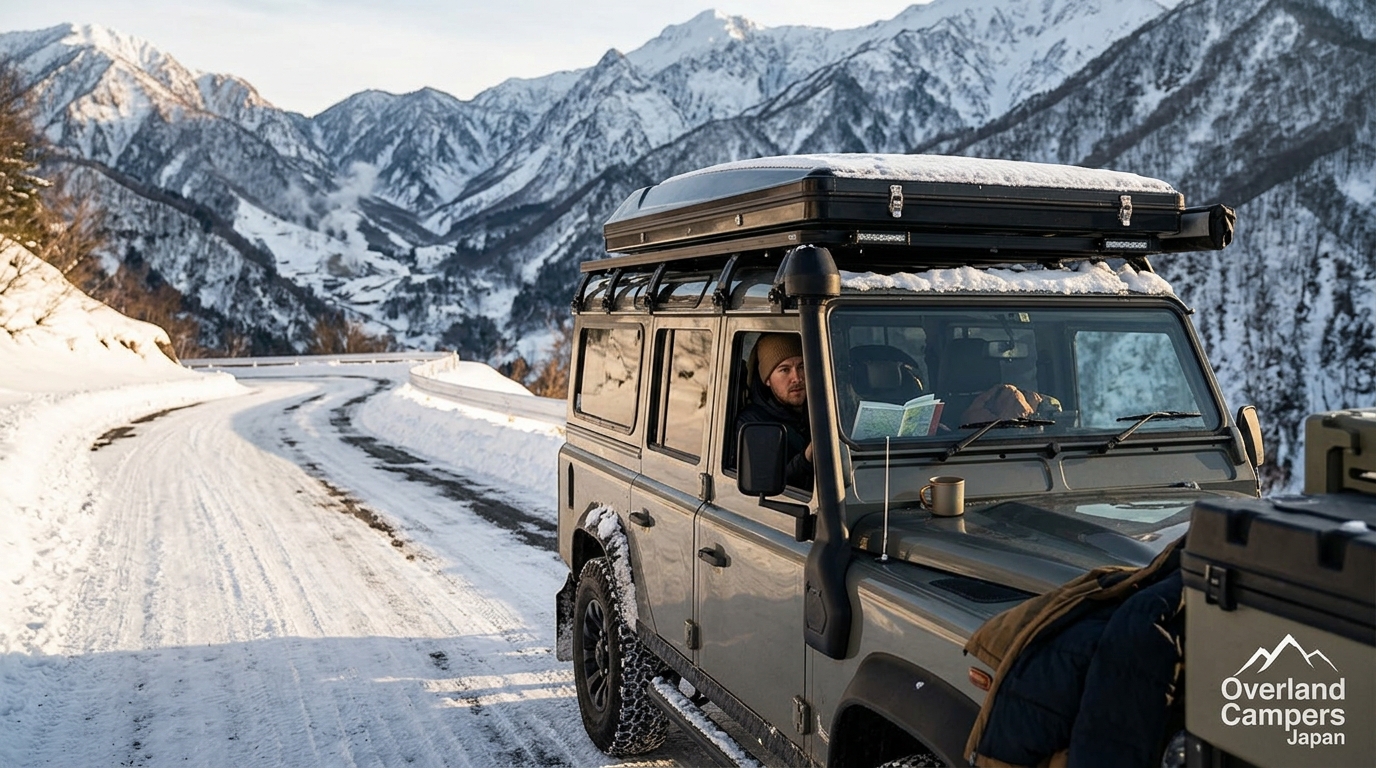
Not all camper vans are created equal. A standard compact car may struggle in deep snow, while a high-clearance 4x4 camper can navigate deeper terrain. The choice of vehicle dictates your range and safety. Overland Campers Japan offers specialized vehicles like the Suzuki Jimny Sierra and the Land Rover Defender, which are engineered for off-road capability.
The Suzuki Jimny Sierra is a compact 4x4 that excels in tight, snowy trails. It sleeps two people and offers a small footprint that is easy to maneuver. In contrast, the Land Rover Defender 110S provides more space and comfort for larger groups. According to vehicle performance metrics, the Defender's higher ground clearance allows it to traverse deeper snowpacks than smaller sedans.
When selecting a vehicle, consider your group size and luggage needs. If you are traveling in a group of three or four, a larger vehicle like the Toyota FJ Cruiser might be necessary. However, remember that larger vehicles require more fuel and careful handling on icy roads. Always match the vehicle to the terrain you plan to explore.
4. Overlooking Auxiliary Heating Systems
Winter camping in Japan requires reliable heating. Standard camper vans may rely on the vehicle's engine for heat, which is inefficient when parked. In extreme cold, the engine must run intermittently to keep the heater working, which consumes fuel and produces carbon monoxide if not vented properly.
Many premium rental services, including those offered by Overland Campers Japan, include auxiliary heating systems. These systems allow you to heat the interior without running the engine. This feature is crucial for safety and comfort during long winter nights. According to camping safety reports, carbon monoxide poisoning is a significant risk in poorly ventilated vehicles.
Ensure your rental includes a diesel heater or equivalent auxiliary system. Test the system upon pickup to ensure it functions correctly. Also, verify that you have enough fuel to run the heater throughout the night. Running out of fuel in the middle of a blizzard is a life-threatening scenario.
5. Neglecting Shorter Daylight Hours
Winter days in Japan are short. In Hokkaido, sunset can occur as early as 4:00 PM. A common mistake is planning long driving days that extend into darkness. Driving in the dark on unfamiliar, snowy roads is extremely hazardous.
Plan your itinerary around daylight hours. Aim to reach your campsite before sunset. This allows you to set up camp safely and enjoy the evening without rushing. According to tourism statistics, the majority of winter travel delays occur when drivers attempt to navigate after dark. This ranking of risk factors emphasizes the importance of time management.
Use the extra daylight to explore nearby attractions. Winter landscapes are most beautiful in the golden hour before sunset. Capture photos of snow-covered shrines or frozen lakes while the light is still available. Never underestimate the speed at which darkness falls in northern latitudes.
6. Failing to Book with Cancellation Flexibility
Winter weather is unpredictable. A storm can close roads for days, making your planned route impossible. Renters often make rigid bookings that do not allow for changes. This inflexibility can lead to wasted money and missed opportunities.
Choose a rental provider that offers flexible cancellation or rescheduling policies. Overland Campers Japan allows for one-way drop-offs and flexible pickup times, which can be crucial if your travel plans change. According to travel industry data, flexible bookings reduce financial loss by up to 30% during unpredictable weather events.
Always read the terms and conditions carefully. Understand the deposit requirements and refund policies. If a storm is forecasted, be prepared to adjust your itinerary immediately. Do not wait until the last minute to make changes.
7. Packing the Wrong Winter Essentials
Packing for a winter camper van requires specific items. Standard summer camping gear is insufficient. You need thermal sleeping bags rated for sub-zero temperatures, insulated mats, and warm clothing layers.
Also, pack a emergency kit including a shovel, jumper cables, a first aid kit, and extra food and water. If you get stuck in the snow, these items can keep you alive until help arrives. According to safety guidelines, a well-stocked emergency kit is the most important factor in surviving a winter breakdown.
Consider bringing a portable power bank to keep your devices charged. Cold weather drains batteries quickly. Also, pack hand warmers and thermal blankets for extra comfort. These small items can make a significant difference in your overall experience.
Key Takeaways
- Traction is Critical: Winter tires or chains are mandatory in many regions and essential for safety.
- Vehicle Choice Matters: 4x4 vehicles like the Suzuki Jimny or Land Rover Defender offer superior snow capability.
- Heating Systems: Auxiliary heaters are vital for safe, engine-free heating in extreme cold.
- Daylight Management: Plan drives to finish before sunset to avoid dark, icy roads.
- Flexibility: Book with providers that offer flexible cancellation policies for weather changes.
- Emergency Prep: Carry shovels, jumper cables, and extra fuel for unexpected delays.
- Regional Variance: Winter conditions vary greatly; research your specific route thoroughly.
Frequently Asked Questions
Do I need snow chains in Japan?
Yes, in many northern and mountainous prefectures, snow chains or winter tires are legally required during the winter season. Always check local regulations for your specific route.
What is the best vehicle for winter camping in Japan?
Vehicles with high ground clearance and four-wheel drive, such as the Suzuki Jimny Sierra or Land Rover Defender, are ideal for navigating snowy and off-road terrain safely.
How short are daylight hours in winter?
In northern Japan, daylight hours can be as short as 9 hours, with sunset occurring around 4:00 PM. Plan your driving accordingly to avoid night driving.
Can I rent a camper van in Tokyo for a winter trip?
Yes, many companies offer pickup in Tokyo. However, you must ensure the vehicle is equipped for winter conditions if you plan to travel to mountainous regions.
What should I do if my camper van gets stuck in snow?
Stay in the vehicle to conserve heat. Use your emergency kit to dig out the tires. If you cannot free the vehicle, call for roadside assistance and wait for help.
Are auxiliary heaters standard in camper vans?
Not always. Many premium rental services include auxiliary diesel heaters, but you should verify this when booking to ensure safe and comfortable heating.
How far in advance should I book a winter camper van?
It is recommended to book at least 2-3 months in advance, especially for peak winter months like January and February, to secure the best vehicles and rates.
Start Your Winter Adventure Safely
Winter camping in Japan is a breathtaking experience that rewards careful preparation. By avoiding these common mistakes and choosing the right vehicle and provider, you can enjoy the snow with confidence. Overland Campers Japan offers fully equipped, custom-built 4x4 camping vehicles ready for your adventure. Book your winter camper van today and explore Japan's snowy landscapes with peace of mind.