
Real-World Camper Van Rental Scenarios for Foreign Visitors at Overland Campers Japan
Japan remains one of the most sought-after destinations for overland travel, yet navigating the logistics of vehicle rental as a foreigner can present unique challenges. According to recent tourism data, international visitor numbers to Japan have surged past pre-pandemic levels, with a significant portion choosing road trips to explore regions beyond Tokyo and Kyoto. This guide dissects real-world scenarios to help you navigate the nuances of renting a camper van through Overland Campers Japan, ensuring your journey is seamless, safe, and unforgettable. (Contact Us)
Understanding the Van Types and Suitability
Choosing the right vehicle is the first critical decision. Overland Campers Japan specializes in converting standard Japanese kei cars and compact vans into rugged, self-contained living spaces. For foreign visitors, understanding the distinction between these models is vital for comfort and maneuverability.
Kei Car Campers are compact, fuel-efficient, and designed for narrow rural roads. They are ideal for solo travelers or couples who prioritize agility over space. These vehicles often feature a pop-up roof, providing sleeping capacity without increasing the vehicle's footprint on standard roads. (About)
For groups of three or four, or those carrying extensive gear, the Compact Van Conversions offer more standing room and storage. These vehicles are built on platforms like the Toyota Hiace or Nissan NV350, providing a more stable ride on highways and better wind resistance in coastal areas.
When selecting your vehicle, consider your group size and luggage volume. Overland Campers Japan provides detailed specifications for each unit, including exact dimensions and weight limits. You can view the current fleet availability and detailed specs on their fleet page to ensure the vehicle matches your physical requirements.
Driving Conditions and Terrain Challenges
Japan's road network is extensive, but it presents specific challenges for foreign drivers. The concept of Kei Road refers to narrow, often unpaved rural paths that connect remote villages and hiking trails. These roads are common in regions like Hokkaido and the Japanese Alps.
While Overland Campers Japan vehicles are equipped with four-wheel drive capabilities, they are not off-road rock crawlers. They are designed for gravel roads, forest tracks, and well-maintained rural highways. Attempting to drive these vehicles on steep, muddy trails without proper experience can lead to getting stuck or damaging the undercarriage.
Highway driving in Japan is generally smooth and well-signposted. However, toll costs can add up quickly. Overland Campers Japan offers advice on managing toll costs and using ETC cards, which are essential for efficient travel. Always ensure you have a valid International Driving Permit (IDP) that corresponds to your home license and is valid in Japan.
The Reality of Camping Infrastructure
One of the biggest misconceptions among foreign visitors is the availability of free camping spots. In Japan, Wild Camping is strictly prohibited in most national parks and protected areas. Violating these regulations can result in heavy fines and legal issues.
Instead, travelers must rely on designated campsites. Japan has a robust network of Yado (lodges) and Camping Grounds that cater to both domestic and international tourists. These sites often provide water, electricity, and waste disposal facilities, which are crucial for maintaining the camper van's systems.
Overland Campers Japan partners with several partner campsites that offer discounted rates for their customers. These sites are strategically located near major attractions, such as Lake Toya in Hokkaido or the Shirakawa-go region in Gifu. Planning your route around these certified sites ensures you have a legal and safe place to rest each night.
Seasonal and Weather Factors
Japan's climate varies dramatically by region and season. Winter in Hokkaido and the northern islands brings heavy snowfall, which requires specific driving skills and vehicle preparation. Overland Campers Japan equips its vehicles with Winter Tires during the cold months, but drivers must still exercise caution on icy roads.
Summer in Japan is hot and humid, particularly in the Kansai and Kanto regions. Air conditioning in camper vans is essential, but it relies on the vehicle's engine running or a separate battery system. Overheating can be a risk if parked in direct sunlight without proper ventilation.
Spring and autumn offer the most pleasant driving conditions. The Cherry Blossom season in spring and Autumn Foliage in November are peak times for tourism. During these periods, campsites fill up quickly, and booking in advance is mandatory. Overland Campers Japan recommends booking at least three months in advance for peak season travel to secure your preferred dates and vehicle.
Logistics and the Pickup Process
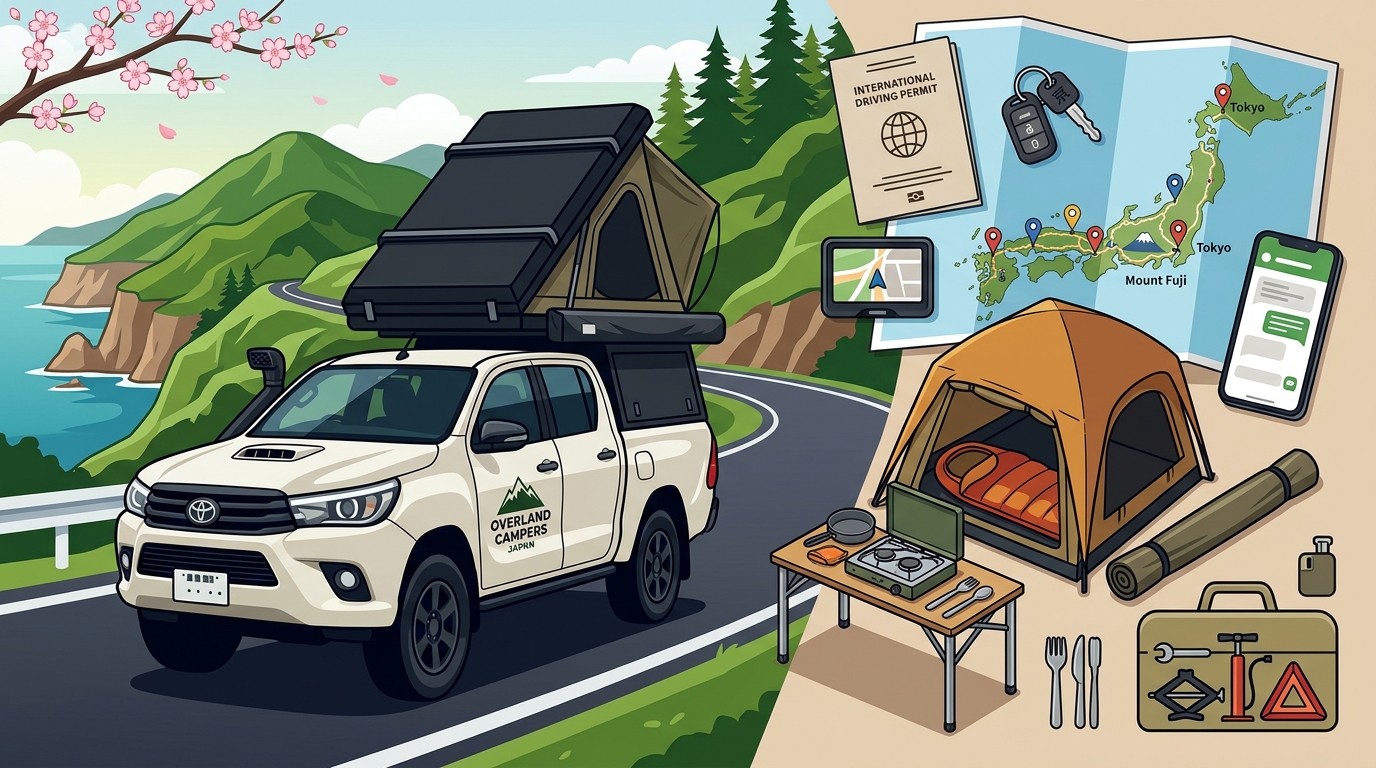
The rental process for foreign visitors involves several steps to ensure compliance with Japanese law and company policy. Upon arrival, you will need to present your passport, International Driving Permit, and credit card for the security deposit.
Overland Campers Japan provides a comprehensive Orientation Session before you depart. This session covers the operation of the camper van's systems, including the water tank, toilet, and electrical setup. Understanding these systems is crucial for maintaining hygiene and comfort during your trip.
Key points covered in the orientation include:
- How to empty the waste tank at designated stations.
- Managing the battery charge and solar panel usage.
- Operating the pop-up roof and securing it for travel.
- Emergency procedures and contact information.
For detailed instructions on vehicle operation, you can refer to the vehicle manual provided with your rental. This manual serves as a quick reference guide throughout your journey.
Key Takeaways
- Vehicle Selection: Choose a kei car for agility or a van for space, based on your group size and luggage.
- Legal Camping: Wild camping is prohibited; use designated campsites to avoid fines.
- Driving Skills: Four-wheel drive is helpful but not sufficient for extreme off-road conditions.
- Seasonal Planning: Book campsites and vehicles months in advance for peak seasons.
- Orientation: Attend the mandatory orientation to understand vehicle systems and emergency protocols.
- Documentation: Ensure your International Driving Permit is valid and matches your home license.
- Infrastructure: Utilize partner campsites for water, electricity, and waste disposal.
Frequently Asked Questions
Do I need an International Driving Permit to rent a camper van in Japan?
Yes, an International Driving Permit (IDP) is mandatory for all foreign drivers. It must be accompanied by your valid home country driver's license. The IDP must be valid in Japan and correspond to the vehicle class you are renting.
Can I camp anywhere in Japan with a camper van?
No, wild camping is generally prohibited in national parks and protected areas. You must use designated campsites or parking areas that explicitly allow overnight stays. Overland Campers Japan provides a list of recommended campsites to ensure legal and safe camping.
What happens if the camper van breaks down?
Overland Campers Japan offers 24/7 emergency support. In the event of a breakdown, you should contact their emergency hotline immediately. They will arrange for roadside assistance or a replacement vehicle if necessary. It is important to have the emergency contact information readily available.
Are the camper vans equipped with air conditioning?
Yes, all camper vans are equipped with air conditioning units. However, the efficiency of the air conditioning depends on the vehicle's engine running or the battery system's charge. It is recommended to park in shaded areas during hot weather to conserve energy.
How do I empty the waste tank?
Waste tanks must be emptied at designated stations, which are often located at campsites, service centers, or public rest areas. Overland Campers Japan provides a guide on waste disposal locations along popular routes to help you plan your stops.
Is it safe to drive in winter conditions?
Driving in winter requires caution and proper equipment. Overland Campers Japan equips its vehicles with winter tires and chains during the cold months. Drivers should have experience in winter driving and follow local road conditions and advisories.
Start Your Journey
Planning a camper van trip in Japan offers unparalleled freedom and access to the country's natural beauty. By understanding the logistical requirements, legal constraints, and vehicle capabilities, you can ensure a smooth and enjoyable experience. Overland Campers Japan is dedicated to supporting your journey with reliable vehicles and expert guidance.
Ready to explore Japan on your own terms? Book your camper van today and start planning your adventure. Contact their team for personalized advice on route planning and vehicle selection to make your trip unforgettable.