
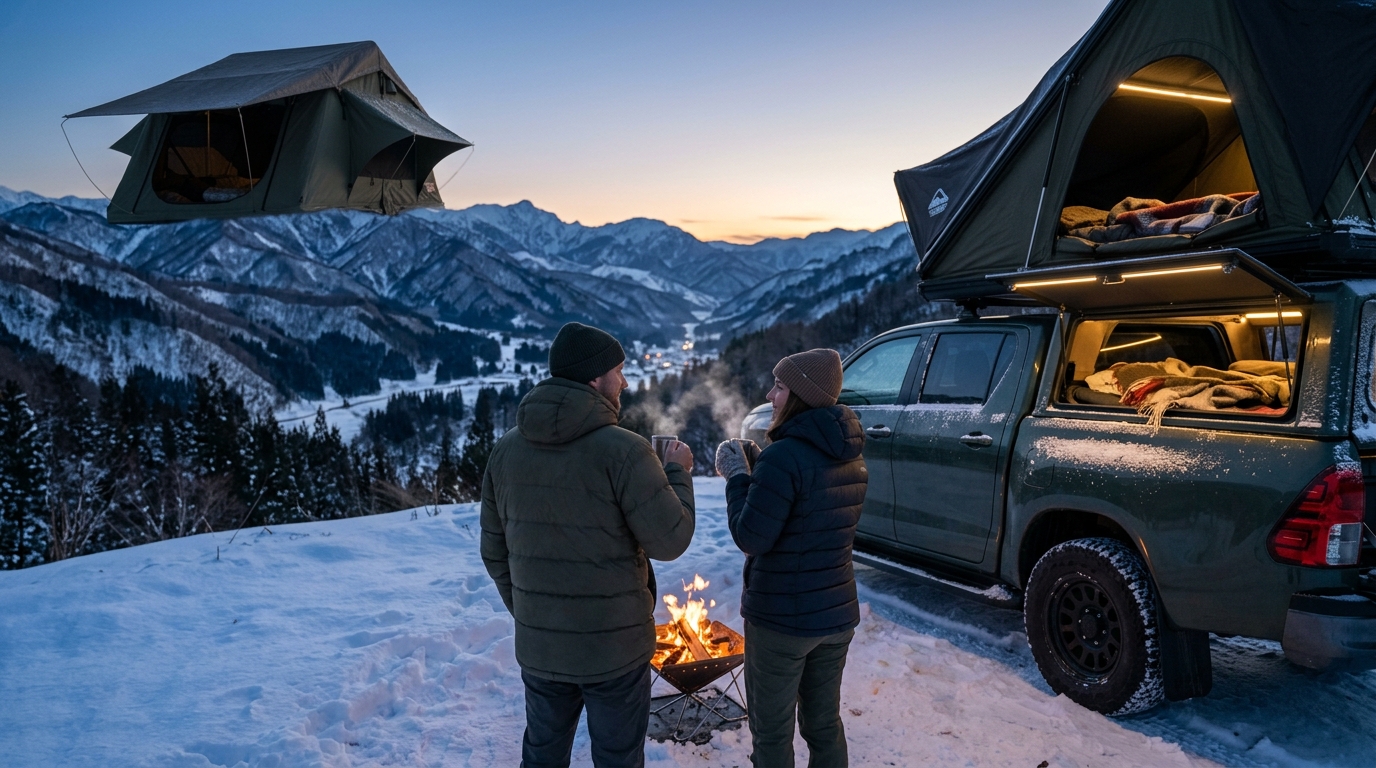
Planning a winter road trip in Japan often triggers immediate hesitation regarding the cold and road conditions. However, data shows that overland camping in winter offers a unique, serene perspective of the landscape that summer crowds cannot match. According to recent tourism trends, the number of domestic travelers seeking off-season experiences has grown significantly, with many opting for the freedom of a camper van to navigate snowy regions like Hokkaido or the Japanese Alps. This guide dismantles the most common fears and provides the factual clarity needed to book your adventure with confidence.
Myth 1: Winter Camping is Impossible Without Special Gear
Many travelers believe that camping in winter requires bringing heavy-duty, industrial-grade equipment from their home country. This is a fundamental misunderstanding of the modern overland rental ecosystem. Overland Campers Japan operates on a philosophy of "everything you need, nothing you don't." Every vehicle in the fleet is pre-equipped with rooftop tents, premium sleeping bags rated for sub-zero temperatures, and insulated camping mats.
The term overland camping is defined as self-supported travel to remote destinations using specialized vehicles. In the context of Japan, this means the vehicles are specifically modified to handle the climate. You do not need to pack a tent or a stove. The rooftop tent is already mounted, and the kitchen setup is ready for use. This eliminates the logistical nightmare of transporting bulky gear on public transport or paying excessive baggage fees on flights.
Furthermore, the insulation in these custom-built units retains heat far better than standard pop-up tents. This allows for comfortable sleep even when temperatures drop below freezing. The myth that you must be an expert survivalist to camp in winter is outdated. With the right rental partner, the experience is as comfortable as a hotel room, just with a view of the stars.
Myth 2: You Cannot Drive in Snow with a Rental Vehicle
A pervasive fear among international tourists is that rental cars are not permitted on snowy roads or lack the necessary traction. This is factually incorrect for the fleet offered by Overland Campers Japan. All vehicles in their inventory are equipped with snow tyres as standard equipment during the winter season. This is not an optional add-on; it is a baseline requirement for safety and operational integrity.
The fleet includes robust 4x4 vehicles such as the Suzuki Jimny Sierra and the Toyota FJ Cruiser. These are not standard city sedans. They are built for off-road capability. The Jimny, for instance, is a compact 4x4 with a small footprint, making it agile on narrow, snow-covered mountain roads. The FJ Cruiser offers more space and power for deeper snow conditions. Both vehicles feature automatic transmission and right-hand drive, which are standard in Japan.
According to automotive safety standards, 4x4 capability combined with proper winter tyres significantly reduces the risk of skidding. However, drivers must still exercise caution. The myth that "rental cars slip on all snow" ignores the reality of modern winter driving technology. Overland Japan ensures that every vehicle is inspected for tyre tread depth and pressure before handover. This guarantees that the vehicle is road-legal and safe for winter conditions.
Myth 3: Winter Rentals Are Prohibitively Expensive
Many travelers assume that peak winter season, particularly around New Year's, will result in exorbitant rental rates. While demand does fluctuate, the pricing structure for overland camping is often more transparent and competitive than traditional hotel stays in popular ski resorts. Overland Campers Japan offers clear daily rates that include all necessary gear, removing hidden costs.
For example, the Suzuki Jimny Sierra starts at approximately ¥19,800 per day. This price point includes the vehicle, the rooftop tent, and all camping essentials. In contrast, a single night in a high-end ryokan or hotel in a ski resort like Niseko or Hakuba can easily exceed this amount, excluding meals and transportation. The value proposition of a camper van becomes clear when you factor in the cost of food, accommodation, and transport combined.
Additionally, the flexibility of a camper van allows you to chase better weather or avoid crowded, expensive hotspots. You are not locked into a fixed itinerary. This freedom is a significant financial and experiential benefit. The concept of adventure camping is defined as travel that prioritizes exploration and outdoor immersion over luxury amenities. In winter, this definition aligns perfectly with cost-effective, high-value travel.
Comparing Winter-Ready Fleet Options
Choosing the right vehicle depends on your group size, luggage needs, and desired level of comfort. Below is a comparison of the primary vehicles available for winter rental in Tokyo and Fukuoka.
| Vehicle Model | Capacity | Winter Readiness | Best For | Starting Price (Daily) |
|---|---|---|---|---|
| Suzuki Jimny Sierra | 2 Sleepers | 4x4, Snow Tyres | Couples, Narrow Roads | ¥19,800 |
| Land Rover Defender 90 | 3 Sleepers | 4x4, Snow Tyres | Adventure Seekers | ¥29,800 |
| Land Rover Defender 110 | 5 Sleepers | 4x4, Snow Tyres | Groups, Extra Space | ¥33,000 |
| Toyota FJ Cruiser | 5 Sleepers | 4x4, Snow Tyres | Long-Distance Travel | ¥23,500 |
Each vehicle listed above is available for pick-up and drop-off in Tokyo or Fukuoka. This flexibility allows you to start your winter journey in the capital and end it in Kyushu, or vice versa. The one-way drop-off option is a critical feature for travelers who do not wish to retrace their steps.
Key Takeaways for Winter Travelers
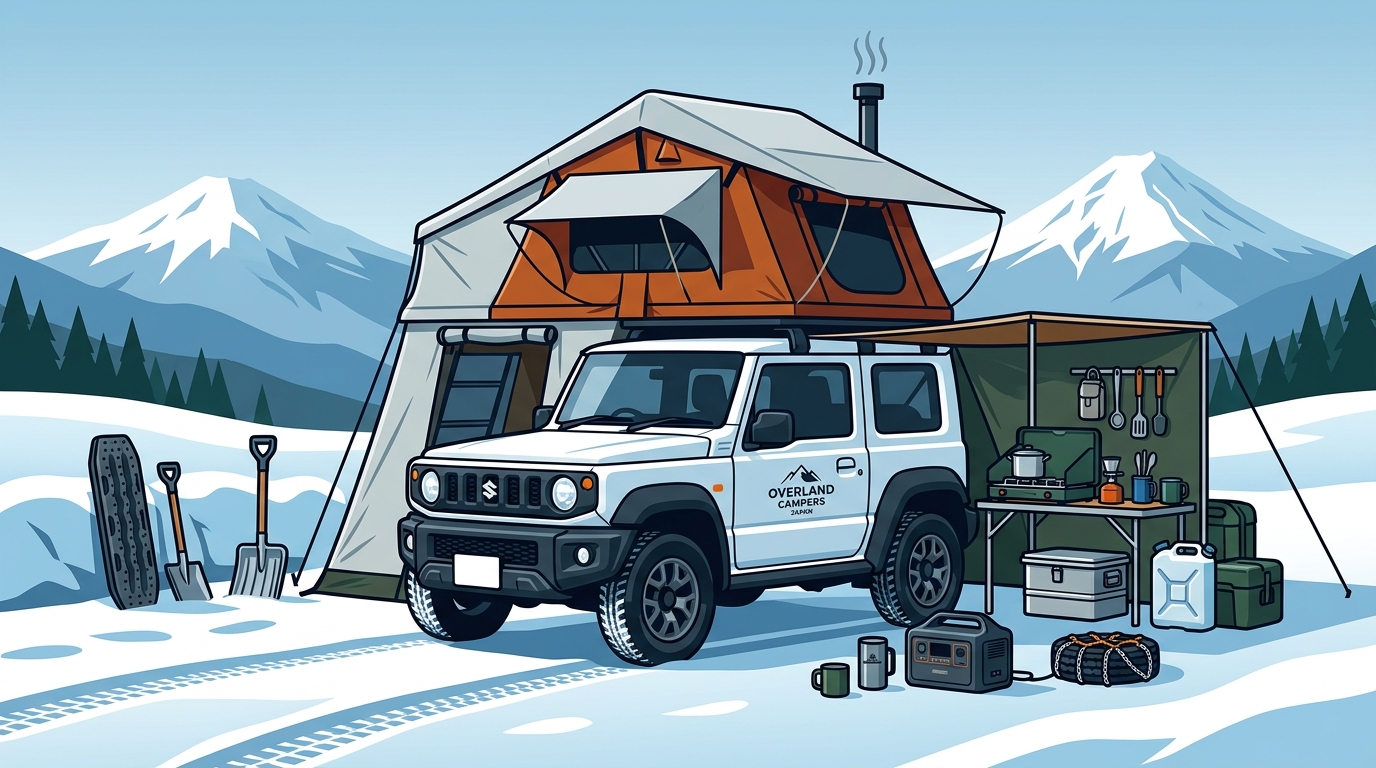
- Standard Equipment: All rental vehicles come with snow tyres and rooftop tents as standard, not as optional extras.
- Vehicle Types: The fleet includes the Suzuki Jimny Sierra, Land Rover Defender, and Toyota FJ Cruiser, all capable of 4x4 off-road driving.
- Pricing: Daily rates start at ¥19,800 for the Jimny, offering high value compared to traditional accommodation.
- Locations: Pick-up and drop-off are available in Tokyo (Yutenji/Naka-Meguro) and Fukuoka (Fukuma).
- Safety: Vehicles are equipped with 24-hour roadside assistance, providing peace of mind in remote winter locations.
- Capacity: Options range from 2 sleepers (Jimny) to 5 sleepers (Defender 110/FJ Cruiser), accommodating various group sizes.
- Booking: Reservations require a minimum of 2 days and must be made in advance due to limited fleet availability.
Frequently Asked Questions
Do I need an international driving permit to rent a camper van in Japan?
Yes, an International Driving Permit (IDP) is required for most foreign nationals. The IDP must be accompanied by your valid domestic driver's license. Overland Japan strictly enforces this policy in compliance with Japanese traffic laws. Without a valid IDP, the rental contract cannot be signed, and the vehicle cannot be driven.
Can I drive from Tokyo to Hokkaido in a rented camper van?
Direct driving is not possible as Hokkaido is a separate island. However, you can drive the vehicle onto the ferry from Aomori to Hakodate. Overland Japan allows vehicle transport via ferry, but you must arrange the ferry ticket separately. This is a popular route for winter travelers seeking to explore the northernmost island.
Are the rooftop tents heated?
The rooftop tents themselves are not heated, but they are designed with high-quality insulation and come with sleeping bags rated for cold temperatures. The vehicles are equipped with auxiliary heaters that can warm the interior cabin. For warmth in the tent, travelers are advised to use the provided sleeping bags and mats, which provide significant thermal protection.
What is the minimum rental period?
The minimum rental period is two days. This policy ensures that the vehicle has sufficient time for cleaning, inspection, and preparation between customers. Shorter rentals are not permitted due to the logistical complexity of winter vehicle maintenance.
Is it safe to camp in snow?
Yes, it is safe provided you follow basic winter camping guidelines. Overland Japan provides detailed instructions on setting up the rooftop tent in snow and managing condensation. The vehicles are equipped with electronic toll collection systems and 24-hour roadside assistance, ensuring help is available if needed.
Do I need to return the vehicle with a full tank of fuel?
Yes, the standard policy requires the vehicle to be returned with the same fuel level as at pick-up. This is a common practice in the car rental industry to ensure fairness and operational efficiency. Refueling stations are available in most towns along your route.
Can I cancel my reservation?
Cancellations are permitted subject to the Rental Terms and Conditions. Cancellation fees apply based on the timing of the cancellation relative to the start date. It is important to review the specific cancellation policy at the time of booking to understand any potential costs.
Book Your Winter Adventure
Winter in Japan is not a season to be avoided; it is a season to be explored. The silence of the snow, the clarity of the air, and the beauty of the frozen landscapes are experiences that define the Japanese winter. Overland Campers Japan provides the tools and vehicles necessary to make this dream a reality. With a fleet of robust 4x4s, comprehensive gear, and flexible pick-up locations, you are ready to hit the road.
Do not let myths hold you back. The data shows that winter travel is safe, manageable, and incredibly rewarding. Visit the reservation page to check availability for your desired dates. Whether you choose the nimble Suzuki Jimny or the spacious Land Rover Defender, your winter adventure starts here.